


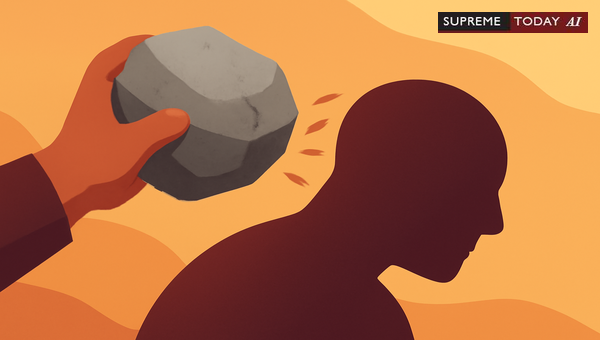
Is a Stone a in Assault Cases?
In the heat of an altercation, everyday objects like stones can become tools of assault. But does picking up a stone automatically elevate a simple hurt case to one involving a '' under Indian law? This question often arises in criminal trials, particularly when distinguishing between Sections 325 and 326 of the . Understanding this classification is crucial for both victims and accused, as it directly impacts charges, convictions, and sentencing.
This blog delves into the legal analysis of whether a stone can be deemed a , drawing from judicial precedents and key factors courts consider. Note: This is general information based on case law and not specific legal advice. Consult a qualified lawyer for your situation.
The Core Legal Question
The issue at hand is straightforward yet nuanced: Weapon of Assault was Stone it Cannot be Said that was Used. Courts across India have repeatedly addressed this, emphasizing that not every stone qualifies as a dangerous or . The determination hinges on context, not assumption. 2005 1 Supreme 215 2014 0 Supreme(Ker) 41
Legal Principles: When Is a Stone a ''?
Under IPC Section 326, by a carries severe penalties, including life imprisonment. Section 325, however, applies to without such a weapon, with lighter punishment. The key distinction? Whether the stone is capable of causing death or .
Courts have established clear principles:- A stone, by itself, is generally not classified as a dangerous or unless specific circumstances show its potential to cause death or grievous injury. Factors include size, sharpness, manner of use, and context of the assault. 2005 1 Supreme 215 2014 0 Supreme(Ker) 41
- The nature of the stone and how it was used are critical. Automatic classification as dangerous is rare. 2005 1 Supreme 215 2014 0 Supreme(Ker) 41
For instance, a small, handful-sized stone hurled in a fit of rage may not meet the threshold, while a large, sharp rock wielded repeatedly could. The absence of the actual stone or detailed evidence—like measurements or photos—often weakens claims of 'dangerousness.' 2014 0 Supreme(Ker) 41 2023 0 Supreme(AP) 963
Judicial Precedents on Stones as Weapons
and High Court rulings provide clarity:- In Mathai v. State of Kerala, the Court stressed that the —are vital. 2014 0 Supreme(Ker) 41- observed that stones in offenses are not necessarily dangerous weapons, especially if their size and use do not suggest lethality. 2023 0 Supreme(AP) 963
These cases underscore that evidence must prove the stone's deadly potential; mere use isn't enough.
Insights from Additional Case Law
Further precedents reinforce this cautious approach:- In one ruling, the court noted: In the instant case considering the size of the stone which was used, as revealed by material on record, it cannot be said that a was used. Thus, conviction was altered from Section 326 to 325 IPC. 2014 0 Supreme(AP) 244- Another case highlighted: Stone as a Weapon - The stone used by the appellant was a handful-sized stone, which by itself cannot be classified as a . Factors like size and nature were decisive, leading to Section 325. 2023 0 Supreme(Kar) 1128 2024 0 Supreme(Ker) 1113 2024 Supreme(Online)(KER) 33180 2024 Supreme(Online)(KER) 40963 2021 Supreme(Online)(KER) 24258 2023 0 Supreme(AP) 963 2024 0 Supreme(Jhk) 627
Contrast this with cases involving inherently dangerous items:- Knives or sharp tools are often deemed dangerous: It is also apparent from the evidence that the knife was used in the said assault which is also a .2008 0 Supreme(UK) 85- Non-vital injuries with non-dangerous objects: Weapon used was not a or .2007 0 Supreme(MP) 199 2007 0 Supreme(MP) 201
Even indiscriminate stone pelting may cause injury, but classification depends on size, sharpness, and facts. Continuous pelting on one person may escalate it, but not automatically. 2014 0 Supreme(AP) 244
Courts evaluate objects like stones based on:1. Size: Handful-sized? Unlikely dangerous. Larger? Potentially yes.2. Sharpness: Blunt vs. edged.3. Manner of Use: Thrown casually or used to bludgeon vital areas?4. Injury Caused: alone doesn't prove the weapon's danger; intent and capability matter. 2024 0 Supreme(Ker) 1113 2024 Supreme(Online)(KER) 33180 2024 Supreme(Online)(KER) 40963 2024 0 Supreme(Jhk) 627
Objects like 'Tangi' (sharp cutting tool) or iron rods may qualify if used lethally, but stones typically do not without proof. 2023 0 Supreme(Kar) 1128 2024 0 Supreme(Ker) 1113 2021 Supreme(Online)(KER) 24258 2022 0 Supreme(MP) 988 2023 0 Supreme(AP) 963 2024 0 Supreme(Jhk) 627
Injuries on non-vital parts (legs, hands) further support , unless evidence shows otherwise. 2007 0 Supreme(MP) 201
Implications for Legal Charges and Trials
If a stone fails the '' test:- Charges downgrade from Section 326 IPC to Section 325 IPC.- Punishment reduces significantly (e.g., 7 years max vs. life).
Prosecutors must produce the stone or robust evidence. Defense can argue lack thereof. This impacts bail, trial strategy, and appeals. 2005 1 Supreme 215 2014 0 Supreme(Ker) 41
Other contexts, like FIRs alleging sharp weapons, require proof: The used of sharp cutting weapon is the main ingredients for the offence u/s 324 IPC. Doubt can lead to acquittal or downgrade. 2023 Supreme(Online)(CAL) 14218
Key Takeaways and Recommendations
- Stones are not inherently dangerous weapons. Evidence of size, sharpness, and use is essential. 2005 1 Supreme 215 2014 0 Supreme(Ker) 41
- Courts prioritize facts over assumptions, often opting for Section 325 IPC without proof.
- For prosecutors: Preserve the weapon and document details.
- For defense: Challenge vague descriptions.
- Always seek case-specific advice from legal experts.
Key References:2005 1 Supreme 215 2014 0 Supreme(Ker) 41 2023 0 Supreme(AP) 963
2014 0 Supreme(AP) 244 2023 0 Supreme(Kar) 1128 2024 0 Supreme(Ker) 1113 2024 Supreme(Online)(KER) 33180
In summary, while a stone can cause harm, Indian courts typically require compelling evidence to label it a . This balanced approach ensures justice aligns with facts, protecting against overcharging. Stay informed, and remember—legal outcomes vary by case details.
#IPCLaw, #DangerousWeapon, #AssaultCases


















