


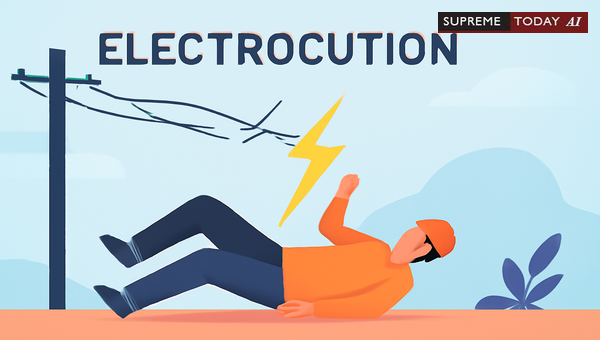
Compensation for Death Due to Falling Electric Line: A Comprehensive Guide
Imagine a tragic incident where a loved one loses their life due to a snapped electric wire falling during a storm or due to poor maintenance. Families are left devastated, grappling with grief and financial loss. A common question arises: How to Determine Compensation in Case of Death from Falling Electric Line? This blog post explores the legal framework in India, primarily governed by the principle of , drawing from key court judgments and precedents.
While this information is based on established case law, it is for educational purposes only and not a substitute for professional legal advice. Consult a qualified lawyer for your specific situation.
The Principle of in Electricity-Related Deaths
In India, electricity transmission is considered an . Courts have consistently applied the doctrine of , originating from the landmark English case , which holds that those engaged in dangerous operations are liable for damages caused, irrespective of negligence, unless specific exceptions apply. This means the electricity supplier, such as the or power utility, bears responsibility for deaths caused by falling live wires. 2007 0 Supreme(Gau) 749 2022 0 Supreme(Kar) 229 2014 0 Supreme(Mad) 342
As held in M.P. Electricity Board v. Shail Kumari (2002), the responsibility to prevent live wires from remaining live after snapping lies with the utility, and liability is strict, not dependent on negligence, unless an exception like act of stranger applies. 2022 0 Supreme(Kar) 229
Key points include:- The utility must ensure safety measures like protective devices, proper maintenance, and timely repairs. 2007 0 Supreme(Gau) 749 2022 0 Supreme(Kar) 229- Liability arises from the hazardous nature of electrical activities, making proof of negligence often unnecessary. 2014 0 Supreme(Mad) 342
How Courts Calculate Compensation
Compensation quantum is not fixed by statute but determined by courts based on precedents, considering factors like:- Age and earning potential of the deceased: Younger victims with dependents receive higher amounts.- Dependency of family members: Loss of income, medical expenses (if any), and emotional trauma.- Nature of the incident: Whether safety measures were absent. 2007 0 Supreme(Gau) 749 2022 0 Supreme(Pat) 701
Courts often reference for assessment. For instance:- In one case, Rs. 8 lakhs per victim was awarded due to the inherently dangerous activity. 2022 0 Supreme(Pat) 701- Amounts range from Rs. 75,000 to several lakhs, adjusted for inflation and circumstances. 2007 0 Supreme(Gau) 749 2014 0 Supreme(Mad) 342
From additional precedents:- Rs. 10 lakhs awarded to legal heirs where the failed to ensure safety post-storm, upholding despite under . 2023 0 Supreme(J&K) 730- Rs. 11,47,200 granted under , citing and for . 2023 0 Supreme(J&K) 140- Rs. 3 lakhs upheld for death due to low-hanging faulty lines violating (). 2022 0 Supreme(Raj) 2569- Rs. 6,39,000 to the widow of a 29-year-old fisherman electrocuted by a fallen high-tension line, using principles. 2012 0 Supreme(Mad) 4128- Rs. 3,50,000 with interest for a child electrocuted by a high-tension wire drop, emphasizing safety measures for high voltage supply. 2012 0 Supreme(J&K) 392
Landmark Cases Reinforcing
Supreme Court Precedents
- M.P. Electricity Board v. Shail Kumari: Affirmed absolute liability for snapped wires. 2022 0 Supreme(Kar) 229
- : Upheld for hazardous electricity supply. 2022 0 Supreme(Pat) 701
High Court Rulings
- In Sukamani Das and S.K. Shangring Lamkang, courts presumed negligence in maintenance, awarding based on precedents. 2023 0 Supreme(Gau) 510 1998 0 Supreme(Gau) 143
- Another case stressed anticipation of storms: The possibility of falling of high tension electric line from its pole as a result of storm or lightning should have been reasonably anticipated. 2012 0 Supreme(Mad) 4128
These cases illustrate that even in writ petitions under , courts may award compensation if negligence is evident, though might direct to civil courts. 2007 0 Supreme(Gau) 749 2022 0 Supreme(Telangana) 497 2021 0 Supreme(Del) 5
Factors Influencing Compensation and Potential Exceptions
Courts weigh:- Evidence of negligence: Lack of adherence to (e.g., ). 2017 0 Supreme(Ori) 1309- or stranger: Lightning or third-party sabotage may absolve liability if proven. However, utilities must show all precautions were taken. 2007 0 Supreme(Gau) 749 2022 0 Supreme(P&H) 200 2003 0 Supreme(Del) 662- Delay in claims: Lapses can reduce awards. 2007 0 Supreme(Gau) 749 2005 6 Supreme 209
In Shabir Ahmad Rather's case, despite storm conditions, the department's failure to respond constituted negligence, leading to Rs. 10 lakhs. lies with the , and they are liable under the principle of '' as per . 2023 0 Supreme(J&K) 730
Practical Recommendations for Claimants
To strengthen your case:- Gather documentation: Post-mortem reports, accident FIR, photos, maintenance records (or lack thereof).- File promptly: Preferably via writ petition if under (right to life) applies, or civil suit.- Prove dependency: Income proofs, family details.- Anticipate defenses: Counter '' with evidence of poor upkeep.
Courts emphasize: The activity of transmitting electricity is inherently dangerous, and the responsible authority must take all safety precautions. 2007 0 Supreme(Gau) 749
Key Takeaways
- dominates: Electricity suppliers are typically liable for falling line deaths. 2022 0 Supreme(Kar) 229 2014 0 Supreme(Mad) 342
- Compensation varies: Rs. 3-11 lakhs common, based on precedents and factors.
- Safety first: Utilities must maintain lines rigorously.
In summary, compensation hinges on , with courts awarding just amounts considering circumstances. Families deserve justice—seek expert guidance to navigate this process effectively.
This post references judgments like 2007 0 Supreme(Gau) 749, 2022 0 Supreme(Kar) 229, 2023 0 Supreme(J&K) 730, and others for illustrative purposes. Laws evolve; verify current status.
#ElectrocutionCompensation, #StrictLiabilityIndia, #ElectricityNegligence












