


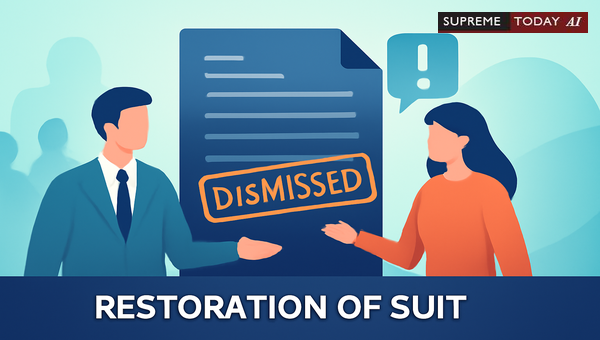
Suit Restoration: Notice to All or Record Parties?
In the intricate world of civil litigation, few moments are as frustrating as having your suit . Suddenly, you're racing against time to file a under . But a critical question arises: Application File for Restoration of Suit Whether Notice has to Give all the Parties or only on Record Parties? This query strikes at the heart of , representation, and court scrutiny.
This blog post dives deep into the legal principles governing restoration applications, drawing from key judicial precedents. We'll explore whether notice must extend to all original parties or suffices for those on record, the pitfalls of single-plaintiff filings in multi-party suits, and practical tips for success. Note: This is general information based on case reviews and not specific legal advice. Consult a qualified lawyer for your case.
Legal Framework for Restoration of Suits
Restoration applications allow plaintiffs to revive suits dismissed due to or default, as per Order IX Rule 13 CPC. Courts typically require showing for the absence, diligence, and no prejudice to defendants. However, procedural nuances—like who files the application and notice requirements—can make or break it.
The core issue often revolves around representation. In multi-plaintiff suits, courts emphasize . A restoration filed by just one plaintiff may falter if others aren't involved, implying that notice or involvement of all parties (plaintiffs) is crucial for . This aligns with ensuring all interests are represented, rather than limiting to record parties alone. 1993 0 Supreme(Cal) 100
Single Plaintiff vs. Multiple Plaintiffs: A Key Hurdle
One recurring theme in restoration cases is the of applications filed by a single plaintiff in suits with multiple plaintiffs. Legal documents indicate this may not be permissible without collective involvement.
Collective Requirement: Courts scrutinize whether all plaintiffs join the restoration. In cases where only one files, it's often deemed non-maintainable due to inadequate representation of co-plaintiffs' interests. This suggests notice or consent from all parties (not just record ones) is implicitly required to avoid dismissal. 1993 0 Supreme(Cal) 100
Dismissal for Absence: Restoration bids fail when plaintiffs or counsel don't appear. For example, a trial court dismissed an application due to the plaintiff's counsel's absence, highlighting lack of diligence. 2022 0 Supreme(Raj) 1364
Plaintiff Conduct Matters: Courts assess diligence. Negligence or lack of interest leads to rejection. 2019 0 Supreme(P&H) 848
Furthermore, second restoration applications after prior dismissals for are generally barred, underscoring judicial caution against repeated laxity. 1993 0 Supreme(Cal) 100
Notice Requirements: All Parties or Record Only?
Directly addressing the query, restoration proceedings demand procedural propriety. While CPC doesn't explicitly mandate notice to all parties in every restoration filing, case law implies broader representation, especially in multi-party scenarios.
In one instance, Upon service of notice on the respondents reply to the application was noted, indicating notice to opposing parties (defendants on record) is standard. 2024 0 Supreme(MP) 493
However, for plaintiffs, courts frown on solo filings. Restoration isn't allowed if filed by only one plaintiff without others, reinforcing that all co-plaintiffs (not just record parties) must be engaged. This extends beyond mere notice to active involvement. 2024 0 Supreme(P&H) 844
Other sources affirm: Applications by strangers or without proper standing are unsustainable, especially with delays. Courts rejected a filing after nearly 10 years due to unexplained lapses. 2024 4 Supreme 378
Mohammad Rafiq Khan VS Punjab National Bank - Current Civil Cases
Insights from Additional Cases: Timeliness and
Timeliness is pivotal. Applications filed promptly with valid reasons succeed:
: A 75-day delay was condoned, restoring the suit: The application for restoration filed by the plaintiff is allowed. 2017 0 Supreme(P&H) 2933
Ill Health Justification: Courts condone delays for genuine reasons like illness, granting fair opportunities if no prejudice. 2023 Supreme(Online)(AP) 4878
Conversely:
Long delays (e.g., one year seven months) bar applications as hopelessly barred by time. 2023 0 Supreme(J&K) 493
Procedural errors, like in partition suits, lead to rejection. 2024 0 Supreme(All) 2416
Even in possession cases post-decree, untimely filings without explanation fail, though timely ones restore . 2023 0 Supreme(Cal) 1206
Under , for is key. No separate application needed if plaintiff isn't at fault—courts restore directly. 2024 0 Supreme(P&H) 844 2005 0 Supreme(Raj) 1174
Common Pitfalls and Successful Strategies
From reviewed cases, here's what typically dooms or saves restorations:
Pitfalls:- Solo filings in multi-plaintiff suits. 1993 0 Supreme(Cal) 100- Unexplained delays or second attempts. 2023 0 Supreme(J&K) 493- Lack of counsel or interest. 2022 0 Supreme(Raj) 1364
Success Factors:- All plaintiffs involved.- Evidence of (e.g., illness). 2023 Supreme(Online)(AP) 4878- Prompt filing with readiness to proceed. 2023 0 Supreme(AP) 466 2024 0 Supreme(AP) 162- Proper notice to defendants on record. 2024 0 Supreme(MP) 493
In family or restitution cases, prior actions by parties influence outcomes, but restoration follows CPC norms. 2019 0 Supreme(All) 1690
Recommendations for Filing Restoration Applications
To maximize chances:- Involve All Parties: Ensure co-plaintiffs join or consent—don't rely on record parties alone.- Document Diligence: Maintain records of appearances, reasons for absence, and timely filing.- Avoid Repeats: Second applications rarely succeed.- Serve Notice Properly: Alert defendants on record, and loop in all plaintiffs.- Seek Condonation if Needed: Support delays with affidavits/medical proof.
Conclusion and Key Takeaways
Restoration applications hinge on collective representation, timeliness, and . While notice typically goes to parties on record (defendants), multi-plaintiff suits demand all plaintiffs' involvement—solo efforts often fail, ensuring fairness. Courts prioritize diligence over technicalities when reasons are genuine, but procedural lapses invite dismissal.
Key Takeaways:- File jointly in multi-plaintiff cases. 1993 0 Supreme(Cal) 100- Act promptly; explain delays robustly.- Notice defendants properly, engage all sides.
For tailored guidance, consult a legal expert. Stay proactive in litigation to avoid default pitfalls.
References:1993 0 Supreme(Cal) 100 2022 0 Supreme(Raj) 1364 2019 0 Supreme(P&H) 848 2023 0 Supreme(J&K) 493 2024 0 Supreme(All) 2416 2024 0 Supreme(MP) 493 2019 0 Supreme(All) 1690 2017 0 Supreme(P&H) 2933 2024 0 Supreme(P&H) 844 2024 4 Supreme 378
Mohammad Rafiq Khan VS Punjab National Bank - Current Civil Cases
2023 0 Supreme(AP) 466 2024 0 Supreme(AP) 162 2023 0 Supreme(Cal) 1206 2023 Supreme(Online)(AP) 4878 2005 0 Supreme(Raj) 1174 #SuitRestoration, #CPCIndia, #LegalInsights















