


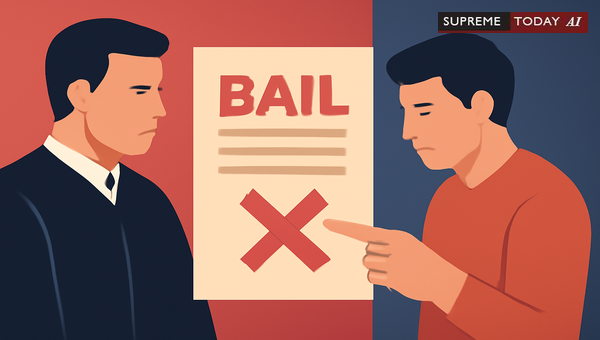
: Jayaben v. Tejas Kanubhai Zala Case Analysis
In the realm of criminal law, few issues generate as much debate as the granting and revocation of bail. The landmark case of highlights critical principles governing when courts may cancel bail, particularly in instances of or . This decision serves as a pivotal reference for understanding the balance between individual liberty and judicial oversight. Whether you're a legal practitioner, an accused facing charges, or simply interested in Indian jurisprudence, this analysis breaks down the ruling's implications.
Note: This post provides general information based on publicly available judgments and is not legal advice. Consult a qualified attorney for specific cases.
The Core Issue:
The question at the heart of this case revolves around the legality of the 's decision to release the accused on bail and the 's subsequent cancellation due to and . In Jayaben v. Tejas Kanubhai Zala, the apex court addressed whether post-bail conduct, such as threats to the complainant or false accusations, justifies revocation. 2025 6 Supreme 541
The clarified that different considerations apply when granting or cancelling bail. Bail grant is discretionary, based on initial facts, while cancellation requires evidence of like misconduct. 2025 6 Supreme 541
Main Legal Findings
The court's primary holding was that bail can be revoked for two distinct reasons: or . For misuse, specific evidence of post-bail misconduct is essential. The judgment emphasized:
Bail can be revoked either for or , with distinct considerations for each. 2025 6 Supreme 541
In this case, the 's bail order was set aside because the accused allegedly threatened the complainant, accompanied co-accused in firing gunshots, and filed false complaints—clear misuse of granted liberty. 2022 1 Supreme 20
Key points from the ruling include:- Post-bail conduct is crucial: Actions like threats or false accusations post-grant are relevant for cancellation. 2025 6 Supreme 541- Challenges to bail orders: These can succeed if the order is illegal, perverse, arbitrary, or ignores material facts. 2025 6 Supreme 541- No shield for misconduct: Bail is not a license for further wrongdoing; courts must revoke it when misuse is proven. 2022 1 Supreme 20
Detailed Analysis: Granting vs. Cancelling Bail
Distinct Principles for Bail Stages
The drew a clear line between bail applications and cancellation petitions. Granting bail involves assessing flight risk, tampering, or gravity of offense under , 439. Cancellation, however, under , demands evidence of breach or misuse. Mere allegations won't suffice; substantial proof is needed. 2025 6 Supreme 541
In , cited in the judgment, bail was cancelled post-grant due to emerging misuse evidence, reinforcing this principle. 2022 0 Supreme(MP) 591
Grounds for Cancellation
The court outlined:1. : Violation of explicit bail terms, like reporting to police.2. : Broader misconduct, e.g., threatening witnesses, even if not a direct condition breach. 2025 6 Supreme 541
Here, the accused's actions—threats and false complaints—constituted misuse, warranting revocation without revisiting pre-bail merits. 2022 1 Supreme 20
Insights from Related Judgments
This ruling has been referenced in subsequent cases, underscoring its precedential value. For instance, in a matter involving suppression of facts, courts upheld cancellation where vital details were hidden in bail applications, echoing Jayaben's caution against misrepresentation.
Suppression of vital facts and misrepresentation in bail applications can lead to the cancellation of bail.
Another decision emphasized that requires substantial compelling reasons; mere FIRs post-bail don't justify revocation without proof of offense commission. This aligns with Jayaben, where documented threats tipped the scale. 2025 Supreme(Online)(MP) 5917
In 2025 Supreme(Online)(MP) 5913, the court dismissed a cancellation plea for lacking criteria, listing specific grounds per precedent like Jayaben: failure to consider material facts or post-bail threats. It noted:
The court identified specific grounds for cancellation of bail while emphasizing that substantial reasoning is required to revoke previously granted bail. 2025 Supreme(Online)(MP) 5913
cases, such as 2022 Supreme(Online)(Guj) 10275, relied on Jayaben (2022(1) Crimes 207 (SC)) to evaluate bail applications, stressing material on record for absconding risk or misuse. 2022 Supreme(Online)(Guj) 10275
Conversely, in scenarios without compelling evidence, like unproven threats, courts deny cancellation to protect liberty, as seen in 2025 Supreme(Online)(MP) 5917. 2025 Supreme(Online)(MP) 5917
Application to the Facts
In Jayaben, the respondent's post-bail behavior—threatening the complainant and associating with co-accused—provided the necessary evidence. The observed:
The 's release of the accused was reviewed and set aside because the found evidence of misuse and breach of bail conditions. 2022 1 Supreme 20
This wasn't arbitrary; it followed established tests, distinguishing from cases where only allegations existed.
Exceptions and Limitations
Cancellation isn't automatic. Courts must find evidence; unsubstantiated claims fail. Pre-bail circumstances influence grant but not post-bail misuse assessments. 2025 6 Supreme 541
Relatedly, in customs smuggling probes at Ahmedabad airport (2020 0 Supreme(Guj) 533), detention upheld despite challenges, but bail contexts stress evidence thresholds akin to Jayaben.
Practical Recommendations for Courts and Litigants
- For courts: Scrutinize post-bail conduct thoroughly before revocation; document evidence meticulously.
- For applicants: Disclose all facts upfront to avoid suppression claims.
- For accused: Adhere strictly to conditions; misuse invites swift cancellation.
- Seek review promptly: Challenge perverse bail grants via appeals.
In JAYABEN vs TEJAS KANUBHAI ZALA - _SC_38183_2019, arising from CRLA No. 1502/2018, the petition reinforced unsustainability of bail ignoring material facts.
JAYABEN vs TEJAS KANUBHAI ZALA
Conclusion and Key Takeaways
The Jayaben v. Tejas Kanubhai Zala judgment reaffirms that bail is a privilege, revocable upon misuse. It protects complainants from intimidation while cautioning against hasty cancellations. Key takeaways:- Misuse like threats justifies revocation with evidence. 2025 6 Supreme 541- Different tests apply to grant vs. cancel.- Courts prioritize liberty but not at justice's expense.
This ruling shapes CrPC bail jurisprudence, cited widely (e.g., 2022(1) Crimes 207 (SC)). Stay informed on evolving precedents to navigate criminal proceedings effectively.
References:1. 2025 6 Supreme 541 - Principles of bail and cancellation.2. 2022 1 Supreme 20 - Case facts and revocation.3. 2022 0 Supreme(MP) 591 - Misuse exemplars.4. Additional sources as integrated.
#BailCancellation, #SupremeCourtIndia, #CriminalLaw














