




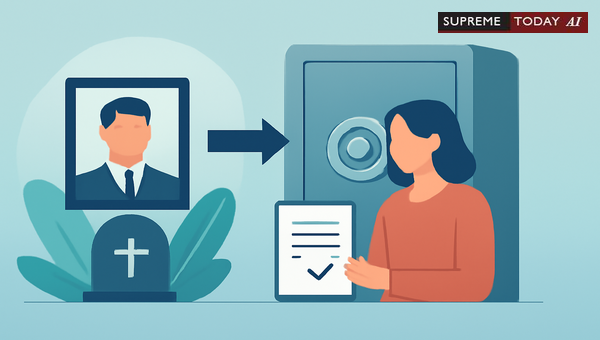
Joint Bank Locker After One Holder's Death: Key Rights
Losing a loved one is challenging enough, but discovering a joint bank locker shared with the deceased can add layers of legal complexity. Many families face questions about access, ownership, and distribution of valuables stored inside. If you've ever wondered, What happens to a joint bank locker on the death of one of the persons?—you're not alone. This post breaks down the general legal principles, bank procedures, and practical steps based on established guidelines and precedents.
Important Disclaimer: This article provides general information only and is not legal advice. Laws and bank policies can vary; consult a qualified lawyer for your specific situation.
Understanding Joint Bank Lockers and Death of a Holder
Bank lockers, also known as safe deposit lockers, are rented spaces where individuals store valuables like jewelry, documents, and gold. When held jointly—meaning two or more people have access—the death of one holder triggers specific protocols. Generally, banks allow surviving joint holders or nominees to access the locker, but ownership of contents isn't automatically transferred. Rights depend on factors like the joint operation type (e.g., ''), nomination status, and bank guidelines. 2023 0 Supreme(Ker) 91 2021 4 Supreme 233
The core principle: Banks act as (custodians), not owners. They verify identities and follow procedures but don't determine final ownership, which may require court intervention if disputed. 2023 0 Supreme(Ker) 91
Bank Procedures for Access After Death
Upon notification of a holder's death, banks typically require:- Death certificate- ID proof of survivors/nominees- Inventory of contents (often prepared jointly with bank officials)
Key guidelines from and banks like outline:- With nomination: gets access after verification. 2023 0 Supreme(Ker) 91- Joint with : Survivors operate as per mandate. 2023 0 Supreme(Ker) 91- Joint signatures required: All survivors plus verification needed. 2023 0 Supreme(Ker) 91
For instance, Clause 10.1 of guidelines states: If the locker was hired solely with a nomination, the bank permits access to the after verifying the death certificate and identification. 2023 0 Supreme(Ker) 91 Banks exercise caution, treating access as , not ownership transfer.
In practice, other sources confirm banks may allow nominees to operate but require an inventory and guarantee: In case of death of the person holding the locker, the Bank may allow the to operate the locker provided an inventory of the articles kept in the locker is prepared and kept in the Bank's safe custody.
Rights of Surviving Joint Holders
Do survivors become absolute owners? Typically, no—at least not automatically. Access rights differ from ownership:- present: Survivor may have stronger claims, akin to joint accounts, but holds in trust for heirs if disputed. Judicial precedents like note: survivors get access but not necessarily absolute ownership without explicit intent.
- No nomination/survivorship: Contents form part of the deceased's estate; may claim via or court order. 2023 0 Supreme(Ker) 91
The bank's role is limited: The bank’s liability and responsibility are limited by its guidelines, and in certain cases, the survivor may be accountable to . 2023 0 Supreme(Ker) 91 Ownership requires proof like wills, deeds, or court rulings.
Role of Nomination vs.
Nominations simplify access but don't confer ownership—nominees act as trustees. In absence of nomination:- Banks may demand succession certificates, though not always for lockers since contents aren't 'debts.'- One ruling clarifies: A cannot be granted in respect of ornaments kept in a bank locker, as they are not debts.
might need or . In a case under , plaintiffs seeking locker operation paid fees as for , not simple declaration: The true principle for determining the proper court fee payable on a plaint is to look at the substance of the plaint and not its ostensible form.
Another view: requirement to have a for access to the bank lockers... is not envisaged by . 2007 Supreme(Online)(Chh) 34
Disputes, Court Interventions, and Bank Liability
Disputes arise from conflicting claims, missing nominations, or emptied lockers. Examples from cases:- In a maintenance dispute, a widow noted her joint locker with deceased husband was empty upon opening post-death, but no unauthorized access proven.
Megha VS Vasantrao
2021 0 Supreme(Bom) 693- Banks as face negligence claims if contents vanish, as in a consumer case where stolen ornaments led to compensation.Courts emphasize: Banks verify but don't adjudicate ownership. In , banks aren't liable for ownership transfer without explicit docs.
If disputes emerge:- Bank freezes locker.- Parties seek court orders.- Heirs prove entitlement via , , or .
In cases where disputes arise (e.g., no nomination, oral agreements, or conflicting claims), courts have emphasized the need for proper legal proof. 2023 0 Supreme(Ker) 91
Exceptions and Special Scenarios
- Sole vs. Joint Hirer: For joint, survivors prioritized; sole hirer death goes to /heirs.
- Oral Agreements/Unregistered Docs: Not recognized by banks. 2023 0 Supreme(Ker) 91
- Criminal Contexts: Lockers may be broken open with authority, as in NDPS cases. 2017 0 Supreme(Guj) 170
- Maintenance Claims: Widows/daughters-in-law may claim from estate, including locker , but proof needed. 2021 0 Supreme(Bom) 693
Key Takeaways and Recommendations
- Plan Ahead: Add nominations and clear survivorship clauses when hiring lockers.
- Post-Death Steps: Notify bank promptly, gather docs, prepare inventory.
- Seek Proof: Survivors should get succession certificates or court orders for undisputed ownership.
- Banks: Adhere to guidelines—verify, inventory, but defer ownership to law.
In summary, joint locker access is feasible for survivors, but contents belong to the estate unless proven otherwise. The legal status of the survivor’s rights—whether they hold the contents as trustees or as absolute owners—is not explicitly settled but is generally understood to be that the survivor’s access does not automatically confer ownership. 2023 0 Supreme(Ker) 91
For personalized guidance, contact a legal expert. Stay informed, secure your assets, and ensure your family's future is protected.
References:1. 2023 0 Supreme(Ker) 91: / guidelines on locker procedures post-death.2. 2021 4 Supreme 233: Bank policies and judicial views on survivor rights.3. Other cases:
,
, 2007 Supreme(Online)(Chh) 34,
Megha VS Vasantrao
, 2021 0 Supreme(Bom) 693,. #JointBankLocker, #LockerDeathRights, #BankLockerLaw















