


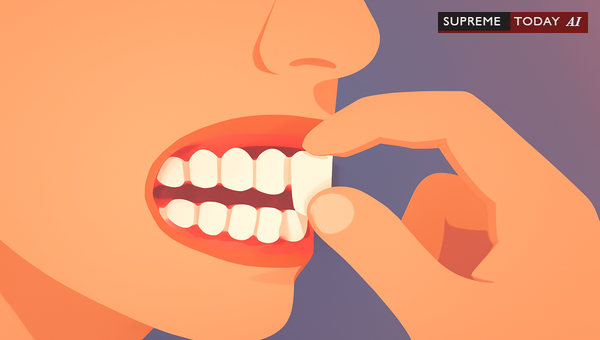
Does a Shaken Tooth Fall Under Section 325 of BNS? A Detailed Legal Breakdown
In the heat of an altercation, injuries like a shaken or dislodged tooth can lead to serious legal consequences. But does such an injury bring the case under , which deals with ? This question often arises in assault cases involving bites or blows to the mouth. While BNS has replaced the , the principles from , 325, and 326 remain relevant for interpretation.
This article examines whether a shaken tooth constitutes under these provisions and if human teeth qualify as . We'll draw from judicial precedents and legal definitions to provide clarity—note: this is general information, not specific legal advice. Consult a lawyer for your case.
What is ? Defining Key Terms
is outlined in (corresponding to BNS provisions on hurt), listing specific injuries such as:- - - or tooth2005 1 Supreme 215
A shaken tooth or dislodged tooth typically falls under , making it if medically confirmed. As one judgment notes, is considered under 2005 1 Supreme 215.
However, punishes (up to 7 years imprisonment), while escalates punishment for by or means. The distinction hinges on the instrument used—not just the injury's severity 2006 0 Supreme(Raj) 173.
Human Teeth: Dangerous Weapon or Simple Means?
A critical point: injuries from are generally not deemed caused by . The in held, human teeth are not even though injuries were caused 2023 0 Supreme(All) 1975. Similarly, the in clarified that injuries caused by teeth bite would be an offence under Sections 324 or 326 IPC depending on whether the injury is simple or grievous, but the teeth themselves are not inherently 2005 1 Supreme 215.
For a shaken tooth from a bite, it may qualify as under Section 320/325, but not automatically under enhanced provisions unless teeth are used as a .
Judicial Precedents on Tooth Injuries
Courts consistently categorize tooth-related injuries carefully:
- In a case, a tooth that became shaken led to conviction under Section 325 IPC, but context involved broader assault
.
- Another ruling noted a dislocated tooth as grievous falling within Section 325 IPC ambit, read with
.
- The Rajasthan High Court observed that a bite will fall within the ambit of Section 325 I.P.C. for tooth injuries, treating it as unless escalated
.
Further, or tooth can be definitely coming under the ambit of as per 2020 0 Supreme(Kar) 1123. Yet, without proof of fracture (e.g., X-ray), convictions may downgrade from 326 to 324 IPC 2020 0 Supreme(Kar) 1123.
In Shakeel Ahmed, even grievous injuries from teeth did not invoke , reinforcing that teeth are not 2023 0 Supreme(All) 1975. A echoed: tooth bite injuries fall under IPC without needing 2013 0 Supreme(Chh) 88.
vs. IPC: Continuity and Changes
BNS 2023 modernizes IPC, but core definitions of (e.g., tooth dislocation) persist. One source references (corresponding to on animal cruelty, but contextually aligned with hurt provisions), stressing proof of injury severity 2025 Supreme(Online)(Mad) 73709. For humans, the focus remains on for without dangerous means.
Courts distinguish : causing grievous injury by a blunt weapon (Section 325) and a sharp edged weapon () 2006 0 Supreme(Raj) 173. Teeth, being natural, align with non-dangerous means.
Exceptions: When Might Apply?
Rarely, if evidence shows teeth used in a manner that qualifies as a dangerous weapon (e.g., biting with the intention to cause grievous harm) 2023 0 Supreme(All) 1975, higher charges may apply. But merely causing a dislocated or shaken tooth, without evidence of use as a dangerous weapon, does not fall under Section 325 as by means of a dangerous weapon.
Mental injuries do not count as : Mental injury does not fall within the ambit of as defined under Section 320 2007 0 Supreme(Cal) 38.
Practical Implications and Recommendations
- For Victims: Get medical evidence (X-rays) to prove dislocation/fracture for claims.
- For Accused: Argue lack of dangerous weapon if bite-related; seek downgrade from 326 to 325/323.
- Prosecutors: Examine intent and means—teeth bites typically under 325, not 326 2023 0 Supreme(All) 1975 2005 1 Supreme 215.
In one appeal, conviction shifted from 323 to 325 IPC for tooth dislocation under Section 320's seventh clause 2015 0 Supreme(Ori) 65. Another upheld 325 for shaken tooth in mouth injury
.
Key Takeaways
- A shaken/dislocated tooth is under /BNS equivalents 2005 1 Supreme 215.
- Human teeth are not , so typically Section 325, not 326 2023 0 Supreme(All) 1975.
- Always prove injury nature medically; intent matters for charges.
- BNS maintains IPC-like distinctions for hurt classifications.
In conclusion, a shaken tooth does not inherently fall under enhanced dangerous weapon ambit but qualifies as under /IPC 325. Judicial trends favor measured application based on evidence 2006 0 Supreme(Raj) 173 2015 0 Supreme(Ori) 65.
This analysis is for informational purposes. Laws evolve, and outcomes depend on facts. Seek professional legal counsel. References drawn from cited judgments.
#Section325BNS #GrievousHurt #ToothInjuryLaw












