Searching Case Laws & Precedent on Legal Query.....!
Analysing the retrieved Case Laws
Scanned Judgements…!



Searching Case Laws & Precedent on Legal Query.....!
Analysing the retrieved Case Laws
Scanned Judgements…!
Divorce by Triple Talaq - Legality and Proof The pronouncement of triple talaq (instant divorce) is considered illegal following the Supreme Court judgment in Shayara Bano case. Proving such divorce requires clear evidence; mere pleadings or photocopies of talaqnama at late stages cast doubt on its validity. If proven, the wife’s right to maintenance persists until she remarries. The core issue in cases often revolves around whether the husband’s plea of triple talaq has been conclusively proved.["2023 0 Supreme(All) 1209"]
Tribal Community Recognition and Certification Several sources discuss the recognition of tribal communities, specifically the Kurumans, with official reports and government orders determining community status. Challenges arise when authorities, such as the State Level Scrutiny Committee, deny community certificates based on updated reports, impacting the community’s Scheduled Tribe status.["2022 Supreme(Online)(Mad) 60535"], ["2024 Supreme(Online)(MP) 29109"], ["2022 Supreme(Online)(Mad) 60535"]
Tribal Welfare and Administrative Setup The Department of Tribal Welfare in Madhya Pradesh maintains a structured administrative hierarchy, including commissioners, collectors, and block education officers, to oversee tribal affairs and welfare activities. These officials are responsible for implementing policies and verifying community claims.["2022 Supreme(Online)(MP) 8803"]
Muslim Law and Judicial Divorce Under Muslim law, divorce can be initiated by the husband’s direct pronouncement, khula (mutual consent with consideration), or judicial decree by a Kazi or court. The husband’s unilateral divorce requires adherence to prescribed procedures, including restrictions on timing (e.g., during menstruation) and the number of pronouncements (e.g., triple talaq). Judicial divorce involves a court’s intervention and is governed by religious and civil procedures.["
KING v. MISKIN UMMA et al.
"], ["2023 0 Supreme(Mad) 924"], ["SULE AMMA v. MOHAMMADO LEBBE PADILY
"]Irrevocable Divorce and Religious Perspectives Pronouncing triple talaq three times (talaq-e-bid’ah) results in an irrevocable divorce, which is viewed negatively in Islamic teachings. The Prophet condemned divorce without genuine cause, emphasizing its sinful nature. The practice of pronouncing divorce during menstruation is prohibited, and improper procedures can invalidate the divorce.["2024 Supreme(JK) 533"]
Legal Proceedings and Challenges in Divorce Cases Divorce petitions based on irretrievable breakdown or cruelty are subject to legal scrutiny. Violations of court orders, such as proceeding with divorce proceedings despite anti-suit injunctions, can lead to legal complications. Recognition of foreign divorce judgments can be challenged if they violate Indian laws or procedural requirements.["2023 0 Supreme(Mad) 924"]
Analysis and ConclusionDivorce in tribal contexts involves complex legal and procedural issues, often intertwined with community recognition and rights. Under Muslim law, divorce procedures are strictly regulated, with triple talaq being a contentious and illegal method post-Shayara Bano. The recognition of tribal status impacts access to welfare and legal rights, with official verification being crucial. Overall, the legal framework emphasizes procedural correctness, religious doctrines, and community recognition, shaping the landscape of divorce and tribal affairs in India.
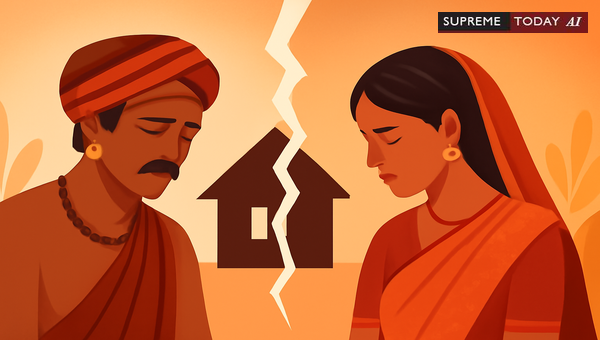
Divorce can be a complex process anywhere, but when it involves tribal communities in India, it layers on unique challenges blending ancient customs with modern . If you've ever wondered, Divorce in Tribal communities?, you're not alone. Many individuals from tribal backgrounds seek clarity on whether customary practices govern their separations or if general laws like the , apply. This post breaks it down, drawing from key legal findings and case precedents to provide a comprehensive overview.
Disclaimer: This article offers general information based on legal precedents and is not a substitute for professional legal advice. Consult a qualified lawyer for your specific situation.
In tribal communities, divorce often hinges on whether customary practices are recognized or if take precedence. Generally, tribal marriages and divorces follow , but these are subject to limitations and must be proven in court. Courts typically uphold like the Hindu Marriage Act unless customs are explicitly pleaded and established. Moreover, judicial discretion under allows divorce on grounds like , even in tribal contexts 2022 0 Supreme(Raj) 771.
Key points include:- Tribal communities frequently rely on for marriage and divorce, which may lack codification 2021 0 Supreme(Jhk) 125.- The Hindu Marriage Act applies to Hindus (including Buddhists, Jains, Sikhs) unless tribes are exempted 2024 0 Supreme(Telangana) 692.- Courts can invoke Article 142 for in cases 2022 0 Supreme(Raj) 771.
The , broadly covers those professing Hinduism, but tribal customs often carve out exceptions. Courts recognize that for many tribes, marriage and divorce are governed by traditions not formalized in statutes. However, customs must be specifically pleaded and proved—simple tribal affiliation isn't enough 1985 0 Supreme(SC) 207.
For instance, in cases involving communities like the Lohar, courts have ruled they are not Scheduled Tribes and follow distinct customs outside statutory purview 1996 2 Supreme 167. Similarly, recognition of tribes like Kurumans as Scheduled Tribes requires scrutiny by committees, impacting legal applicability
. The may rely on revenue reports to determine status, as seen in challenges to tribal certifications.
The applicability of the , to tribal communities depends on whether their customs align with the Act’s provisions; otherwise, prevail 2024 0 Supreme(Telangana) 692.
hold sway in tribal divorces but face hurdles. They must be documented and proven; without this, courts default to statutory options like or 2021 0 Supreme(Jhk) 125. Customs cannot be arbitrarily altered by courts—only Parliament can designate Scheduled Tribes or codify practices 2000 8 Supreme 429.
In practice, lead courts to apply general personal laws if the tribe professes Hinduism. A writ petitioner from the Scheduled Tribe (Plains) community highlighted how tribal status influences legal rights, though in an admission context, underscoring the need for verified status 2003 0 Supreme(Gau) 566.
Limitations include:- Customs require specific proof; general claims fail 1985 0 Supreme(SC) 207.- No court-modified tribal lists—Parliament's domain 2000 8 Supreme 429.- Unrecognized customs yield to statutes 2024 0 Supreme(Telangana) 692.
A powerful tool for tribal divorce cases is Article 142, empowering the to do . This allows dissolution for , bypassing rigid customs or statutes if facts warrant it 2022 0 Supreme(Raj) 771. The Shilpa Sailesh judgment affirms this situational power, applicable even where statutory grounds are absent 2022 0 Supreme(Raj) 771.
The law permits courts to exercise discretionary powers, including under , to dissolve marriages on grounds like , even for tribal communities where statutory law does not explicitly apply 2022 0 Supreme(Raj) 771.
This discretion ensures fairness, especially when customs prolong dead marriages.
For tribal couples, the path forward depends on context:- Proven customs: Courts may honor traditional divorce if established.- Unproven or conflicting customs: Statutory routes like Hindu Marriage Act apply.- : Seek judicial intervention via Article 142.
Tribal welfare contexts, such as employees in tribal hostels, reflect community integration into state systems, potentially subjecting them to broader laws 2023 Supreme(Online)(MP) 24302. In matrimonial disputes, this underscores documenting customs for enforceability.
Exceptions are clear:- No automatic statutory exclusion without proof 1985 0 Supreme(SC) 207.- Parliamentary sole authority on tribal status 2000 8 Supreme 429.- Codification key for custom validity 2024 0 Supreme(Telangana) 692.
Recommendations for navigating tribal divorces:- Document customs: Formalize practices for court recognition.- Prove tribal status: Use scrutiny committees if needed
.- Invoke discretion judiciously: For irretrievable cases under Article 142.- Advocate reforms: Codify tribal laws to reduce ambiguity.
Divorce in Indian tribal communities primarily follows if proven and recognized, but statutory frameworks like the Hindu Marriage Act often fill gaps. Courts' Article 142 powers provide flexibility for justice in irretrievable breakdowns 2021 0 Supreme(Jhk) 125 2022 0 Supreme(Raj) 771. Always plead and prove customs meticulously 2024 0 Supreme(Telangana) 692.
In summary, while traditions endure, modern courts balance them with equity. For personalized guidance, reach out to a family law expert familiar with tribal matters. Stay informed, and approach separations thoughtfully.
: Tribal status scrutiny.


Secondly, even if for the sake of arguments, it is assumed that the husband was able to prove that he indeed divorced his wife by pronouncing trible talaaq, wife’s right to obtain maintenance shall continue till she does not re-marry. ... Respondent no.2, to stress his plea of divorce could only file photocopy of talaqnama that too at a very late stage of the trial, hence the plea of divorce was quite doubtful; learned trial court took correct view that the petitioner was entitled for maintenance; the petitioner was never paid any amount ....

COMMISSIONER DEPARTMENT OF TRIBLE WELFAR E SATPURA BHAWAN BHOPAL (MADHYA PRADESH) 3. COLLECTOR (BRANCH) DEPARTMENT OF TRIBLE WELFARE DISTRICT JHABUA (MADHYA PRADESH) 4. ... DEPUTY COMMISSIONER DEPARTMENT OF TRIBLE WELFARE OPPOSITE GOVERNMENT SCIENCE COLLEGE, POST G.P.O., A.B. ROAD, INDORE (MADHYA PRADESH) 5. ... ASSISTANT COMMISSIONER DEPARTMENT OF TRIBLE WELFARE DISTRICT JHABUA (MADHYA PRADESH) 6. BLOCK EDUCATION OFFICER (BEO) BLOCK RANAPUR, DISTRICT JHABUA (MADHYA PRADESH) Signature Not Verified 7.
SUMANTRA BAI W/O LAXMAN SINGH, AGED ABOUT 54 YEARS, OCCUPATION: POST RASOIYA (PEON) WORKING AS TRIBLE WELFARE GIRLS HOSTEL KUDIYA DISTRICT HARDA (MADHYA PRADESH) 7. SMT. ... SUGRATI BAI SARIYAM W/O RADHESHYAM, AGED ABOUT 52 YEARS, OCCUPATION: JALWAHAK (PEON) POSTED AT TRIBLE GIRLS HOSTEL REHATGAON TEHSIL TIMARNI DISTRICT HARDA (MADHYA PRADESH) 6. ... KHUMAN SINGH S/O SHRI SALAK, AGED ABOUT 47 YEARS, OCCUPATION: JALWAHAK (PEON) POSTED AT TRIBLE BOYS HOSTEL MORGADHI THE KHIRKUYA DISS HARDA (MADHYA PRADESH) 3.

filed under Article 226 of the Constitution of India seeking issuance of Writ of Mandamus, directing the respondent to issue community certificates to the petitioner's daughters viz., M.S.Kripalanishree and M.S.Shakshithashree to the effect that they belong to “Kurumans” Scheduled Trible ... The prayer in the Writ Petition reads as follows:- directing the respondent to issue community certificates to the petitioner's daughters viz., M.S.Kripalanishree and M.S.Shakshithashree to the effect that they belong to “Kurumans” Scheduled Trible within a reasonable

A perusal of the case diary it reflects that the offences are trible by the Magistrate. ... It is contended by the counsel that the offences are trible by the Magistrate and the maximum punishment is 3 years. It is further contended by the counsel that the (MANINDER S. BHATTI) JUDGE co-accused Smt. Nidhi Saxena has already been enlarged on regular bail by the trial Court.
Additional Commissioner, Tribal Development reported in 1994 (6) SCC 241, concluded that the petitioners belong to the Scheduled Trible called “Kurumans”. The Anthropologist also was of the same opinion. ... The State Level Scrutiny Committee chose to rely upon the reports of the Revenue Divisional Officer and the District Collector of the year 2015 and 2017 respectively to conclude that the petitioners do not belong to the Scheduled Trible community called “Kurumans”. ... Challenge in the Writ Petition is to the order of the State Level Scrutiny Committe....
Muslim law-Divorce by wife-Judicial decree-Civil Procedure Cods, Chapter XLII. Under the Muslim law a wife is only entitled to a divorce if her husband effects the divorce himself, or the divorce is granted by a decree of Court. ... Now that elders are no longer recognized, the husband has the right of divorce straight away. The second method of divorce is by khula, where the wife wants the divorce with the consent of the husband, the consideration being the ....

In case of irrevocable divorce where husband pronounces divorce twice i.e. two consecutive tuhrs and thereafter decides not to live with his wife or pronounces a third divorce, the husband pronounces triple divorce or uses any other form of divorce to make it clear that it is to operate irrevocably, ... The Prophet was once informed that Abu Ayyub Al-Ansari was determined to divorce Umm Ayyubhis wife. The Prophet knowing that the divorce of Umm Ayyub was not grounded ....
Therefore, it could be seen that the divorce petition was not only filed on the ground of irretrievable breakdown of marriage but also on the ground of cruelty which is also one of the grounds for divorce under the Divorce Act. ... In violation of the said anti-suit injunction order, the husband had proceeded with the divorce proceedings and an order of divorce has been granted on 27.02.2018. ... Therefore, according to the learned Senior Counsel, the ground of irretrievable breakdown of marriage is not....
Mohammedan Law-Divorce-" Tollok "-" Letters of Divorce " Mohammedan Code of 1806, ss. 87, 88, 89. ... husband shall give to his wife written letters of divorce? ... It was also of opinion, on the authority of MacNaghten, that the repetition of the words of divorce, when divorce can be verbal, must be made on several occasions. ... Looking to a certain admission of the defendant, the evidence of the witnesses, and to the fact of the parties having lived separate from the time of the alleged #HL_....

Such divorce would be considered as single-term-divorce associated with a sin on the part of the husband for giving three-in-one divorce." (page 212) The divorce takes effect when the husband issues triple divorce whether in a single sentence, or in a single session during the wife's purity from menstruation period.

The Magistrate still has power to examine as to whether accused persons deserved to be discharged under Section 239 Cr.P.C. 15) High Court should not assume the role of a Trial Court and embark upon an enquiry as to reliability of evidence and sustainability of accusation on a reasonable appreciation of such evidence. Moreover, all the offences are trible by Magistrate. Matter would have been different had the offences been trible as a Sessions case.

2. Writ petitioner is a member of Scheduled Trible (Plains) Community. Thereafter, she pursued her Higher Secondary Course in science stream from Kendriya Vidyalaya, Dullajan, Assam and came out successful in the said examination in the year 2003 having secured 78% of marks. The petitioner appeared in All India Secondary School Examination (Matriculation) in the year 2001 under the Central Board of Secondary Education and came out successful securing 85% of marks.

Looked from any angle, the petitioner does not even have a trible cause. On the contrary, it is quite apparent to this Court that this petition has been filed with a view to perpetuate the injustice caused to respondent Nos. The plea with regard to civil litigating between Surinder Singh and some of the private respondents has since already been taken care of in the earlier writ petition, mentioned above. 4 to 67 for whose benefit alone this land was acquired.

From the above facts (sic) and that large number of lodging rooms available there can be no doubt that a reasonable reception counter is necessary for running the business. The lodging has 33 rooms consisting of double or trible rooms. It is also a fact that those who come to book the rooms require some space to keep their luggage until they procure the rooms.


An indispensable Tool for Legal Professionals, Endorsed by Various High Court and Judicial Officers
Please visit our Training & Support
Center or Contact Us for assistance

Scan Me!
India’s Legal research and Law Firm App, Download now!


For Daily Legal Updates, Join us on :



 Back to top


