


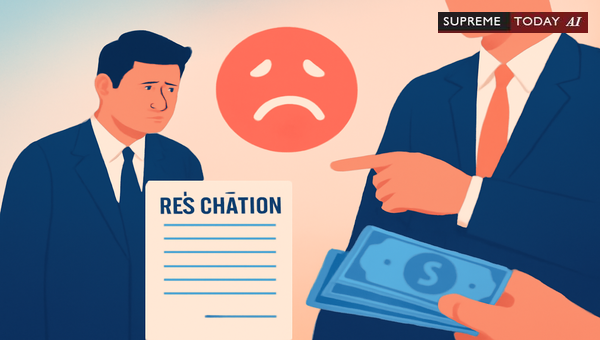
Is Resignation Valid if Employer Fails to Pay Wages?
In today's fast-paced work environment, disputes over unpaid wages can lead to abrupt resignations. But what happens when an employee quits because the company hasn't paid agreed remuneration? Is a resignation valid if the company failed to pay remuneration which was agreed? This question arises frequently in employment disputes, especially in Malaysia under the .
This article explores the legal principles governing resignation validity, drawing from key court decisions. We'll examine whether non-payment alone invalidates a resignation or if additional factors like coercion are required. Note: This is general information, not specific legal advice. Consult a qualified lawyer for your situation.
Understanding Resignation Validity in Malaysian Employment Law
Generally, a resignation is considered valid if tendered voluntarily by the employee, even amid employer failures like non-payment of wages. Courts emphasize the employee's intent and freedom in deciding to resign. As established in legal precedents, a resignation is generally considered valid if the employee voluntarily tenders it, even if the employer has failed to pay some agreed remuneration, provided the employee’s resignation was not coerced or induced by the employer’s misconduct.
Key Principles of
- Voluntary Nature: Resignations are upheld unless proven coerced. Mere dissatisfaction, such as unpaid wages, doesn't suffice.
- : The employee must demonstrate coercion or . Non-payment alone rarely meets this threshold.
- Court Scrutiny: Judges review circumstances, like how the resignation letter was prepared and submitted. For instance, a letter typed at home without supervision supports voluntariness.
In
, the employee signed a resignation after partial payments, and the court ruled no coercion existed, stating that non-payment of wages alone does not automatically invalidate a resignation unless the employee can prove coercion or .
Impact of Non-Payment of Agreed Remuneration
Failure to pay salaries, bonuses, or statutory contributions breaches contracts but doesn't automatically void a resignation. Courts distinguish between and forced resignations.
Case Examples on Wage Non-Payment
- In
, the employee's requests for statutory contributions weren't coercive; the resignation was voluntary despite the breach.
- Similarly,
clarified: the employee failed to substantiate claims of coercion, and the resignation was deemed voluntary.
Other sources reinforce this. In
, a claimant alleged due to performance issues and payment disputes, but the court found it voluntary, noting: equates to dismissal if proven that an employer coerced an employee; the lies on the employee. The claimant negotiated compensation and signed a , negating coercion claims. (Paras 41, 42, 100)
Non-payment can contribute to if it fundamentally breaches the contract. In
, delayed salaries and non-remittance of contributions justified : The Company's failure to pay salary and remit statutory contributions constituted . (Paras 19, 20, 66, 72) However, this requires the employee to treat it as termination, not resignation.
Coercion, Threats, and
Resignations become invalid if akin to dismissal through employer misconduct.
Elements of Coercion
- Threats or Pressure: Withholding wages as punishment or coupling it with harassment may qualify.
- Proof Required: Employees must provide evidence; unsubstantiated claims fail. In
, lack of conclusive evidence upheld the resignation.
From
, A equates to a dismissal if proven... lies on the employee to establish claims of . (Paras 41, 42, 100) The court dismissed the claim as the resignation was negotiated voluntarily to avoid inquiry.
In contrast, Indian cases like 2019 0 Supreme(Kar) 1347 show courts rejecting claims without evidence: The court found that the plaintiff was not forced to resign... no evidence to support the plaintiff's claim.
vs. Resignation
If non-payment creates an intolerable environment, employees may claim under . This differs from resignation:
| Aspect | Resignation | ||--------|-------------|------------------------|| Initiative | Employee chooses to leave | Employee terminates due to employer's breach || Validity | Valid if voluntary | Treated as dismissal without just cause || Proof | Presumed voluntary | Employee proves fundamental breach
|
In
, unilateral changes and non-payment led to success: Employee entitled to terminate contract if employer's conduct breaches fundamental terms. (Paras 19, 20, 25, 27)
Exceptions and Limitations
- Proven Coercion: Resignation may be reclassified as dismissal.
- No Automatic Invalidation: Mere non-payment of wages, without evidence of coercion, does not automatically invalidate resignation.
- Performance Contexts: PIPs or inquiries don't coerce unless abusive.
International parallels, like 2023 Supreme(Online)(NCLT) 1643, involve resignations tied to payment beliefs, but validity hinges on voluntariness.
Practical Recommendations for Employees and Employers
For Employees
- Document all payment requests and employer responses.
- Avoid resigning impulsively; consider claims.
- Gather evidence of coercion if alleging .
For Employers
- Pay dues promptly to prevent disputes.
- Ensure resignations are accepted with clear records.
- Implement fair performance processes to avoid coercion claims.
Employers should pay all agreed wages and statutory contributions before accepting resignation to avoid disputes.
Conclusion and Key Takeaways
In summary, a resignation typically remains valid even if remuneration is unpaid, provided it's voluntary and free from coercion. Courts prioritize evidence, placing the burden on employees. While non-payment breaches contracts, it rarely invalidates resignations without more.
Key Takeaways:- Voluntary resignations stand unless coercion proven.
- Non-payment may support claims.
- Always document interactions to protect rights.
Stay informed on employment laws to navigate these issues effectively. For personalized guidance, seek professional legal counsel.
References:1.
2.
3.
4.
5.
6.
#EmploymentLaw, #ResignationRights, #MalaysiaLabourLaw















