



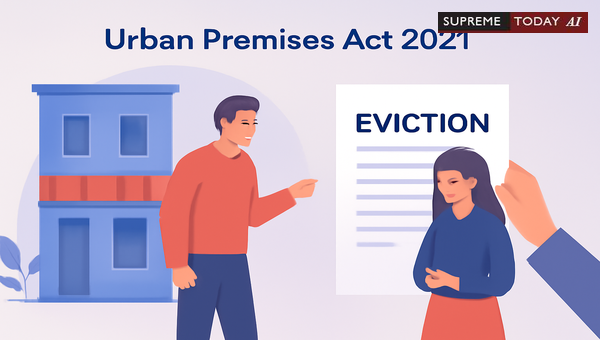
: Navigating Limitations, Tenant Rights, and Eviction
In the dynamic landscape of landlord-tenant relationships in Uttar Pradesh's urban areas, the has introduced significant changes. Replacing the longstanding , this new legislation addresses modern tenancy challenges while preserving certain procedural continuities. A key query often arises: Is the applicable in matters under the Public Premises Act? While the 2021 Act primarily governs private urban premises, intersections with public premises laws, such as the , highlight nuanced applications of limitation periods, jurisdiction, and eviction processes. This post delves into core principles, landmark cases, and practical insights to help landlords, tenants, and legal professionals understand these evolving rules.
Overview of the
The 2021 Act repeals the 1972 Act but includes a crucial under , allowing ongoing cases under the old law to proceed uninterrupted as if the previous law were still in force 2023 0 Supreme(All) 710. This ensures procedural stability but raises questions about limitation periods, especially when public premises are involved. Typically, limitation laws may apply to bar stale claims, but special statutes like public premises eviction acts often override general limitation periods to prioritize public interest evictions 2002 0 Supreme(All) 1352.
The Act regulates letting, rent fixation, and eviction in urban buildings, excluding certain properties like waqf lands. It balances tenant protections with landlord rights, emphasizing and fair rent determination.
Key Legal Principles from Landmark Cases
1. Applicability and Exemptions
Not all properties fall under the Act. are exempt, as affirmed in a case where the trial court ruled that a waqf-classified property was not governed by the U.P. Act No. 13 of 1972, favoring the landlord 1996 0 Supreme(All) 1107. This exemption underscores the need to verify property status before initiating proceedings.
In public premises contexts, jurisdiction under the , remains intact despite overlapping urban development laws. Courts have held that the 1972 Public Premises Act and the , operate in distinct fields, with no . The 1972 Act is a for eviction of unauthorized occupants from public premises 2002 0 Supreme(All) 1352. Limitation periods generally do not bar such , prioritizing expeditious clearance.
2. Tenant Rights and Eviction Grounds
Tenant protections are robust but not absolute. Under Section 20(4) of the 1972 Act (mirrored in the new framework), courts assess arrears, damages, and retention rights. In one dispute, the court directed vacation due to arrears, stressing this section's role 2011 0 Supreme(All) 139.
Eviction orders based on non-payment and valid under the are routinely upheld when the Act does not apply. The court found that the Act was not applicable, allowing the landlord to proceed with eviction 2008 0 Supreme(All) 1655.
Relatedly, in under , landlord's (e.g., for family business) must be genuine. Courts limit judicial review under , refusing to disturb factual findings unless occur. Court held that this Court has very limited scope under ... no good ground exists warranting interference 2021 0 Supreme(All) 457.
3. Jurisdictional Nuances
retain jurisdiction in landlord-tenant suits, dismissing challenges to the Act's applicability 2010 0 Supreme(All) 3559. also handle injunction suits, even post-2021 Act. The U.P Regulation of Urban Premises Tenancy Act, 2021 does not bar from entertaining suits for by tenants against eviction 2024 0 Supreme(All) 1649. The Act does not empower rent authorities for such reliefs; civil jurisdiction persists 2024 0 Supreme(All) 1649.
For non-agricultural leased lands, adjudicate injunctions under the U.P. Revenue Code, 2006 (Sections 94, 95, 206). Plaints cannot be partially rejected: The ; it must be rejected as a whole if grounds exist to do so 2025 0 Supreme(All) 3086.
4. Rent Determination and Related Disputes
Courts hesitate to interfere with Rent Control Officers' decisions absent errors. Appeals from both sides were dismissed in one case, upholding the determination 2013 0 Supreme(All) 36.
Rent calculations under the 1972 Act include taxes: As per the interpretation of , the tenants were liable to pay 18% house tax and water tax over and above the rent 2019 0 Supreme(All) 1533. Termination notices remain valid when properly issued.
Intersections with repealed laws like the , require due process. Tenants-turned-owners can challenge improper notices: The court set aside the notice and directed proper proceedings according to law 2025 Supreme(Online)(Cal) 3241. Post-repeal demands for premiums on entire lands (including private portions) are impermissible 2023 0 Supreme(Bom) 1247.
Limitations in Public Premises Matters
Addressing the core question— is Applicable in the Matter of Public Premises Act—special eviction statutes like the Public Premises Act typically feature abbreviated or no limitation bars to enable swift action against unauthorized occupants. General limitation laws under the , may not apply rigidly, as these are complete codes. However, for ongoing tenancies transitioning to the 2021 Act, saving clauses preserve timelines from the old regime 2023 0 Supreme(All) 710. Parties should act promptly to avoid procedural lapses, consulting counsel for case-specific applicability.
Practical Recommendations
- Landlords: Verify Act applicability (e.g., no waqf exemption), issue compliant notices, and leverage bona fide need claims judiciously 2021 0 Supreme(All) 457.
- Tenants: Assert rights via civil injunctions where rent authorities lack power 2024 0 Supreme(All) 1649, and challenge improper demands under repealed ceiling laws 2023 0 Supreme(Bom) 1247.
- Legal Practitioners: Monitor impacts; note ' role in non-barred suits 2025 0 Supreme(All) 3086.
Conclusion and Key Takeaways
The , modernizes tenancy laws while respecting prior proceedings. Key takeaways include waqf exemptions 1996 0 Supreme(All) 1107, civil jurisdiction persistence 2024 0 Supreme(All) 1649, and limited limitation applicability in public premises for efficient evictions 2002 0 Supreme(All) 1352. Outcomes hinge on property type, jurisdiction, and procedural adherence.
This article provides general insights based on reported cases and is not legal advice. Consult a qualified attorney for personalized guidance.
References:2023 0 Supreme(All) 710 1996 0 Supreme(All) 1107 2011 0 Supreme(All) 139 2010 0 Supreme(All) 3559 2013 0 Supreme(All) 36 2008 0 Supreme(All) 1655 2025 Supreme(Online)(Cal) 3241 2025 0 Supreme(All) 3086 2023 0 Supreme(Bom) 1247 2024 0 Supreme(All) 1649 2021 0 Supreme(All) 457 2019 0 Supreme(All) 1533 2002 0 Supreme(All) 1352
#UrbanPremisesAct #UPLandlordTenant #EvictionLaws







