Searching Case Laws & Precedent on Legal Query..!
Scanned Judgements…!



Searching Case Laws & Precedent on Legal Query..!
Scanned Judgements…!
Muslim Male Filing for Divorce - Muslim men have the legal right to initiate divorce under Islamic law and statutory provisions. Courts in some jurisdictions recognize this right and have the authority to entertain divorce applications filed by Muslim males, including proceedings based on Talaq, Ila, Zihar, Lian, Khula, and Mubaraat. The Family Court is empowered to hear such cases, and statutory laws like the Muslim Marriage and Divorce Act, 1939, provide specific procedures for dissolution of marriage. ["2025 Supreme(Online)(MP) 935"]
Legal Procedures and Grounds - Divorce can be sought through out-of-court methods (Talaq, Khula, Mubarat) or via court under the Dissolution of Muslim Marriages Act, 1939. Validity depends on adherence to Muslim marriage essentials, such as consent, presence of witnesses, and the absence of a subsisting marriage with another man. Courts have also recognized mutual consent and judicial decrees as valid grounds for divorce. ["2025 Supreme(Online)(Ker) 56022"], ["2023 Supreme(Online)(MAD) 35161"]
Jurisdiction and Court Authority - Magistrates' courts generally lack jurisdiction to hear Muslim divorce claims unless specifically authorized, as jurisdiction is often vested in Quazis or specialized courts. Appointments of Quazis and their authority are subject to legal and constitutional validation. ["
ISMAIL v. MUTHU MARLIYA
"]Custody and Rights of Women and Children - After divorce, women are entitled to custody of minor children until a certain age (usually 7 years for boys). The law recognizes the wife's right to seek divorce and custody, often through civil suits or Khula, and courts consider the best interests of the child in custody disputes. ["2025 Supreme(Online)(Mad) 58074"]
Mutual Consent and Settlement - Many cases involve mutual consent divorce, often documented through Talaqnama or divorce deeds, with parties settling all disputes amicably and legally terminating the marriage. Such agreements are recognized by courts, provided they comply with Muslim law and procedural requirements. ["2023 0 Supreme(Del) 10740"]
Additional Insights - Muslim men can contract multiple marriages if they follow prescribed procedures, including notices to authorities and existing wives. The law accommodates polygamy under specific legal frameworks, but the rights and obligations of spouses are subject to legal and religious norms. Courts have also addressed issues like the validity of subsequent marriages and the rights of women post-divorce. ["
THE ATTORNEY GENERAL v. A.E. REID
"]Analysis and Conclusion:A Muslim male can indeed file for divorce legally and under Islamic law, with courts recognizing and enforcing such rights through various procedures, including Talaq and judicial decrees. While the law grants Muslim men significant authority to divorce, this power is subject to legal procedures and safeguards, especially concerning the rights of women and children. Courts have clarified jurisdictional limits and emphasized adherence to both religious and statutory requirements in divorce proceedings.
References:- 2025 Supreme(Online)(MP) 935- 2025 Supreme(Online)(Ker) 56022- 2024 Supreme(Online)(MAD) 38210- 2025 Supreme(Online)(Mad) 58074-
ISMAIL v. MUTHU MARLIYA
- 2024 Supreme(Online)(AP) 23334- 2023 Supreme(Online)(MAD) 35161- 2023 0 Supreme(Del) 10740-THE ATTORNEY GENERAL v. A.E. REID
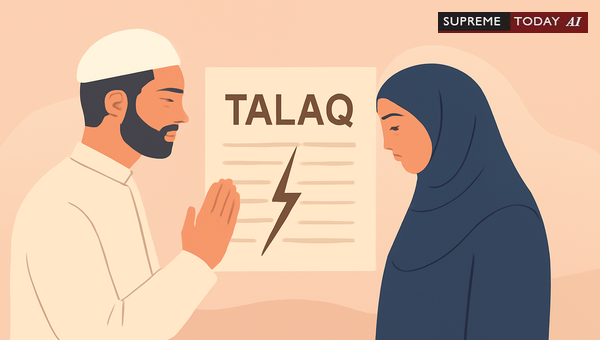
Divorce is a sensitive and often misunderstood aspect of in India. Many believe a husband can simply pronounce '' three times to end a marriage instantly—a notion popularized but legally incorrect. What is the Procedure for a Husband to Initiate Divorce in Islam? This question arises frequently amid evolving judicial interpretations and the push for gender justice. Under , as applied in India, divorce () by a husband requires strict adherence to Islamic procedures emphasizing reconciliation, fairness, and evidence. Failure to comply can render the divorce invalid, leading to legal challenges.
This guide breaks down the valid processes, highlights invalid practices, and draws from key judicial precedents. Note: This is general information based on established principles and should not be taken as specific legal advice. Consult a qualified lawyer for personalized guidance.
Muslim law views marriage as a civil contract but permits dissolution under prescribed conditions. The husband's right to is not absolute or unilateral; it demands procedural compliance to align with Islamic injunctions. Courts in India have repeatedly stressed that arbitrary divorces are unlawful 1967 0 Supreme(SC) 47 2006 0 Supreme(Bom) 1370.
Key principles include:- Reconciliation First: Efforts to save the marriage are mandatory before finalizing divorce 2006 0 Supreme(Bom) 1370 1967 0 Supreme(SC) 47.- Specific Forms: must follow recognized formats like -e-Ahsan or -e-Hasan 2006 0 Supreme(Bom) 1370.- Proof Required: Oral or written claims alone are insufficient without evidence of proper execution 2006 0 Supreme(Bom) 1370.
Unilateral, capricious pronouncements, such as in one sitting, are invalid and against Islamic tenets 2002 7 Supreme 39 2006 0 Supreme(Bom) 1370.
Before pronouncing , the husband must initiate reconciliation. This typically involves:- Appointing arbitrators (one from each spouse's family) to mediate and resolve disputes 2006 0 Supreme(Bom) 1370 1967 0 Supreme(SC) 47.- Allowing time for cooling off and family intervention.
Islamic law mandates this to prevent hasty decisions, ensuring the marriage isn't dissolved lightly.
The core act is the pronouncement, which must be:- Clear and Explicit: Stated in Arabic or understandable terms, e.g., 'I divorce you.'- During : Made in a period of purity (non-menstrual cycle) for non-pregnant wives 2006 0 Supreme(Bom) 1370.- In Presence of Witnesses: Preferably Muslim witnesses or a Qazi (Islamic judge) 2006 0 Supreme(Bom) 1370.
Post-pronouncement, the wife observes . becomes final and irrevocable only after this, barring revocation in revocable forms 2006 0 Supreme(Bom) 1370.
Not all pronouncements qualify as divorce. Courts invalidate:- in One Go: Pronouncing '' three times arbitrarily is unlawful and sinful per Islamic scholars, and legally ineffective 2002 7 Supreme 39 2006 0 Supreme(Bom) 1370.- Pronounced in Anger or Jest: If procedures are followed, it may still hold, but intent and compliance are scrutinized 2006 0 Supreme(Bom) 1370.- Without Witnesses or Reconciliation: Mere statements lack validity 2006 0 Supreme(Bom) 1370.
The misconception of unchecked unilateral power ignores Islamic safeguards for women's rights 2002 7 Supreme 39 1967 0 Supreme(SC) 47.
Indian courts uphold but intervene for procedural lapses. To validate :- Burden of Proof: Husband must prove pronouncement, timing, witnesses, and reconciliation attempts 2006 0 Supreme(Bom) 1370.- Challenges: Wives can file suits for declaration of marriage subsisting if is flawed.
In recent proceedings like those referenced in O.S. No. 98 of 2024 before the , a husband invoked and to seek divorce. However, such filings underscore the need for judicial oversight, especially when distances and dependencies complicate matters for the wife 2024 Supreme(Online)(AP) 22540. Courts here emphasize evidence beyond mere filings.
Deviations render ineffective, protecting against misuse 2002 7 Supreme 39.
Even if pronounced in jest, procedural adherence may validate it, but courts probe deeply 2006 0 Supreme(Bom) 1370.
To ensure a valid, hassle-free process:- Engage family or a Qazi early for arbitration.- Document every step with witnesses.- Avoid impulsive actions; seek counseling.- File for judicial confirmation if contested.
Promote awareness to safeguard families and comply with law 1967 0 Supreme(SC) 47.
| Aspect | Valid Requirement | Invalid Example ||--------|--------------------------|-----------------|| Reconciliation | Mandatory arbitration 2006 0 Supreme(Bom) 1370 | Skipped || Pronouncement | During , witnessed 2006 0 Supreme(Bom) 1370 | Triple in one sitting 2002 7 Supreme 39 || Proof | Witnesses + 2006 0 Supreme(Bom) 1370 | Statement only || Finality | After | Immediate claim |
In summary, a Muslim husband's divorce in India demands rigorous Islamic procedures: reconciliation, proper pronouncement, witnesses, and proof. Arbitrary is invalid, as courts prioritize justice and evidence 2002 7 Supreme 39 2006 0 Supreme(Bom) 1370 1967 0 Supreme(SC) 47. This upholds the spirit of Sharia while aligning with Indian jurisprudence.
Disclaimer: Laws evolve, and outcomes depend on facts. Always consult a legal expert or Islamic scholar.


Thus, there is ample power entrusted upon the Family Court by the statutes to entertain the application for divorce of a muslim male. 6. ... Thus, the grave illegality is committed by the Family Court in not deciding the divorce application of the appellant. Section 2 of the Act of 1939 also provides a procedure for dissolution of marriage through judicial process providing several grounds to a muslim #HL....

Muslim law recognizes out-of-court divorce initiated by both husband (talaq) and wife (khula), as well as divorce by mutual consent (mubarat) and divorce through court by the wife (Dissolution of Muslim Marriages Act, 1939). ... The essentials of a Muslim marriage include free consent, competency and the proposal (ijab) and acceptance (qubul) occurring in the same meeting. Additionally, ....

The view that the Muslim husband enjoys an arbitrary, unilateral power to inflict instant divorce does not accord with Islamic injunctions. … It is a popular fallacy that a Muslim male enjoys, under the Quoranic law, unbridled authority to liquidate the marriage. ... A male child was born through the wedlock. The parties are doctors by profession. ... It is true that a Muslim m....

While she was residing in her matrimonial home along with her child, the 3rd respondent who is the mother-in-law of the petitioner came to the petitioner and made her to file a suit for divorce under life threat, which constrained the petitioner to file the suit and it was decreed ... This is the position about the entitlement to the custody of a minor male child under the Muslim Law. In the present case....
It is the case of the petitioner that the marriage between the petitioner and the respondent was held on 08.07.2012 as per Muslim rites and the same was registered on the file of Sub-Registrar, Pallavaram on O.P.No.496 of 2023 2019 on the file of District Munsif-cum-Judicial Magistrate, Madhavaram seeking declaration of Khula as valid and obtained a decree of divorce. ... Thereafter, it was mutually ....
Have these Magistrates' Courts jurisdiction to hear such claims in view of the provisions of Section 48 of the Muslim Marriage and Divorce Act No. 13 of 1951 ? ... By Section 12 (1) of the said Act it is provided as follows :- " The Minister may appoint any male Muslim of good character and position and of suitable attainments to be a Quazi. " This Court in Jailabdeen v. Danina Umma[(1962) 64 N. L. ... In such a c....

It is also relevant to say that the respondent/husband also filed O.S.No.98 of 2024 on the file of the Principal Junior Civil Judge, Kavali, under Section 307(3) of Mohammedean Law and rule 123 (V) of Dissolution of the marriage under Muslim Marriage Act. ... Learned counsel for the petitioner further contended that the petitioner being a woman depending upon her parents, it is very difficult for her to travel at a distance for more than 300 Kms from Anantha....

It is also relevant to say that the respondent/husband also filed O.S.No.98 of 2024 on the file of the Principal Junior Civil Judge, Kavali, under Section 307(3) of Mohammedean Law and rule 123 (V) of Dissolution of the marriage under Muslim Marriage Act. ... Learned counsel for the petitioner further contended that the petitioner being a woman depending upon her parents, it is very difficult for her to travel at a distance for more than 300 Kms from Anantha....

Counsel submits that in terms of the above settlement the parties have already voluntarily executed Divorce deed three timesas per Muslim law firstly on 10.11.2020, secondly on 10.12.2020 and lastly on 21.01.2021. Divorce deed/ Talaqnamais on record. ... Respondent No. 2 states that she was married to the petitioner No.1 on 11.07.2013 and one male child namely Riyaan was born out of the wedlock who is staying with her. She....
Held, that the Muslim Marriage and Divorce Act makes full provision for a male Muslim inhabitant of Ceylon to contract more than one marriage. ... It is sufficient to say that it makes full provision for a male Muslim inhabitant of Ceylon to contract more than one marriage provided certain notices are given by the Muslim to the Quazi of the District and by the Quaz....


An indispensable Tool for Legal Professionals, Endorsed by Various High Court and Judicial Officers
Please visit our Training & Support
Center or Contact Us for assistance

Scan Me!
India’s Legal research and Law Firm App, Download now!


For Daily Legal Updates, Join us on :



 Back to top


