


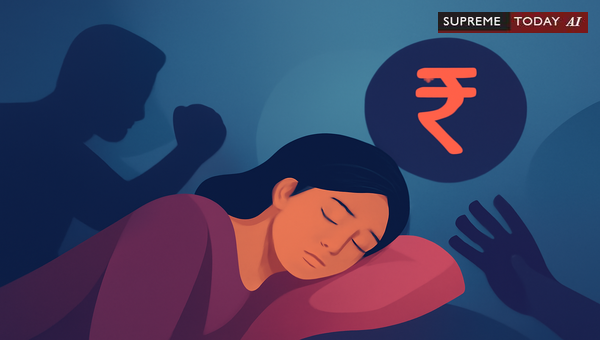
Is a 3-Year-Old Dowry Demand Valid for 304B IPC?
In India, dowry-related deaths remain a tragic reality, with families often alleging harassment leading to a woman's unnatural death. But what if the alleged dowry demand was made just once, three years before the incident? Does it hold up in court under ? This question—One Time Demand of Dowry before 3 Year of Incident Reliability—strikes at the heart of prosecutions.
This blog post breaks down the legal nuances, drawing from landmark judgments and statutory interpretations. We'll explore why matters, what '' truly means, and how courts assess evidence. Note: This is general information based on case law and not specific legal advice. Consult a qualified lawyer for your situation.
Understanding Under Section 304-B IPC
Section 304-B IPC defines '' as a woman's death within seven years of marriage caused by burns, bodily injury, or unnatural circumstances, if she was subjected to for dowry by her husband or relatives . raises a if these elements are proven.
The key hurdle? Proving the demand or cruelty was 'soon before' the death. A one-time demand years earlier typically fails this test unless linked to ongoing harassment. As courts have noted, the phrase '' is a relative, that requires a between the demand and death. 2024 0 Supreme(All) 1325
Interpreting '': The Elastic Term
The has repeatedly clarified that 'soon before' isn't a fixed timeline—it's case-specific, focusing on whether the cruelty disturbed the victim's mental equilibrium leading to death. Demands made years prior are often deemed '' or remote.
In Harjit Singh vs. State of Punjab (2006) 1 SCC 463, the Court held: the proximity should be such that there is a perceptible nexus between cruelty and death. Demands or cruelty that are remote in time—such as several years before—are considered and insufficient. 2024 0 Supreme(All) 1325
Similarly, There must exist a proximate and between the effect of cruelty based on dowry demand and the death of the victim. If the alleged incident of cruelty is remote in time and has become enough not to disturb the mental equilibrium of the woman concerned, it would be.... 2024 0 Supreme(Cal) 1307
Key Judicial Precedents on Remote Demands
- Ramesh Kumar v. State of Haryana: A demand five years earlier was too remote; accused acquitted under 304-B. 2005 0 Supreme(P&H) 453
- Charan Singh @ Charanjit Singh v. State of Uttarakhand: Demands two years prior lacked proximity; presumption not invoked. 2012 0 Supreme(Ker) 742
These cases underscore that isolated, old demands don't suffice without evidence of continuous cruelty near the death.
When Past Demands Might Still Matter: Exceptions
Courts aren't absolute. If a three-year-old demand forms part of an ongoing pattern of harassment escalating 'soon before' death, it could be relevant. For instance:
- Evidence of persistent torture linked to the old demand strengthens the case. 2023 0 Supreme(All) 1603
- In one matter, an quashed after 23 years of marriage where in-laws' relatives were implicated late, with no prior complaints: for demand of dowry and cruelty against husband, mother-in-law and petitioners after 23 years of marriage... no offence by petitioners established. 2024 0 Supreme(MP) 91
Conversely, in State of Madhya Pradesh Vs. Jogendra, a demand one year post-marriage, renewed later, was 'soon before' due to persistence: The persistent demand of dowry appears to indicate that the said demand was also made ''. 2022 0 Supreme(Jhk) 1426
From another ruling: demands made several years prior are typically too remote to establish unless supported by ongoing harassment close to the time of death. 2005 0 Supreme(P&H) 453
Evidence Standards: What Courts Look For
To invoke the presumption:1. Prove cruelty/harassment for dowry soon before death.2. Establish proximity: Mere past incidents won't do; need a '.' 2014 0 Supreme(Del) 22233. Corroborate with witnesses: Inconsistencies, like varying dowry claims, weaken cases. 2026 1 Supreme 717
In a bail rejection case, allegations of recent harassment trumped denials: It is stated that the deceased was living happily but committed suicide. It is stated that there was no demand of dowry whatsoever... but bail denied due to prima facie evidence. 1997 0 Supreme(Raj) 501
Prosecution failures often stem from:- No eyewitnesses to recent demands. 2006 0 Supreme(Pat) 764- allegations without pattern. 2002 0 Supreme(Del) 1172
Broader Context: Related Offences and Quashing FIRs
Dowry claims often pair with (cruelty). But even here, matters. In a 2022 case, proceedings quashed against distant relatives: petitioners sisters and uncle of husband—residents of different places since many decades—their names not mentioned in earlier two complaints. 2024 0 Supreme(MP) 91
have acquitted where no '' link exists: No evidence on record to establish that appellants abetted to commit suicide. 2002 0 Supreme(Raj) 1393
Practical Recommendations for Cases
If pursuing a claim:- Gather recent evidence: Diaries, calls, witness statements of cruelty near death.- Link past to present: Show the old demand fueled ongoing harassment.- Avoid overreach: Courts quash frivolous FIRs; focus on specifics. 1999 0 Supreme(All) 438
For accused:- Highlight and lack of continuity.- Point to inconsistencies in prosecution stories.
Conclusion: Reliability of a 3-Year-Old Demand
Generally, a one-time dowry demand three years before the incident lacks reliability for Section 304-B IPC unless tied to ongoing cruelty soon before death. The law prioritizes proximate causation to prevent misuse while protecting victims. 2023 0 Supreme(All) 1603 2014 0 Supreme(Del) 2223
Key Takeaways:- 'Soon before' is elastic but demands proximity.- Remote demands are without live links.- Build cases on patterns, not isolates.
This analysis draws from multiple judgments emphasizing evidence quality. For tailored advice, approach a legal expert. Stay informed, and let's work towards a dowry-free society.
References (select excerpts):- 2024 0 Supreme(All) 1325: Elastic term, demands.- 2005 0 Supreme(P&H) 453: 5-year demand too remote.- 2024 0 Supreme(Cal) 1307: Proximate required.- 2022 0 Supreme(Jhk) 1426: Persistent demands qualify.
#DowryDeath, #Section304B, #DowryLaw












