




Unlawful Contracts: Void and Unenforceable in Indian Civil Law
Introduction
In the world of business and personal agreements, not every deal is created equal. Imagine entering into a contract that promises quick profits but skirts the edges of legality—perhaps involving restricted activities or payments that defy statutory norms. What happens when such a contract lands in court? The legal validity of unlawful contracts in civil law becomes a critical question, especially under Indian jurisprudence.
This blog post delves into whether unlawful contracts hold water, drawing from established principles of the , and judicial precedents. We'll explore why these agreements are typically void, the distinctions between void and illegal contracts, and practical implications for parties involved. Note: This is general information, not specific legal advice. Consult a qualified lawyer for your situation.
Main Legal Finding
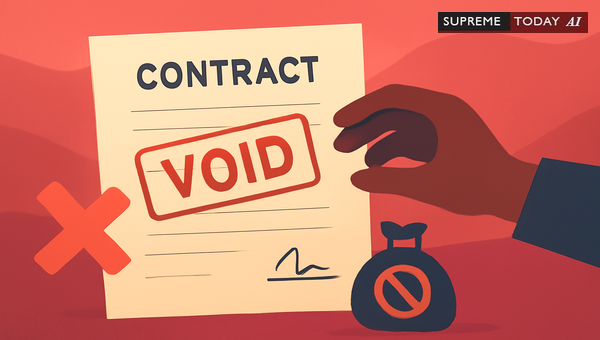
Contracts that are unlawful or opposed to public policy are generally considered void and unenforceable under Indian law. Courts will not lend assistance to enforce them, as doing so would support illegal or immoral conduct, which the law prohibits 2016 5 Supreme 417.
This principle is rooted in protecting public interest and upholding statutory mandates. As one key ruling notes, a contract expressly or implicitly forbidden by statute is void 2016 5 Supreme 417.
Key Distinctions: Void vs. Illegal Contracts
Understanding the nuances is essential:
- Void contracts have no legal effect from the outset but may not involve illegality. They are not punishable and can sometimes collateral to lawful deals 2024 0 Supreme(Guj) 1253.
- Illegal contracts are prohibited by law, (from the beginning), and often carry punitive consequences 2024 0 Supreme(Guj) 1253 2024 0 Supreme(Guj) 1319.
For instance, agreements forbidden by law or with unlawful object or consideration fall into the illegal category 2016 5 Supreme 417 1999 0 Supreme(Ori) 129. The law draws from the maxim pactis privatorum publico juri non derogatur—private pacts cannot derogate from public law 2016 5 Supreme 417.
Additional sources reinforce this: Under frameworks like the Contracts Act, agreements not enforceable by law are void per 2024 Supreme(Online)(Tel) 32596 2024 Supreme(Online)(TEL) 13313. Similarly, unlawful objects render contracts invalid 2021 Supreme(Online)(DEL) 1846.
When Contracts Involve Prohibited Acts
If a contract requires performing acts forbidden by statute—such as illegal sales or transfers—it is void 2016 5 Supreme 417. Even if not explicitly banned, unlawful consideration or purpose voids it 1999 0 Supreme(Ori) 129.
Consider this: Contracts necessitating disobedience to law are unenforceable, but if performance is possible lawfully, validity may hold 2024 1 Supreme 366 2007 0 Supreme(Kar) 266. Post-formation changes making acts unlawful also void the agreement 2017 3 Supreme 780.
Judicial consensus is clear: decisions affirm that prohibited contracts receive no aid 2016 5 Supreme 417 2023 0 Supreme(Gau) 428.
Impact on Collateral Transactions
Illegality taints not just the main agreement but collaterals too. If the primary object is unlawful, dependent rights are unenforceable 1999 0 Supreme(Ori) 129 2024 0 Supreme(Guj) 1253. For example, mechanisms facilitating illegal acts fall with the core contract.
In related contexts, arbitration clauses must comply legally; non-compliant ones are void 2024 Supreme(Online)(Tel) 32596. Construction contracts needing writing or registration highlight formation formalities, though failure doesn't always invalidate if not core to unlawfulness 2024 Supreme(Online)(Tel) 32596 2024 Supreme(Online)(TEL) 13314.
Exceptions and Counterarguments
While strict, exceptions exist:
- Recovery possible if parties not (equally guilty), illegal purpose not substantially executed, or claim avoids illegality 2020 0 Supreme(Del) 703 1999 0 Supreme(Ori) 129.
- Corporate veils pierced for fraud, impacting contract validity
SRI MAJU SARATA EKSPRESS SDN BHD vs SEGAR MUNUSAMY & ORS - Ipoh
. - Restraint of legal proceedings void under , but arbitration exceptions apply 2021 Supreme(Online)(DEL) 1846.
However, aware parties get no relief 1999 0 Supreme(Ori) 129. Burden of proving lawfulness lies with the claimant
QING YANYUN & ORS vs B&G TROPICAL SDN BHD - Kuala Lumpur
.Internationally, parallels exist: Malaysia's voids unlawful objects ()
A G ROSELI & PAUL vs SS PRECAST SDN BHD & ORS - Kuala Lumpur
, and allows rescission for illegal contracts 2023 Supreme(US)(ca2) 200. Civil sanctions further deter unlawful practices 2021 Supreme(US)(ca9) 279.Practical Implications and Recommendations
Businesses and individuals should:
- Scrutinize objects and considerations for statutory compliance.
- Seek legal review for borderline agreements.
- Note courts examine intent against law and public policy.
In disputes, even partial performance won't sway courts from denying relief on illegal contracts 2023 0 Supreme(Gau) 428 1971 0 Supreme(SC) 533.
Conclusion and Key Takeaways
Unlawful contracts in Indian civil law are typically void, unenforceable, and discouraged to preserve public policy. The distinction between void and illegal agreements guides outcomes, with illegality broadly prohibiting judicial aid.
Key Takeaways:- Unlawful object/consideration = 2016 5 Supreme 417.- Collaterals tainted by main illegality 1999 0 Supreme(Ori) 129.- Exceptions rare, favor non-guilty parties 2020 0 Supreme(Del) 703.- Always prioritize compliance; consult professionals.
By understanding these principles, you can navigate agreements wisely. Stay informed, contract smartly.
References:1. 2016 5 Supreme 417: Core principles on forbidden contracts.2. 1999 0 Supreme(Ori) 129: Void vs. illegal distinctions.3. 2024 0 Supreme(Guj) 1253: Jurisprudential explanations.4. 2024 0 Supreme(Guj) 1319: Illegal contract effects.5. 2024 1 Supreme 366: Prohibited acts analysis.6. 2024 Supreme(Online)(Tel) 32596: Enforceability sections.7.
A G ROSELI & PAUL vs SS PRECAST SDN BHD & ORS - Kuala Lumpur
: Comparative unlawful objects. #UnlawfulContracts #IndianContractLaw #VoidAgreements















