


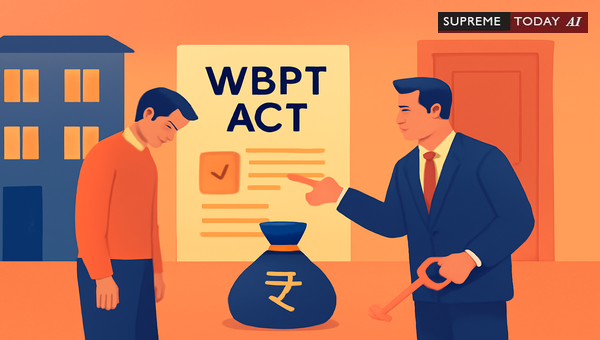
Understanding in Broader Aspects Under
In the realm of tenancy laws in West Bengal, the concept of a '' carries significant weight, particularly under the (). Tenants and landlords alike often grapple with questions like: What exactly makes a tenant a in broader aspects in ? This isn't limited to simply missing rent payments— it extends to a range of non-compliances that can lead to . This blog post delves into the nuances, drawing from judicial interpretations and statutory provisions to provide clarity.
Whether you're a tenant striving for compliance or a landlord seeking remedies, understanding these broader aspects is crucial. Note that this is general information based on legal precedents and should not be taken as specific legal advice—consult a qualified lawyer for your situation.
Defining a : Beyond Simple Non-Payment
Under the , a is broadly understood to include tenants who fail to deposit rent within strict statutory timelines. This encompasses not just outright defaults but also short deposits, delayed deposits beyond extensions, and non-compliance with court orders on rent deposits. The Act emphasizes , with little room for leniency once limits are exceeded. 2024 0 Supreme(Cal) 259
Key points from judicial rulings highlight this strict stance:- A primarily refers to a tenant failing to deposit rent as mandated within the statutory period. 2024 0 Supreme(Cal) 259- or minor deviations do not protect against eviction. 2024 0 Supreme(Cal) 2592024 0 Supreme(Cal) 1160- Extensions are capped (e.g., not exceeding two months per instance) and cannot be repeated indefinitely. Courts rarely condone post-extension delays. 2024 0 Supreme(Cal) 2592024 0 Supreme(Cal) 1247- Even short deposits or lower rates, including due to , typically classify a tenant as a if exact requirements aren't met. 2024 0 Supreme(Cal) 2592024 0 Supreme(Cal) 1247
The court in 2024 0 Supreme(Cal) 259 explicitly states: > The provisions laid down under of the , 1997 is mandatory and the same must be strictly adhered to.
This mandatory nature affects eviction protections under .
Core Provisions: Focus on Section 7
Section 7 of the is pivotal, outlining deposit requirements during proceedings. and its proviso set timelines, while limits extensions. Failure here triggers status, impacting tenancy rights.
From 2025 0 Supreme(SC) 1204, the , applies subject to 's own provisions: > Thus, the applicability of the vis-à-vis is not in general, but subject to the provisions of the limitation specified in the itself.
This reinforces that WBPT timelines override general condonation powers, aligning with the Act's goal of prompt compliance.
Extensions, Condonation, and Judicial Limits
Courts have restricted powers to extend deposit periods. The proviso to allows only one extension up to two months. Post-exercise, no further relief is available, and inherent powers under cannot override this.
The Supreme Court in 2024 0 Supreme(Cal) 259 clarifies: > The Court does not have any power to grant any further extension of time for deposit of rent after the power of extension has been exercised in terms of the proviso contained in Section 7.
Similarly: > The inherent jurisdiction of the Court to make orders cannot be invoked to grant an extension outside the restriction imposed under Section 7 of the . 2024 0 Supreme(Cal) 259
In 2024 0 Supreme(Cal) 1247, delays post-extension cannot be condoned, underscoring the provisions' mandatory character.
Short Deposits and Bona Fide Errors: No Automatic Exemption
Depositing less than ordered—even unintentionally—doesn't shield tenants. Courts demand exact, timely compliance.
As noted in 2024 0 Supreme(Cal) 259: > Even after such finding the court held that the provisions of , which restricts further extension, is applicable. The tenant's failure to deposit rent at the correct rate within the prescribed period constitutes a default.
Related cases like 2024 0 Supreme(Cal) 1160 stress consequences of short deposits or delays, while 2024 0 Supreme(Cal) 971 links non-compliance to eviction under (1)(B).
Exceptions, Procedural Safeguards, and Broader Contexts
While strict, exceptions exist for genuine efforts within limits:- may not lead to immediate eviction if rectified promptly within extensions. 2024 0 Supreme(Cal) 259- Procedural fairness is key; courts require evidence of landlord-tenant ties and proper notices. 2022 0 Supreme(Cal) 9322022 0 Supreme(Cal) 915
In banking parallels (e.g., wilful defaulters), transparency matters, but WBPT focuses on tenancy. 2024 0 Supreme(Guj) 481 notes: > It is well settled that a quasi-judicial authority... must act fairly and must act with an open mind while initiating a show-cause proceeding.
Applications under must be timely; rejections occur for non-appearance. 2022 0 Supreme(Cal) 1382
Practical Recommendations for Tenants and Landlords
To navigate these rules:- Tenants: Deposit exact amounts on time; document rectifications within extensions. Act swiftly on mistakes.- Landlords: Issue notices per (2); prove defaults with evidence.- Both: Understand Section 7 limits—seek advice early.- Legal practitioners: Advise strict adherence, as condonation bids rarely succeed post-limits.
Key Takeaways and Conclusion
A under the broadly includes tenants failing strict rent deposit rules—timelines, amounts, and orders—especially post-extensions. Courts enforce mandatory compliance, limiting relaxations. 2024 0 Supreme(Cal) 2592024 0 Supreme(Cal) 1247
In conclusion, the Act prioritizes procedural rigor to balance rights. Tenants avoiding status must prioritize precision; landlords benefit from clear precedents. For tailored guidance, consult professionals. Stay informed to safeguard your tenancy interests.
References:1. 2024 0 Supreme(Cal) 1247 - Condonation limits post-extension.2. 2024 0 Supreme(Cal) 259 - Core on scope, timelines, judicial powers.3. 2024 0 Supreme(Cal) 1160 - Strict compliance needs.4. 2022 0 Supreme(Cal) 932 - Procedural fairness.5. 2025 0 Supreme(SC) 1204 - Limitation Act interplay.6. 2024 0 Supreme(Cal) 971 - Eviction links.7. 2022 0 Supreme(Cal) 1382 - Section 7 applications.
(Word count: 1028. This post integrates judicial insights for educational purposes only.)
#WBPTAct, #TenantDefaulter, #RentDefault












