


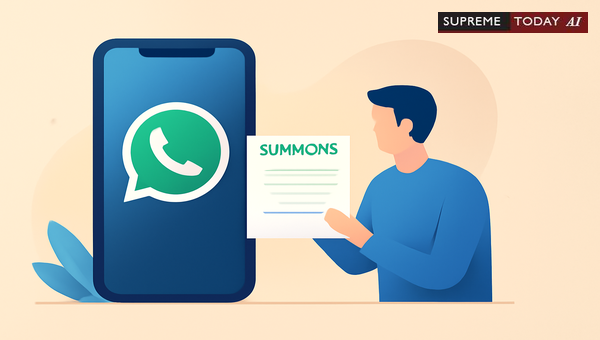
WhatsApp Summons Service Restricted Under : Key Ruling
In today's digital age, communication via platforms like WhatsApp has become ubiquitous. But can it replace traditional methods for serving critical legal documents like summons and notices? A recent ruling has brought clarity—and restrictions—to this question, particularly under the . This blog post delves into the legal nuances, drawing from court decisions and statutory provisions to help you navigate this evolving area of Indian law.
The Burning Legal Question
Recent Ruling Related to Restrict the Serving of Summons through Whatsapp under Bns .
This query reflects growing confusion among legal practitioners, authorities, and citizens about whether instant messaging apps can suffice for formal service of summons, especially post the introduction of , which replaced parts of the . Courts have repeatedly addressed this, emphasizing compliance over convenience.
Main Legal Finding
Service of notices and summons via WhatsApp or other electronic modes cannot be deemed sufficient or valid under Indian law without compliance with statutory procedures and specific judicial directions. . . 2025 1 Supreme 719
This stance upholds the integrity of legal processes, ensuring recipients receive undeniable notice.
Key Points from Judicial Pronouncements
- Statutory Modes Mandatory: Notices under Sections 41-A of Cr.P.C. and must follow prescribed modes like in-person delivery or recognized official channels. 2025 1 Supreme 719
- WhatsApp Not a Substitute: Electronic modes like WhatsApp are not valid alternatives unless permitted by legislation or judicial directions. 2025 1 Supreme 719 2025 6 Supreme 227
- Court Emphasis on Adherence: and stress statutory compliance for statutory notices. WhatsApp service requires simultaneous email transmission for validity. 2025 6 Supreme 227
- Proof of Effective Service Required: Courts have ruled that service through WhatsApp or electronic modes cannot be considered or recognised as an alternative or substitute to mode of service recognised and prescribed under /BNSS, unless proven effective and compliant. 2025 1 Supreme 719
- COVID-19 Exceptions: permitted WhatsApp/email during the pandemic, but only with email accompaniment or verified proof like delivery receipts. Mere . 2025 6 Supreme 227
Detailed Legal Framework
Statutory Provisions for Service
The , and mandate service of summons and notices in person or via recognized official modes, such as registered post or personal delivery. These ensure no disputes over receipt, safeguarding due process. 2025 1 Supreme 719
Judicial Clarifications on Electronic Modes
Courts have consistently clarified that WhatsApp cannot replace statutory methods without authorization. During COVID-19, the allowed electronic service accompanied by email or verified proof of delivery, stressing that read receipts alone are inadequate. 2025 6 Supreme 227
In one instance, service via WhatsApp was deemed impermissible for lacking email backup, as per guidelines. 2025 6 Supreme 227 Notices under statutes like or demand traditional methods unless explicitly permitted. 2025 1 Supreme 719
Evolving Trends from Other Judicial Insights
While restrictions dominate for statutory notices, courts show flexibility in non-statutory or urgent scenarios. For example:
- Service via WhatsApp and email is recognized as sufficient when traditional methods are impractical, with proof like screenshots accepted. 2025 Supreme(Online)(Del) 3026 2024 Supreme(Online)(NCLAT) 869
- Digital modes help prevent evasion, expedite proceedings, and cut costs, especially when respondents provide such addresses. 2025 Supreme(Online)(Del) 3026 2021 0 Supreme(HP) 507
- Courts have ordered communication on the email address or on WhatsApp or by such other mode, as is permissible in law, indicating growing acceptance with evidence. 2020 0 Supreme(Bom) 1209 2020 0 Supreme(Bom) 1321
However, these do not override statutory mandates. In cases like Sessions Case No. 4/2022, records emphasize proper service channels. 2023 0 Supreme(Gau) 482 Practical challenges, such as witness relocation, are noted, but electronic service needs corroboration. 2023 0 Supreme(MP) 386 2023 Supreme(Online)(MP) 6077
Trend Analysis: There's a shift toward digital efficiency, but for BNSS/Cr.P.C. notices, verification (e.g., message logs) is crucial to avoid invalidation. 2024 Supreme(Online)(NCLAT) 869 2021 Supreme(Online)(HP) 1333
Exceptions and Limitations
- Explicit Authorization: Valid if legislation or court orders permit, like pandemic directives. 2025 6 Supreme 227
- No Reliance on Blue Ticks: Mere reading does not prove service without email/acknowledgment. 2025 6 Supreme 227
- Statutory Notices Excluded: Personal/official modes mandatory; electronics insufficient alone. 2025 1 Supreme 719
In contrast, some orders permit WhatsApp alongside hard copies or for counsel communication. 2020 0 Supreme(MP) 956 2020 0 Supreme(Del) 697
Practical Recommendations
To ensure validity:- Stick to personal service or registered post for statutory notices.- For electronics (exceptional cases), pair with email and retain proofs like screenshots.- Courts must verify delivery before acceptance.- Document everything to preempt disputes. 2025 1 Supreme 719
Legal practitioners should note: The order be communicated to the counsel appearing for the parties, either on the email address or on WhatsApp in permissible contexts. 2020 0 Supreme(Bom) 1321
Conclusion and Key Takeaways
In summary, while Indian courts are adapting to technology, for statutory notices under unless supplemented by recognized proofs like email and compliant with directions. 2025 6 Supreme 227 This balances modernity with procedural rigor.
Key Takeaways:- Prioritize statutory modes for Cr.P.C./BNSS notices. 2025 1 Supreme 719- Use electronics cautiously with backups. 2025 6 Supreme 227- Evolving acceptance in non-statutory cases aids efficiency. 2025 Supreme(Online)(Del) 3026
This post provides general information based on reported rulings and is not legal advice. Consult a qualified lawyer for specific cases.
References:1. 2025 1 Supreme 719: Notices under /35 BNSS require prescribed modes; WhatsApp invalid.2. 2025 6 Supreme 227: WhatsApp needs email/proof; blue ticks insufficient.3. Additional: 2025 Supreme(Online)(Del) 3026, 2024 Supreme(Online)(NCLAT) 869, 2020 0 Supreme(Bom) 1209, 2021 0 Supreme(HP) 507
#BNSS2023 #WhatsAppSummons #IndianLegalRuling















