


Husband Files : Understanding Wife's Right to Residence in
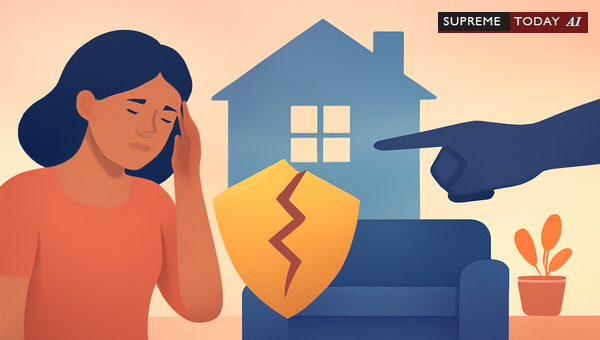
In family disputes, questions like File by Husband often arise, leaving spouses confused about legal protections. While the (DV Act) primarily safeguards women as , husbands or male partners typically cannot file as the 'aggrieved person' since the Act defines it as a woman in a . However, husbands may attempt counter-actions like or related proceedings amid ongoing DV cases filed by wives. This blog explores the wife's robust right to reside in the , even when husbands challenge it through legal filings. Note: This is general information, not specific legal advice—consult a qualified lawyer for your situation.
Overview of Act and Residence Rights
The DV Act provides critical protections for women facing violence, including the right to reside in a . This right is not dependent on property ownership but stems from the itself. Section 17(1) states that every woman in a shall have the right to reside in her —a provision that's expansive, covering women who may not have previously resided there but are in such a relationship 2022 5 Supreme 542.
Sub-section (2) further protects against arbitrary eviction: an aggrieved woman cannot be dispossessed except by valid legal processes 2022 5 Supreme 542. This is particularly relevant when husbands file for eviction, divorce, or other reliefs, as courts have upheld the wife's residence rights under the DV Act 2022 0 Supreme(SC) 1368 2022 0 Supreme(SC) 1445.
Defining Key Terms: and
A under Section 2(f) includes ties by marriage, , adoption, or relationships 'in the nature of marriage.' Familial bonds suffice to sustain proceedings, regardless of the respondent's current residence 2025 0 Supreme(Gau) 1128. For instance, the existence of a familial relationship is sufficient to sustain proceedings under the Act, regardless of the respondent's residence status 2025 0 Supreme(Gau) 1128.
Section 2(s) defines it as a household where the aggrieved woman lives or has lived in a , such as the husband's house or his joint family home. Properties solely owned by in-laws may not qualify unless linked to the domestic setup 2006 8 Supreme 1002. Courts emphasize evidence of residency or relationship to establish this 2016 0 Supreme(Mad) 3163.
Husband's Filings and Wife's Protections
When a husband files proceedings—be it eviction, divorce, or counters in DV cases—the wife's right persists. Courts have ruled that even if a woman hasn't resided there before, she can enforce entry based on the relationship 2022 5 Supreme 542. In disputes, the DV Act overrides hasty evictions.
However, post-divorce, maintainability changes. If a exists, there is no as husband and wife at the time of filing of petition, rendering DV proceedings non-maintainable 2019 0 Supreme(Bom) 616. One case noted: decree of divorce was already granted... During the relevant period... there was no ... proceedings under the Act were not maintainable 2019 0 Supreme(Bom) 616.
Role of Relatives and Gender Neutrality Aspects
The DV Act allows complaints against relatives, including female ones. For example, a daughter-in-law can be a respondent if in a with the aggrieved mother-in-law, as the Act is somewhat in defining 'respondent' 2024 0 Supreme(Bom) 49. In one ruling: the court found the complaint against the daughter-in-law to be maintainable... considering the nature of the Act 2024 0 Supreme(Bom) 49.
Conversely, distant relatives like a brother-in-law abroad may face challenges if no direct domestic tie exists, but familial links can sustain cases: mere residence outside India does not exempt... when a familial relationship exists 2025 0 Supreme(Gau) 1128.
Exceptions and Limitations
- Non-Qualifying Properties: Rights don't extend to unrelated in-law properties 2006 8 Supreme 1002.
- Landlord Rights: DV disputes don't impact landlord-tenant evictions 2022 0 Supreme(SC) 1368.
- Evidence Requirements: Claims need proof of residency or relationship; courts remand cases if is violated, like not allowing contestation of documents 2016 0 Supreme(Mad) 3163. The erred in relying solely on the documentary evidence without giving the petitioners a fair chance 2016 0 Supreme(Mad) 3163.
- Compromises: Courts may quash proceedings post-settlement in matrimonial disputes 2016 0 Supreme(P&H) 3387.
- : Wives facing distant proceedings can seek transfers or video conferencing for fairness 2017 3 Supreme 58.
Relevant Case Law Highlights
- Right Not Limited to Actual Residence: Enforceable even pre-residency in domestic ties 2022 5 Supreme 542.
- Post-Divorce Bar: No protection without ongoing relationship 2019 0 Supreme(Bom) 616.
- Familial Respondents: Brothers or daughters-in-law liable if criteria met 2025 0 Supreme(Gau) 1128 2024 0 Supreme(Bom) 49.
These precedents underscore the DV Act's focus on protecting women while respecting procedural limits.
Practical Recommendations
- For Aggrieved Women: Gather evidence of and nature. File under Sections 12, 17-19 promptly.
- Countering Husband's Filings: Emphasize Section 17 protections; challenge evictions.
- For Respondents: Prove absence of or post-divorce status.
- General Tip: Use mediation or compromises to resolve amicably, as courts favor quashing settled matrimonial cases 2016 0 Supreme(P&H) 3387.
Conclusion and Key Takeaways
While husbands cannot typically file as aggrieved under the DV Act, their eviction or divorce filings do not easily override a wife's right to the . Robust protections exist, tempered by definitions and exceptions like divorce or non-qualifying properties. Always substantiate claims with evidence to navigate these complexities.
Key Takeaways:- Wife's residence right is heritable from , not ownership 2022 5 Supreme 542.- Post-divorce, DV claims fail due to ended relationship 2019 0 Supreme(Bom) 616.- Relatives can be roped in via familial ties 2024 0 Supreme(Bom) 49.- Seek professional advice tailored to facts.
References:- 2022 5 Supreme 542 2022 0 Supreme(SC) 1368 2022 0 Supreme(SC) 1445 2006 8 Supreme 1002 2024 0 Supreme(Bom) 49 2025 0 Supreme(Gau) 1128 2019 0 Supreme(Bom) 616 2017 3 Supreme 58 2016 0 Supreme(Mad) 3163 2016 0 Supreme(P&H) 3387
This post is for informational purposes only and does not constitute legal advice.
#DVActIndia, #SharedHousehold, #DomesticViolenceLaw












