


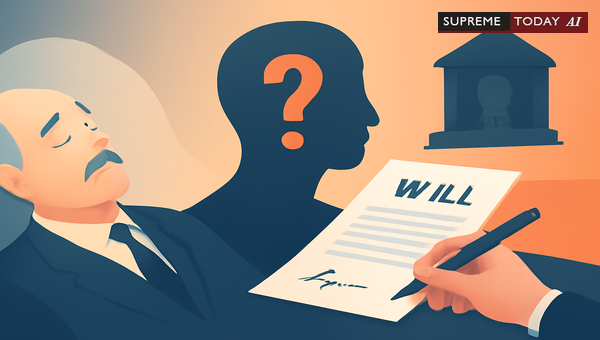
Dies Before : What Happens to the Will?
In estate planning and law, unexpected events can dramatically alter the path to validating a will. One such scenario arises when the —the individual responsible for presenting the will to the court for —dies before the , the person who created the will. This situation raises critical questions: Does the will remain valid? How does it affect the process? And what evidence is needed to uphold it?
If you're dealing with a contested will or navigating after such an event, understanding the legal implications is essential. This article breaks down the key principles, case law, and practical steps, drawing from established precedents. Note: This is general information and not specific legal advice. Consult a qualified attorney for your situation.
Understanding the Role of the
The is typically the executor named in the will or another party seeking . Their primary duty is to prove the will's validity, including that it was executed voluntarily by a of sound mind, without . When the dies before the , this role doesn't vanish, but proving these elements becomes more challenging.
As highlighted in legal texts, the should place before the Court evidence 'proving that the will was according to law'
. This burden persists, shifting to remaining parties or successors.
Key Legal Principles Governing Will Validity
Courts apply stringent standards to ensure a will reflects the 's true intentions. Here are the core principles:
: The must demonstrate the executed the will voluntarily, with , and free from coercion. This requires showing the understood the will's nature and effects 1975 0 Supreme(Ori) 4 2016 0 Supreme(HP) 705.
: Any red flags around execution—such as haste, isolation, or unnatural dispositions—demand the dispel doubts with clear evidence, proving sound mind and voluntariness
1984 0 Supreme(Cal) 115.
Impact of 's Death: The 's pre-death demise complicates matters. Their absence means no direct testimony, heightening scrutiny, especially in contested cases. Courts then rely heavily on other evidence 2008 0 Supreme(Cal) 597
.
Even if are unavailable due to death, courts may consider like the will's copy, caveators' admissions, or surrounding circumstances to prove 2023 0 Supreme(Cal) 1354. Signatures are scrutinized under , with testimony from those who saw the sign 2023 2 Supreme 649.
Relevant Case Law Insights
Judicial precedents underscore the heightened evidentiary needs:
In scenarios where the predeceases the , courts demand robust proof of validity. The lack of the 's input invites closer examination for fraud or influence 2008 0 Supreme(Cal) 597
.
If the was a key witness, their death creates evidentiary gaps. Courts turn to other attestors present at execution 1975 0 Supreme(Ori) 4 1953 0 Supreme(Cal) 47.
For instance, where a declaration from an attesting witness supports execution, and the was appointed executor, the original will (Exhibit A) is filed, affirming the 's appointment before death 2017 0 Supreme(Cal) 442
In The Goods of : Joydev Pal (Deceased) and Joydeb Paul VS Dipanwita Pal - Current Civil Cases
.Challenges to signatures as forged, especially with unnatural dispositions and no secure custody, raise doubts about authenticity 2011 0 Supreme(Del) 221. In family-related cases, like a uncle to the , document writers as witnesses are evaluated similarly 2010 0 Supreme(Mad) 4736 2010 0 Supreme(Mad) 4706.
These cases illustrate that while the 's death doesn't invalidate the will outright, it amplifies the need for alternative proof, such as witness affidavits or related documents like partition deeds 2023 2 Supreme 649.
Implications of the 's Death Before the
The 's untimely death triggers several consequences:
Shifted Burden of Proof: Remaining parties must step up, furnishing evidence sans the 's testimony. This includes proving sound mind, voluntary signing, and no 2019 0 Supreme(HP) 1846 2010 0 Supreme(Del) 1126 2025 0 Supreme(Jhk) 1447 2023 0 Supreme(Cal) 779 2023 0 Supreme(Cal) 703.
Heightened Contestation Risk: Challengers may exploit the evidentiary void, arguing doubts over authenticity or intentions 2008 0 Supreme(Cal) 597 2022 0 Supreme(Del) 2171. Courts grow cautious, particularly if execution was recent before the 's death or witnesses are deceased 2023 0 Supreme(Del) 4741
.
Alternative Evidence Reliance: Without live witnesses, courts accept proof like observed signatures or supporting documents. Failure risks the will being deemed invalid, leading to 2023 0 Supreme(Cal) 1310 2023 0 Supreme(Cal) 703
.
In essence, the will's fate hinges on satisfying execution requirements—, proper signing, and clean circumstances—even posthumously for the 2023 0 Supreme(Cal) 1354 2025 0 Supreme(Jhk) 1447.
Practical Recommendations for Success
To navigate this complexity:
Gather Comprehensive Evidence Early: Secure affidavits from any surviving witnesses attesting to the 's mental state and execution details.
Document Everything: File the original will, supporting declarations, and related records meticulously.
Address Suspicion Proactively: Dispel doubts with medical records, contemporaneous notes, or neutral party testimonies.
Seek Legal Expertise: Engage specialists to marshal evidence and counter challenges effectively.
By preparing thoroughly, parties can uphold the 's wishes despite the 's absence.
Conclusion and Key Takeaways
The death of the before the doesn't doom a will but intensifies the burden. Success depends on strong, alternative evidence proving , capacity, and voluntariness. Courts prioritize the 's intentions but demand rigorous proof amid gaps 1975 0 Supreme(Ori) 4
2008 0 Supreme(Cal) 597
2019 0 Supreme(HP) 1846 1953 0 Supreme(Cal) 47 2010 0 Supreme(Del) 1126 1984 0 Supreme(Cal) 115 2022 0 Supreme(Del) 2171 2023 0 Supreme(Cal) 1354.
Key Takeaways:- Burden remains on proving validity without testimony.- require clear rebuttal.- Leverage witnesses, documents, and case-specific evidence.- Always consult professionals for tailored guidance.
This scenario highlights proactive estate planning's value—naming alternates and documenting thoroughly. Stay informed, and protect legacies effectively.
(Word count: 1028. References are indicative of supporting legal documents; full texts should be reviewed.)
#WillProbate #PropounderDeath #EstateLaw















