


Witness Identification in Dark, Foggy Forest Murders: What Courts Consider
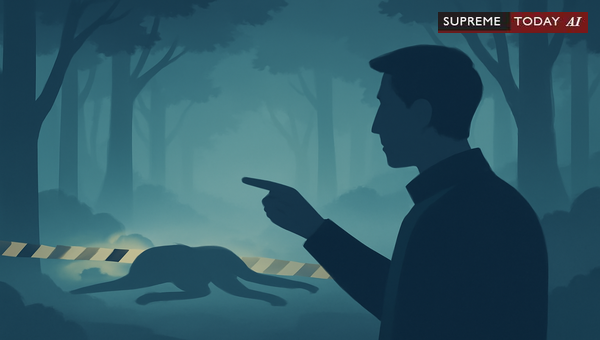
Imagine a chilling murder in a dense forest on a pitch-black night shrouded in fog. Can eyewitnesses reliably identify the perpetrator under such conditions? The question of Murder Forest Dark Night Fog Conduct of Witnesses often arises in criminal trials, where poor visibility and witness behavior become central to justice.
In this post, we explore how Indian courts assess the reliability of witness testimony in these challenging scenarios. While environmental factors like darkness and fog complicate identification, familiarity with the accused, credible conduct, and can uphold convictions. Note: This is general information based on legal precedents and not specific legal advice. Consult a qualified attorney for your case.
The Core Legal Principle: Identification Despite Poor Visibility
Courts have consistently held that identification in dark or foggy conditions is possible, particularly when witnesses are acquainted with the accused. The is that the conduct of witnesses in cases involving murder in a forest during a dark night, especially under poor visibility like fog or darkness, is evaluated based on their ability to identify the accused and the reliability of their testimony. Even in such conditions, identification stands if witnesses are well-acquainted or their conduct supports . Fog or darkness alone does not negate testimony if substantiated by other evidence. 2023 4 Supreme 216 2005 1 Supreme 867
Key points include:- : Witnesses can identify via voice, gait, or features even in insufficient light if intimately known to the accused. 2023 4 Supreme 216- : Behavior post-incident, like logical explanations for presence, bolsters . 1973 0 Supreme(SC) 391- : Absence of dense fog in reports supports identification. 2009 0 Supreme(Del) 772
Detailed Analysis: Navigating Darkness and Fog
Identification in Challenging Conditions
Legal precedents affirm that dark forests at night do not automatically discredit eyewitnesses. For instance, 2023 4 Supreme 216 states: Even if there is insufficient light, a witness can identify a person, with whom he is fairly acquainted or is in intimate terms, from his voice, gaits, features etc. This is echoed in 2005 1 Supreme 867, emphasizing close relationships overcoming poor visibility.
In 2009 0 Supreme(Del) 772, the court reviewed weather data showing mainly clear conditions with 1000-meter visibility and mist (not fog), repelling defense claims: the plea taken by the counsel for the appellant with regard to the presence of fog/mist... is repelled. Witnesses' identification was deemed credible as conditions allowed sight.
Additional cases reinforce this. In 2008 3 Supreme 629, a witness recognized the assailant as his grandson from voice of accused who raised despite darkness. Similarly, 2007 0 Supreme(Pat) 1084 notes: Witnesses have given explanation as to how they were able to identify the appellant in such a dark night, upholding identity due to prior acquaintance.
Witness Conduct and Post-Incident
Witness behavior is scrutinized rigorously. Unnatural conduct, like delayed reporting, raises doubts. In 1973 0 Supreme(SC) 391, the court found witnesses' failure to immediately inform police about a kidnapping unnatural, undermining .
Conversely, logical explanations sustain testimony. Sources highlight improbabilities in presence at scenes: 2022 0 Supreme(Mad) 713 discusses counsel harping on improbabilities regarding the presence of PW-2 to PW-4... and their conduct after realising the missing of his brother or hearing about the murder. In forest murders, courts probe if witnesses' forest presence at night is plausible.
notes a dark night with no village electricity, where witnesses were dragged toward the forest, testing their accounts.
Even in torchlight or lantern glow, identification holds if credible. 2017 0 Supreme(Raj) 2598 observes: even though it was a dark night, the witnesses could identify the accused, aided by a lantern, rejecting defense challenges.
Weather Reports: Fog vs. Mist and Visibility Impact
Courts demand proof of obstructive conditions. 2009 0 Supreme(Del) 772 rejected fog claims absent weather report evidence, noting mist's minimal impact.
similarly found fog not dense, supporting witnesses.
Other sources describe dense fog defenses: 2021 0 Supreme(All) 259 records a witness denying because of the dark night and dense fog he had not seen the incident. 2017 0 Supreme(Del) 4019 admits fog and darkness on a winter night but upholds testimony. 2018 0 Supreme(Raj) 99 questions torchlight identification in darkness sans recovered torch, yet familiarity often prevails.
Exceptions and Limitations in Testimony Reliability
Not all cases favor prosecution:- Proven obstruction: Dense fog or total darkness, if evidenced, diminishes reliability.- Unnatural conduct: Delayed disclosures or implausible presence (e.g., chance witnesses without reason) invite skepticism. 2005 1 Supreme 867- Inconsistent accounts: Pitch darkness admissions without identification aids weaken cases. Sources note many witnesses saw bodies post-murder, not the act, relying on circumstantial evidence. 2021 0 Supreme(Jhk) 734 2021 0 Supreme(Jhk) 262
Investigation challenges in forests amplify scrutiny: mismatched weapons, delayed inquests. Courts urge caution in rural, dark settings. 2024 0 Supreme(Jhk) 1001 2025 0 Supreme(All) 3375
Recommendations for Prosecution and Defense
- Examine weather rigorously: Use reports to counter visibility pleas. 2009 0 Supreme(Del) 772
- Assess conduct holistically: Prioritize familiarity, consistency over environment alone.
- Bolster with corrobation: Voice, gait, or lanterns aid visual limits. 2017 0 Supreme(Raj) 2598
- Prosecution duty: Prove conditions permitted sight via testimony or data.
Key Takeaways and Conclusion
In summary, witnesses can reliably identify accused in forested dark nights or fog if familiar or conduct-credible. Darkness or mist alone does not invalidate testimony if circumstances support it. 2023 4 Supreme 216
Courts balance challenges like those in
(dark nights, no electricity) against credible explanations, as in 2007 0 Supreme(Pat) 1084. This nuanced approach ensures justice without dismissing vital eyewitness input.
Final note: Legal outcomes vary by facts. For personalized guidance, seek professional counsel. Stay informed on evolving precedents shaping criminal justice in adverse conditions.
References
- 2009 0 Supreme(Del) 772: Weather vs. visibility in mist/fog.
- 2023 4 Supreme 216: Voice/gait identification in darkness.
- 2005 1 Supreme 867: Chance witnesses' .
- 1973 0 Supreme(SC) 391: Post-incident conduct.
: Non-dense fog supports ID.
- Additional: 2022 0 Supreme(Mad) 713,
, 2021 0 Supreme(All) 259, 2018 0 Supreme(Raj) 99, 2017 0 Supreme(Del) 4019, 2017 0 Supreme(Raj) 2598, 2007 0 Supreme(Pat) 1084.












