


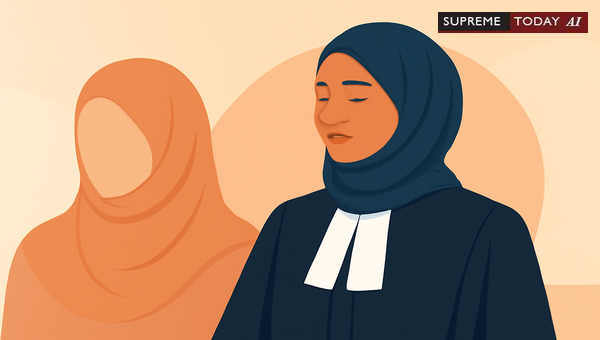
Can Women Advocates Wear Hijab in India? Legal Guide
In recent years, the debate over women wearing hijab has extended beyond educational institutions into professional spaces, including courtrooms and legal practice. The question Woman Advocate Wearing Hijab has sparked discussions on religious freedom, , and constitutional rights in India. As more Muslim women enter the legal profession, understanding the legal nuances is crucial. This post provides a comprehensive overview based on judicial precedents and constitutional principles, but note that this is general information and not specific legal advice—consult a qualified lawyer for personalized guidance.
Legal Status of Hijab as a Religious Practice
The core issue revolves around whether wearing the hijab constitutes an in Islam, which would grant it protection under of the (). Courts have consistently held that the Holy Quran does not mandate the hijab or headgear for Muslim women, viewing it more as a social custom for safety and empowerment rather than a religious obligation.
Historically, the hijab allowed women to venture outside safely, but it is not prescribed as obligatory in religious texts.
Some sources reference Quranic verses on 'hijab of eyes' and decency, but these do not explicitly require veiling. 2024 Supreme(Online)(Del) 33443 It is stated that there are two verses in the Qur‘an in which Almighty Allah talks about the issue of decency and hijab, which deal with ‘hijab of eyes’. 2024 Supreme(Online)(Del) 33443
While some argue it is essential 2022 Supreme(Online)(Kar) 39763, judicial scrutiny often finds insufficient evidence that it is mandatory or practiced consistently from the start of one's religious life. 2022 0 Supreme(Kar) 513
Constitutional Rights and Their Limitations
, 21, and 25 protect freedom of speech, , and religion. However, these are subject to for , health, or morality. Wearing hijab as a personal choice or matter of conscience is generally protected, but only essential religious practices qualify for absolute protection under .
Courts emphasize that uniform dress codes in professional or institutional settings, if religion-neutral, do not violate rights and promote equality and harmony.
2022 0 Supreme(Kar) 44
Judicial Precedents on Hijab Bans and Rights
Several landmark cases have shaped the discourse:- In educational contexts, courts have upheld dress codes excluding religious symbols to foster secularism. Petitions to mandate or ban hijab were dismissed, affirming state authority.
2022 0 Supreme(Kar) 44- The issued an interim order: Pending consideration of all these petitions, we restrain all the students regardless of their religion or faith from wearing saffron shawls (Bhagwa), scarfs, hijab, religious flags or the like within the classroom, until further orders. 2022 0 Supreme(Kar) 296 This highlights the balance between rights and uniformity.- Rulings note that if hijab disrupts , the state must intervene, but bans should not force removal of attire for education access. 2022 0 Supreme(Kar) 513 2022 Supreme(Online)(KAR) 30- The essentiality question remains under review, with some courts questioning mandatory veiling and its impact on women's emancipation. 2022 0 Supreme(Kar) 513
Protests against hijab bans have been defended as democratic expression, underscoring constitutional violations if rights are curtailed. 2024 Supreme(Online)(MAD) 40074
Implications for Women Advocates
For advocates, attire is regulated by the rules and , which prioritize decorum but may not explicitly ban religious attire. The key distinction: hijab is not an , so it isn't protected as a mandatory obligation. However, as a matter of personal choice or conscience, it falls under . 2022 0 Supreme(SC) 1043
- Protected if personal: Courts recognize individual conscience rights, allowing hijab unless conflicting with dress codes. 2022 0 Supreme(SC) 1043
- Professional context: Uniform policies in courts or bar associations, if neutral, prevail to maintain judicial solemnity.
- Tolerance emphasized: Institutions should foster tolerance, ensuring Muslim women aren't barred from practice. 2022 Supreme(Online)(Kar) 39763 2024 0 Supreme(Del) 512
If a dress code prohibits it, advocates may seek exemptions arguing constitutional rights to expression and conscience.
Broader Social and Legal Context
The hijab debate intertwines with women's rights and . Opponents argue insistence on veils may hinder emancipation, while proponents stress religious freedom. 2022 0 Supreme(Kar) 513 Legal battles, especially in Karnataka, reflect evolving views, with calls for societal tolerance to respect attire without disrupting order. 2022 Supreme(Online)(Kar) 39763
Petitioners often cite religious texts, but courts demand proof of essentiality.
The landscape is dynamic, with ongoing reviews balancing individual rights against collective harmony.
Practical Recommendations for Advocates
- Review Regulations: Check Bar Council rules and court-specific dress codes. Many permit modest attire.
- Seek Clarity: If ambiguous, request written guidelines or exemptions.
- Argue Constitutionally: Emphasize personal conscience over religious mandate. 2022 0 Supreme(SC) 1043
- Build Consensus: Engage bar associations for inclusive policies promoting diversity.
Generally, women advocates can wear hijab as personal expression, subject to institutional policies.
Key Takeaways
- Not Essential Practice: Hijab lacks mandatory status in Islam per courts.
- Protected as Choice: Valid under expression rights, unless restricted by neutral codes.
- Evolving Law: Monitor judgments; tolerance key to inclusion.
- Advice: This is general; professional legal counsel essential.
The legal consensus leans toward permitting hijab for women advocates as personal choice, fostering an inclusive bar while upholding professionalism. Stay informed as cases progress.
#HijabInCourt, #WomanAdvocate, #IndianLaw















