


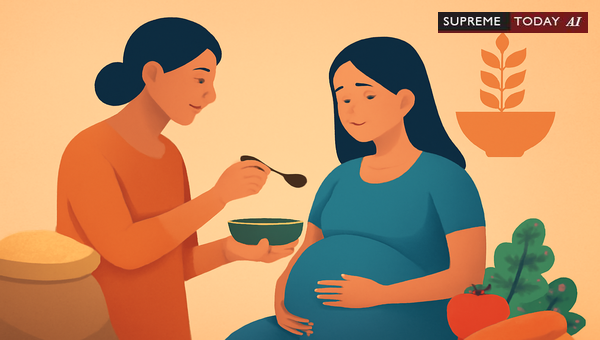
Does a Working Woman Still Get ? Insights
Many women in India, especially those balancing careers and motherhood, wonder: Agar mahila kama rahi hai to bhi use milega? Judgement kya kehta hai? (If a woman is earning, will she still get ? What does the judgement say?). This common query arises amid schemes aimed at maternal and child welfare. The good news? Legal frameworks prioritize health over employment status. This post breaks down the law, key judgements, and eligibility details to empower you with knowledge.
Note: This is general information based on statutes and precedents. Consult a legal expert for personalized advice.
Understanding : What It Means
refers to provided to pregnant and lactating women under government schemes. It's part of broader initiatives to combat malnutrition, ensuring mothers and children receive adequate meals, supplements, and care. Rooted in constitutional rights to health and nutrition under , these benefits are not like some welfare programs.
The core law is the (NFSA), which mandates free meals via anganwadi centers. Importantly, eligibility hinges on pregnancy or lactation status, not income or job2021 1 Supreme 97.
Legal Provisions: NFSA and Beyond
– Section 4
explicitly states: every pregnant woman and lactating mother shall be entitled to—(a) meal, free of charge, during pregnancy and six months after the child birth, through the local anganwadi, irrespective of her employment status2021 1 Supreme 97. No clauses mention income thresholds or work conditions. This universal approach ensures vulnerable groups aren't excluded.
Implementing rules under NFSA and reinforce this. emphasize registration at , focusing on maternal status 2022 0 Supreme(SC) 376.
's Stance
The has upheld these rights, stressing the State's to provide nutrition, especially to pregnant women and children, regardless of employment2021 1 Supreme 97. In relevant rulings, the Court linked food rights to (right to life), declaring schemes like NFSA and ICDS non-discriminatory.
The right to food and nutrition is a under of the Constitution. The Court emphasized that the State’s to ensure health and nutrition is not dependent on the employment status of women 2021 1 Supreme 97.
Key Eligibility Points
Here's a breakdown of why working women qualify:
- Irrespective of Employment: NFSA provides to pregnant/lactating women without conditions on work or earnings2021 1 Supreme 97.
- Anganwadi Access: Register at your local center for free meals during pregnancy and 6 months post-delivery.
- No Income Test: Unlike cash maternity benefits (which may exclude government employees), has no such bar2021 1 Supreme 97.
- Focus on Vulnerability: Schemes target maternal health to prevent low birth weights and malnutrition in kids 2022 0 Supreme(SC) 376.
Exceptions and Limitations
While broad, there are nuances:
- : Women in regular government jobs may not get cash entitlements, but via remains intact2021 1 Supreme 97.
- Registration Required: Benefits start post-enrollment; delays can hinder access.
- No Explicit Disqualification: Documents confirm no provision bars working women from 2022 0 Supreme(SC) 376.
In broader welfare contexts, courts have quashed overreaches that deny rights based on unrelated factors. For instance, in cases involving maternal health allegations, judicial scrutiny ensures protections aren't arbitrarily withheld, aligning with NFSA's intent 1982 0 Supreme(Pat) 160.
Policy Guidelines and Implementation
ICDS and NFSA guidelines prioritize:
- Pregnancy/lactation confirmation.
- Child's age (up to 6 months for lactation benefits).
- Local anganwadi linkage 2022 0 Supreme(SC) 376.
The guidelines and rules framed under the NFSA and ICDS schemes specify that the entitlement to is based on registration and enrollment at anganwadi centers, not on income or employment status 2022 0 Supreme(SC) 376.
Awareness gaps persist, as seen in RTI queries on scheme access, where courts affirm entitlements without bureaucratic hurdles like employment checks 2024 Supreme(Online)(CIC) 4781.
Recommendations for Eligible Women
- Register Early: Visit your anganwadi upon pregnancy confirmation.
- Know Your Rights: Cite NFSA Section 4 if denied benefits.
- Raise Awareness: Schemes need better outreach; participate in local drives.
- Seek : Use helplines or portals for implementation issues.
Implementation agencies must adhere strictly: eligibility criteria are strictly based on pregnancy/lactation status and registration, not employment or income 2021 1 Supreme 97.
Broader Context: Maternal Rights in India
This ruling fits into expansive welfare jurisprudence. Courts have protected vulnerable women in diverse scenarios, from quashing baseless FIRs in health-related cases to upholding nutritional duties 1982 0 Supreme(Pat) 160. Even in high-profile matters, like film certifications or public health discourse, judges prioritize non-discrimination in welfare 2021 0 Supreme(Bom) 1067 2015 0 Supreme(Del) 2600.
Related precedents affirm access to aid without prejudice, echoing NFSA's spirit 2022 Supreme(Online)(DEL) 5208.
Conclusion: Empowerment Through Law
In summary, yes, a working or earning woman is entitled to . Employment doesn't disqualify; the focus is maternal and child nutrition. Backed by NFSA 2013, directives, and scheme rules 2021 1 Supreme 97 2022 0 Supreme(SC) 376, these benefits are a right, not a privilege.
Key Takeaways:- Entitlement based on pregnancy/lactation, not income.- Free anganwadi meals for 9+6 months.- State duty under .
Stay informed, register promptly, and advocate for seamless delivery. For tailored guidance, approach legal aid services.
References:1. 2021 1 Supreme 97: NFSA provisions and emphasis.2. 2022 0 Supreme(SC) 376: Scheme guidelines on eligibility.
Empower yourself and others—nutrition is every mother's right.
#BharanposhanRights, #NFSA, #MaternalWelfare












