


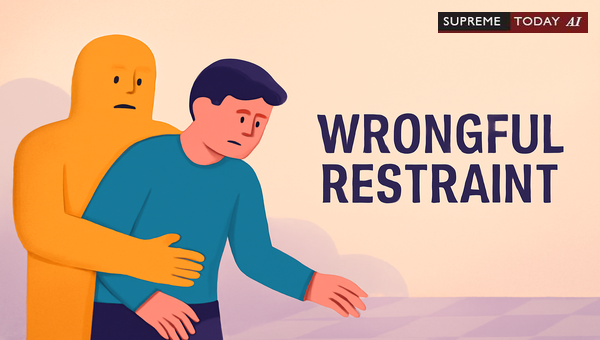
Understanding : Essential Ingredients Under Section 339
In the realm of criminal law, particularly under the (), certain offenses deal with interference in . One such offense is , which often arises in disputes involving physical or perceived blockages to movement. But what exactly constitutes ? This blog post delves into the essential ingredients of the offence of , drawing from statutory definitions, case laws, and legal commentaries to provide clarity.
Whether you're a legal practitioner, a business owner facing potential disputes, or simply someone interested in criminal law, understanding these elements can help navigate everyday conflicts legally. Note that this is general information and not specific legal advice—consult a qualified lawyer for your situation.
What is ? The Statutory Definition
Essential Ingredients of the Offence of are enshrined in , which states: .—Whoever voluntarily obstructs any person so as to prevent that person from proceeding in any direction in which that person has a , is said to wrongfully restrain that person. 2024 0 Supreme(Cal) 852
This definition breaks down into core components that must all be proven for the offense to stand. Courts consistently emphasize these ingredients across judgments and legal texts. 2022 0 Supreme(SC) 1243 2012 0 Supreme(Guj) 278
1. by the Accused
The first pillar is . The act must be intentional and deliberate, not accidental. As outlined, The act must be done voluntarily by the accused. 2024 0 Supreme(Cal) 852 2022 0 Supreme(SC) 1243
Physical acts like blocking a path are classic examples, but the law has evolved. Physical presence isn't always required. Verbal acts or gestures that induce a reasonable belief of obstruction can suffice. 2012 0 Supreme(Guj) 278 In the case of Madala Peraiah v. Voruganti Chendriah, the court held that can occur by causing the victim to believe it is impossible or dangerous to proceed, even without physical obstruction. 2012 0 Supreme(Guj) 278
2. Prevention from Proceeding in a Specific Direction
The obstruction must prevent the person from proceeding in a specific direction. It's not about total immobilization but partial restriction. The obstruction must prevent the victim from proceeding in a specific direction. 2024 0 Supreme(Cal) 852 2022 0 Supreme(SC) 1243
This distinguishes it from broader restraints. For instance, blocking one exit while others remain open might qualify if it targets a lawful path.
3. The Victim's
Crucially, the obstructed person must have a in that direction. This right could stem from public roads, private property access, or contractual permissions. The person obstructed must have a in that particular direction. 2024 0 Supreme(Cal) 852 2022 0 Supreme(SC) 1243
Without this lawful right, no offense occurs. Legal texts reinforce: The accused must have intentionally obstructed... the person must have a in that direction. 2022 0 Supreme(SC) 1243
Key Differences: vs.
A common confusion arises between () and (). The former involves partial prevention—obstructing movement in one direction—while the latter imposes total restraint within defined limits. The difference between and is that the former involves partial prevention (obstructing movement in one direction), whereas involves total restraint within limits. 2012 0 Supreme(Guj) 278
This nuance is vital in prosecutions, as misclassification can lead to case dismissals.
Insights from Case Law and Judicial Interpretations
Courts rigorously scrutinize whether these ingredients are met. In one instance, a complaint failed because the complaint also fails to disclose the necessary ingredients to constitute the offence of . 2024 Supreme(Online)(KER) 32083 The court quashed proceedings, noting Section 339's requirements weren't satisfied.
Similarly, in a Kerala Legislative Assembly case involving allegations against MLAs for obstructing the Finance Minister's budget presentation, the quashed complaints under . The court found that allegations of ... did not meet the necessary legal criteria. 2024 Supreme(Online)(KER) 32083 It emphasized: The right to protest does not extend to or assault. 2024 Supreme(Online)(KER) 32083
Another reference questions testimony's sufficiency: However, the first question which arises is whether this testimony establishes an offence of . 2025 Supreme(Online)(Del) 3595 Such cases highlight that mere allegations aren't enough—proof of , directional prevention, and lawful right is essential.
Exceptions and Defenses to
Not every obstruction qualifies as criminal. Exceptions include:- Good faith acts: Obstruction over private land believed to be lawful. 2012 0 Supreme(Guj) 278- Reasonable belief: If the victim doesn't reasonably believe they're obstructed, no offense. 2012 0 Supreme(Guj) 278
Verbal prohibitions or gestures can still constitute the offense if they induce a reasonable belief of obstruction. 2012 0 Supreme(Guj) 278
Practical Recommendations for Legal Practitioners
When building a case:1. Prove voluntariness: Gather evidence of intent via witnesses or videos.2. Demonstrate prevention: Show specific directional blockage.3. Establish right: Use property deeds, easements, or public access laws.4. Leverage non-physical evidence: Words or gestures suffice if they create reasonable apprehension.
Prosecutors must tie facts to these ingredients meticulously, as courts often quash deficient complaints. 2024 Supreme(Online)(KER) 32083
Conclusion and Key Takeaways
In summary, the essential ingredients of under Section 339 are:1. Voluntary act of obstruction. 2024 0 Supreme(Cal) 8522. Prevention of proceeding in a particular direction. 2022 0 Supreme(SC) 12433. The victim's lawful right to that direction. 2012 0 Supreme(Guj) 278
These elements ensure the law targets unjust interferences without criminalizing legitimate actions. By understanding them, individuals and professionals can better assess situations involving movement restrictions.
Key Takeaways:- Focus on intent, specificity, and rights.- Distinguish from confinement for accurate charging.- Courts demand clear proof—vague claims fail.
This analysis is based on established legal sources and is for informational purposes only. For tailored advice, seek professional legal counsel.
References:- 2022 0 Supreme(SC) 1243: Elements including and .- 2012 0 Supreme(Guj) 278: Case laws on non-physical obstruction and distinctions.- 2024 0 Supreme(Cal) 852: Statutory definition and ingredients.- 2025 Supreme(Online)(Del) 3595, 2024 Supreme(Online)(KER) 32083: Judicial quashing for lack of ingredients.
#WrongfulRestraint, #IPC339, #CriminalLaw












