
 Back
Back





IN THE HIGH COURT OF KARNATAKA AT DHARWAD
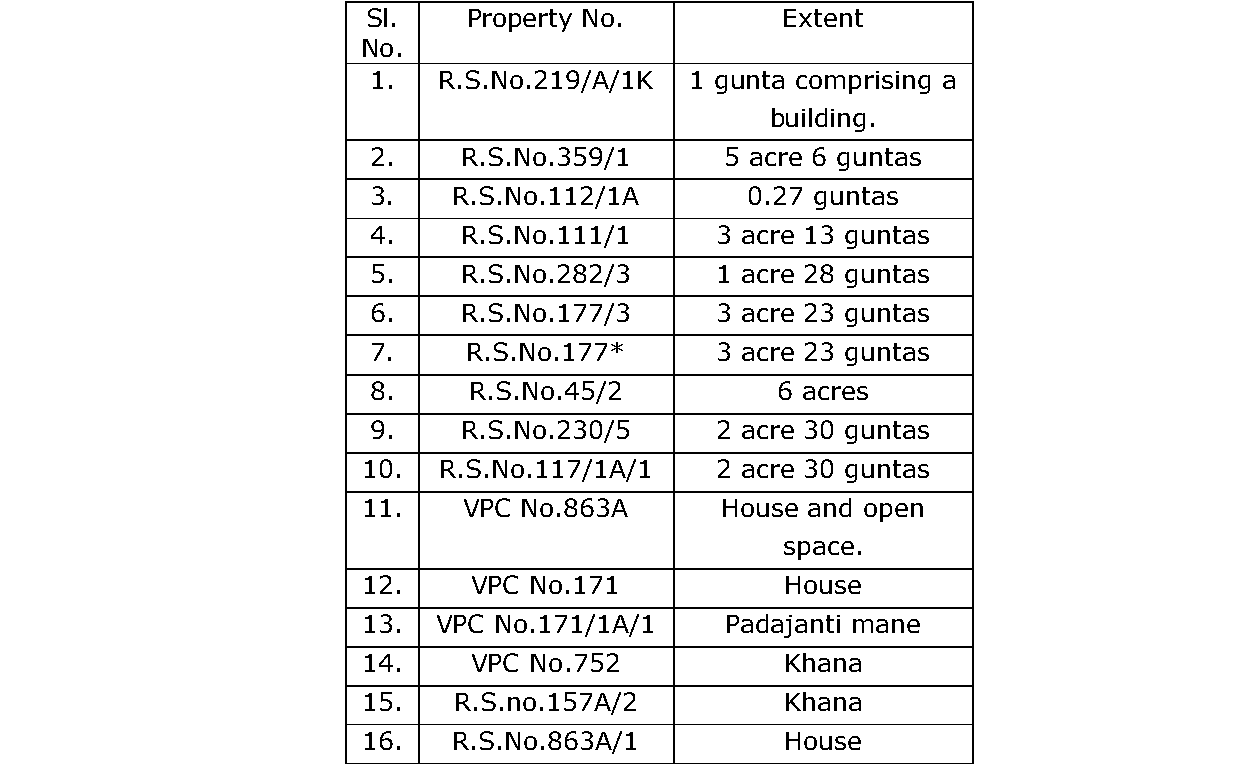
R.DEVDAS, B.MURALIDHARA PAI, JJ.
Manjula W/o Shankarappa Majjigi – Appellant
Versus
Pramila W/o Maheshappa Halabhavi – Respondent
RFA No. 100164 of 2021
Decided On : 12-12-2025
| Table of Content |
|---|
| 1. factual background of partition suit (Para 1 , 3 , 4 , 8) |
| 2. legitimacy of children born during marriage (Para 10 , 18 , 22) |
| 3. counsel's arguments regarding evidence and legitimacy (Para 11 , 12 , 13 , 19) |
| 4. court's observations on legal interpretations (Para 14 , 15 , 16 , 20 , 21 , 26 , 28) |
| 5. judgment and final orders (Para 29 , 30 , 31) |
JUDGMENT :
B. MURALIDHARA PAI, J.
1. Defendant Nos. 3 to 7 in O.S. No. 292/2018, on the file of the learned III Additional Senior Civil Judge and JMFC, Ranebennur, have preferred this Regular First Appeal challenging the judgment and decree dated 17.04.2021 passed therein and have sought dismissal of the said suit by allowing this appeal.
2. The parties to this appeal are referred herein with their original ranking before the trial court.
3. The plaintiff namely Smt. Pramila, instituted the suit in O.S. No. 292/2018 seeking partition and separate possession of her 1/3rd share in the schedule properties comprising of total 16 items of properties situated at Halageri Village in Ranebennur Taluk. It was her contention that the schedule properties are the ancestral and undivided joint family properties and the properties acquired from the income of joint family properties and that she is entitled to a 1/3rd share therein. She contended that Defendant No.7 was a woman maintained by Defendant No.1 outside wedlock and Defendants No.3 to 6 are their children. She alleged that Defendant No.1 has created certain revenue records in the names of Defendant Nos. 3 to 6 with an intention of depriving her legitimate share in the schedule properties. The plaintiff maintained the suit with a contention that when she demanded Defendant No.1 to give her share in the schedule properties, he refused her such request on the ground that there was already a partition in the family.
4. Upon service of summons, Defendant Nos. 1 to 7 entered appearance before the trial Court through their respective counsels. Defendant Nos. 1, 2, and 5 filed separate written statements, whereas Defendant Nos. 3, 4, 6, and 7 adopted the written statement filed by Defendant No. 5.
5. In his written statement, Defendant No.1 admitted that Item Nos. 7, 11, 15, and 16 of the schedule properties had devolved upon him from his ancestors, and contended that all the remaining properties are his self-acquired properties. He further contended that neither the plaintiff nor the other defendants have any manner of right, title, or share in the schedule properties.
6. Defendant No.5 has put forth contentions similar to that of Defendant No.1. Whereas, Defendant No.2 has conceded the contentions urged by the Plaintiff and also sought for his 1/3rd share in the schedule properties.
7. Based on the pleadings of the parties, the trial Court framed the following issues for its consideration:
1. Whether plaintiff proves that the suit schedule properties are the Hindu Undivided ancestral properties of plaintiff and defendants No.1 and 2?
2. Whether plaintiff proves that she is having 1/3rd share in the suit schedule properties?
3. Whether plaintiff further proves that, the sale transaction in respect of suit B schedule properties taken place between 1st defendant and defendants No.3 to 6 and the name of these defendants mutated in the revenue documents by way of giving wardi by the 1st defendant are illegal and not binding on the rights of plaintiff and 2nd defendant?
4. Whether 1st defendant proves that the plaintiff had already taken her share by way of money, gold and silver ornaments?
5. Whether 6th defendant proves that the suit is barred by limitation?
6. Whether plaintiffs are entitled to the relief as prayed for?
7. What decree or order?”
8. During trial of the case, the Plaintiff adduced her evidence as PW-1 and got marked documents at Ex.P1 to P41. Similarly, Defendant Nos.1 and 2 deposed before the trial court as DW-1 and DW-2 respectively, examined two more witnesses and got marked documents at Ex.D1 to D114.
9. On completion of evidence on bot
AI
Children born from void marriages are entitled to inherit their father's share but do not hold coparcener rights until the father's death.

The court established that there is no presumption of joint ownership in family properties, and the burden of proof to establish such claims lies with the party alleging joint ownership.

Daughters have equal rights as sons in ancestral property under the Hindu Succession Act, 2005, regardless of prior claims of partition.

The presumption of joint family status in Hindu law requires clear evidence to establish prior partition; the Appellate Court allowed partition of one property acquired post-partition while dismissin....
The court reaffirmed that daughters have equal rights as sons in ancestral properties, emphasizing the applicability of Section 6 of the Hindu Succession Act.

Daughters became coparceners under Hindu Succession (Tamil Nadu Amendment) Act, 1989, allowing them equal rights in joint family properties.

The main legal point established in the judgment is that a child born out of a void marriage is not entitled to claim partition of the joint family properties during the lifetime of the parent but ma....



An indispensable Tool for Legal Professionals, Endorsed by Various High Court and Judicial Officers
Please visit our Training & Support
Center or Contact Us for assistance

Scan Me!
India’s Legal research and Law Firm App, Download now!


For Daily Legal Updates, Join us on :



 Back to top


