
 Back
Back





IN THE JUDICATURE OF HIGH COURT AT BOMBAY AURANGABAD BENCH
ARUN R. PEDNEKER, VAISHALI PATIL-JADHAV, JJ.
Executive Director, G.M.I.D.C. – Appellant
Versus
M/s Gurunanak Industries, Now G.N.I. Infrastructure Pvt. Ltd. – Respondent
Commercial Appeal No. 09 of 2019
Decided On : 17-01-2026
Certainly. Here are the key points derived from the provided legal document:
The suit was filed within the limitation period because the cause of action arose upon the non-payment of the final bill, specifically after the last R.A. Bill was measured and drawn on 12/04/2016. The limitation period started from this date, making the suit filed in 2017 timely (!) (!) (!) (!) .
The contractual work was completed on 30/06/2013, but the final measurement and payment were only made on 12/04/2016. The cause of action for the claim regarding price escalation crystallized only after this final payment, which is why the limitation period is considered to begin from this date (!) (!) (!) .
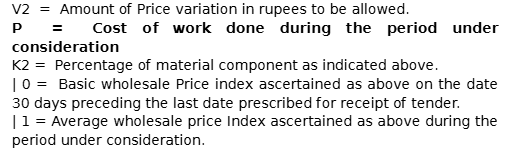
The dispute primarily concerns the interpretation of the price variation clause (Clause 56). The clause prescribes that escalation should be calculated separately for each R.A. Bill based on the period covered by that bill, rather than averaging escalation over the entire contract period (!) (!) (!) (!) (!) (!) (!) (!) (!) (!) .
The contractual scheme involves paying escalation amounts in each R.A. Bill, which are based on the specific period for that bill. The contractor accepted these payments over nearly 20 years, indicating acceptance of the escalation calculations at each stage (!) (!) .
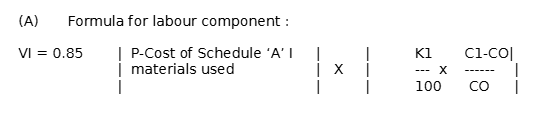
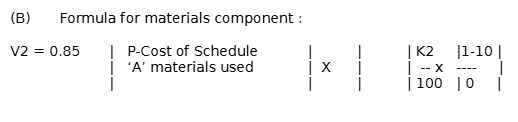
The interpretation that the entire contract period should be averaged for escalation calculation is inconsistent with the language of the clause, which explicitly refers to the "cost of work done during the period under consideration" (i.e., each R.A. Bill period). The formulas are designed to compute escalation separately for each bill period, not cumulatively over the entire contract duration (!) (!) (!) .
The payments made under each R.A. Bill, including the final one, were in accordance with the contractual formulas, and the plaintiff's claim for additional escalation based on a cumulative average is unsupported by the contractual language (!) .
Since the escalation was properly computed and paid in each R.A. Bill, the claim for a lump sum additional amount of Rs. 5,76,25,112/- is without contractual or legal basis and is thus rejected (!) .
The appellate court found that the suit was within the limitation period, and the interpretation of the contractual clauses was correct. Consequently, the judgment in favor of the plaintiff was set aside, and the appeal was allowed (!) (!) .
Would you like a detailed summary or specific legal implications based on these points?
| Table of Content |
|---|
| 1. contract award and completion timeline (Para 3 , 4 , 5 , 6 , 7 , 8) |
| 2. defendants' contesting arguments on payments (Para 9 , 10 , 11 , 12 , 13) |
| 3. limitation act applicability in law (Para 17 , 21 , 24) |
| 4. price variation clause interpretation (Para 41 , 42 , 43) |
| 5. judgment dissolution and appeal conclusion (Para 51 , 52) |
JUDGMENT :
ARUN R. PEDNEKER, J.
1. The present Commercial Appeal is filed by the original defendants, who are aggrieved by and dissatisfied with the judgment and decree dated 09/08/2019, passed by the learned District Judge-1, Jalna, in Commercial Suit No. 08 of 2019, whereby the suit for recovery of an amount of Rs.5,76,25,112/- along with interest at the rate of 15% per annum from the date of filing of the suit till realisation is decreed.
2. Heard the learned Counsel Mr. S.G. Bhalerao for the appellants, the learned Counsel Mr. A.P. Bhandari for respondent No.1 and the learned AGP Mr. A.R. Kale for respondent No.2-State.
FACTS :
3. The case of the plaintiff, as pleaded in the plaint, in brief, is as follows :
The original defendants invited tenders for the construction work of “Nimna Dudhana Project – Earthen Dam, Chainages 580 to 2810 meters” situated in Jalna District. The plaintiff emerged as the lowest bidder and was awarded the contract by Defendant No.5 on 16/03/1995. The stipulated period for completion of the work was 24 calendar months, i.e. up to 15/03/1997.
4. The estimated cost of the work was Rs.2,09,92,740/-, whereas the accepted contract value was Rs.2,80,25,309/-. The plaintiff furnished an advance security deposit of Rs.2,80,253/- by way of bank guarantee as per the contractual conditions.
5. Although the contractual period was initially 24 months, extensions of time were granted from time to time, ultimately extending the period up to 30/06/2003. During execution, additional work relating to excavation and masonry dam from Chainage 2810 meters to 3040 meters was attached to the original work, and the time for completion was correspondingly extended.
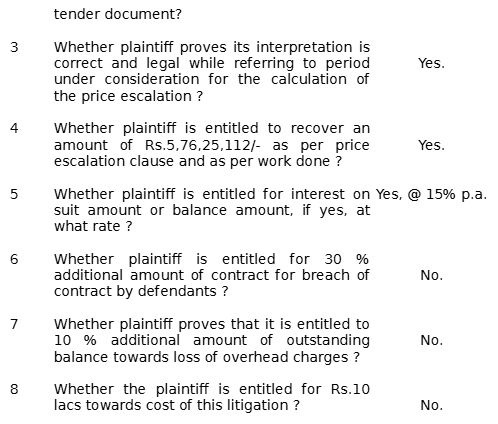
6. It is the plaintiff’s case that the site was not made available in its entirety within a reasonable time, owing to which further extensions became necessary. The plaintiff relies upon the Price Variation Clause (Clause No.56 at Page 80 of the Tender), which permits escalation or deduction in the contract price on account of variation in labour, material, and fuel costs during the operative period of the contract, as calculated in accordance with the prescribed formula.
7. The plaintiff asserts that the work was completed on 30/06/2013, and the final measurements were recorded and the last Running Account (R.A.) Bill was drawn on 12/04/2016. According to the plaintiff, excess quantities had to be executed due to erroneous and inadequate assumptions at the time of floating the tender.
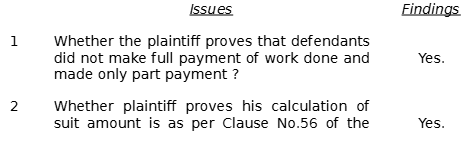
8. Despite repeated requests since 2016, the defendants allegedly failed to release the balance amount. The total outstanding amount payable under the tender terms was claimed to be Rs.10,02,91,108/- whereas the defendants paid only Rs.4,26,65,996/- by cheque in the year 2016 . According to the plaintiff, the defendants failed to pay the correct escalation amount as per Clause 56, leaving a balance of Rs.5,76,25,112/-, which compelled the plaintiff to institute the suit. Thus Commercial Civil Suit was filed by the respondents (original plaintiffs) seeking recovery of compensation amounting to Rs.5,76,25,112/-, together with interest at the rate of 24% per annum from the last date of payment, i.e. 12/04/2016.
9. The suit is contested by the defendants/present appellants by filing a written statement. It is the case of the defendants that the department granted extensions of time solely with the intention of enabling completion of the tender work, as the progress of the work was not as expeditious as agreed.
10. It is stated that after issuance of the work order and upon completion of the work by the plaintiff, the defendants, after recording measurements, mad

AI
The suit was within limitation as the cause of action accrued upon the non-payment of the final bill, and not completing the price escalation calculations per the contract terms invalidated the defen....

The main legal point established in this judgment is the requirement for proper pleading and proof of claims, including escalation charges and interest, in a contract dispute. The Court emphasized th....

The main legal point established in this judgment is that the award of escalation charges and interest in a commercial contract dispute should be based on proper pleading, proof, and consideration of....


The main legal point established in the judgment is the entitlement of the petitioner to escalation cost under the contractual provision of Clause-32(a)(b)(c) despite the submission of a 'no claim ce....


Escalation of contract rates is permissible when delays are not due to the contractor's fault, allowing for additional payment for work done after significant delays.



An indispensable Tool for Legal Professionals, Endorsed by Various High Court and Judicial Officers
Please visit our Training & Support
Center or Contact Us for assistance

Scan Me!
India’s Legal research and Law Firm App, Download now!


For Daily Legal Updates, Join us on :



 Back to top


