
 Back
Back





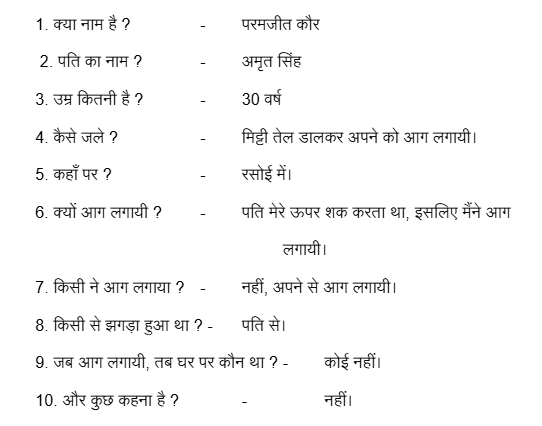
HIGH COURT OF CHHATTISGARH AT BILASPUR
RAJANI DUBEY, J.
Amrit Singh, S/o. Makkhan Singh – Petitioner
Versus
State of Chhattisgarh, Through Police of Police Station – Respondent
CRA No. 152 of 2013
Decided On : 12-09-2025
| Table of Content |
|---|
| 1. background of the case and prosecution's evidence. (Para 1 , 2 , 4) |
| 2. arguments by the appellant and respondent. (Para 5 , 6) |
| 3. court's analysis of the evidence and legal principles. (Para 7 , 8 , 20 , 22) |
| 4. ratio decidendi related to abetment of suicide. (Para 12 , 18 , 19 , 21) |
| 5. final ruling and orders by the court. (Para 23 , 24 , 25) |
Judgment :
Rajani Dubey, J.
1. This appeal under Section 374(2) of Cr.P.C. has been filed by the appellant against the judgment of conviction and order of sentence dated 04.01.2013 passed by learned Sessions Judge, Korea, (Baikunthpur) C.G., in Sessions Trial No. 88/2009 whereby the trial Court convicted the appellant for the offence punishable under Section 306 of IPC and sentenced to undergo RI for 7 years and to pay fine of Rs. 1000/- and in default of payment of fine, to undergo additional RI for 6 months.
2. Case of the prosecution, in brief, is that Paramjeet Kaur, wife of Amrit Singh Sardar, aged about 30 years, R/o near Nepal Gate Charcha New Market, was admitted to Regional Hospital Charcha for treatment on 30.12.2008 in a 90% burnt condition. On the hospital memo sent by Dr. Ashok Kumar Viraji, Senior Medical Officer, the dying declaration of the patient was recorded by sending it to Sub-Divisional Magistrate. In her dying declaration before the Executive Magistrate Baikunthpur on 30.12.2008, Paramjeet Kaur told that her husband doubted on her character, so she poured kerosene on herself and set herself on fire. Thereafter, on 03.01.2009, Police Station Charcha received a memo for taking the patient out by her relatives for high level treatment. Thereafter, the injured Paramjit Kaur was admitted to the hospital in Sector-9, Bhilai for treatment, where she died during treatment on 07.01.2009. When the hospital management informed the Police Station Bhilai Nagar about the death of the deceased Paramjit Kaur, an unnumbered case was registered at Police Station- Bhilai. After the Panchnama of the dead body of the deceased Paramjit Kaur, the post-mortem was conducted and the body was handed over to the heirs of the deceased.
On the basis of the unnumbered case registered at Police Station- Bhilai, case No. 02/2009 was registered at Police Station- Charcha. After the inquest, Crime No. 89/2009 was registered against the accused. The accused was arrested. After completing all the formalities of investigation, a charge sheet was filed before the learned trial Court against the accused under Section 306 of the Indian Penal Code followed by framing of charge, to which appellant abjured his guilt and prayed for trial.
3. So as to hold the accused/appellant guilty, the prosecution examined as many as 19 witnesses. Statement of the accused/appellant was also recorded under Section 313 of the Cr.P.C. in which he denied all the incriminating circumstances appearing against him and pleaded innocence and false implication in the case. However, he did not adduce any evidence in his defence.
4. Learned trial Court upon appreciation of oral and documentary evidence available on record, by its judgment dated 04.01.2013 finding evidence adduced by the prosecution trustworthy, convicted and sentenced him as mentioned in para 1 of this judgment. Hence, this appeal.
5. Learned counsel for the appellant submits that the impugned judgment passed by learned trial Court is bad in law as well as facts available on record. Learned trial Court failed to appreciate the evidence and documents in its correct perspective. The learned trial Court failed to appreciate that the ingredients of Section 107 of Indian Penal Code would not be attracted in the present case. The learned trial Court failed to appreciate that the dying declaration which was recorded by Nayab Tahsildar- Amit Gupta (P.W.-16) cannot be relied upon for convicting the appellant as a question put by the Nayab Tahsildar did not prove the guilt of the appellant. The learned trial Court failed to appreciate that in the dying declaration it has
AI
Conviction for abetment of suicide under IPC requires proof of direct instigation or action closely linked to the act, which was not established in this case.


A dying declaration, while crucial, cannot solely support a conviction for abetment of suicide or cruelty without corroborative evidence and clear proof of intent.


The judgment emphasizes the requirement of unqualified clarity and conviction in proving the accused's culpability under Section 306 IPC, highlighting the necessity of mens rea and a direct link betw....
The court confirmed that to convict for abetment of suicide, clear evidence of instigation or intent must be established, which was not proven in this case.



An indispensable Tool for Legal Professionals, Endorsed by Various High Court and Judicial Officers
Please visit our Training & Support
Center or Contact Us for assistance

Scan Me!
India’s Legal research and Law Firm App, Download now!


For Daily Legal Updates, Join us on :



 Back to top


