
 Back
Back





2025:DHC-1178
IN THE HIGH COURT OF DELHI AT NEW DELHI
MANMEET PRITAM SINGH ARORA, J.
Addictive Learning Technology Limited and Another – Appellants
Versus
Aditya Garg and Others – Respondents
C.S. (OS) No. 570 of 2024, I.A. Nos. 34094-34098 of 2024
Decided On : 20-02-2025
Advocates Appeared :
For the Appellant : Raghav Awasthi
For the Respondents : Himanshu Bhushan, Shagun Srivastava
JUDGMENT :
MANMEET PRITAM SINGH ARORA, J.
1. The captioned suit has been filed seeking a decree of permanent injunction along with damages. The subject matter of the suit are the tweets published by defendant nos. 1, 2, 4 and 5 on the social media platform known as ‘X’ (formerly ‘Twitter’), which has been impleaded as defendant no. 3 in the present suit. It is the case of plaintiff nos. 1 and 2 that the impugned tweets are harmful and derogatory to the said plaintiffs and has defamed plaintiffs in Cyber Space.
2. This Court considered it fit to examine the plaint and the documents on the basis of a demurer and assess the contentions therein, particularly since it was prima facie apparent to this Court that there was no cause of action for defamation on the basis of which the suit was filed. Post the detailed assessment of the case at hand given below, this Court indeed concluded that plaint fails to disclose cause of action and, therefore, the present plaint ought to be rejected.
Case setup by the Plaintiffs
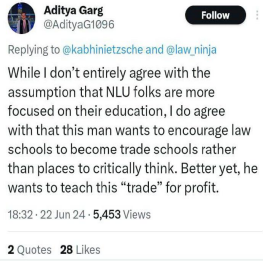
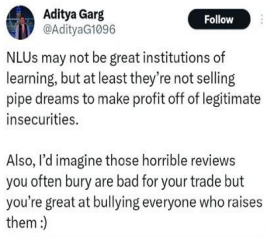
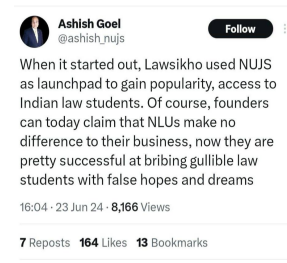
3. In the plaint, the plaintiffs have challenged two (2) tweets published by defendant no. 1 and one (1) tweet published by defendant no. 4, which forms part of a ‘Conversation Thread No.1’ initiated by defendant no. 1 on his personal X handle. Similarly, the plaintiffs have challenged two (2) tweets published by defendant no. 2 and one (1) tweet published by defendant no. 5, which forms part of a ‘Conversation Thread No.2’ initiated by defendant no. 2 on his personal X handle.
3.1 It is stated in the plaint that the conversation threads initiated by defendant no. 1 and defendant no. 2 are reactionary and finds its genesis in a tweet which was first published by plaintiff no. 2 on his personal X handle at 11:20 a.m. on 22.06.2024 (‘Lead Tweet’). It is stated in the plaint [Paragraph ‘13’ to the plaint] that the plaintiff no. 2 posted the said Lead Tweet in good faith, with the intention of shedding light on a significant trend in the legal industry that impacts law students, law firms and educational institutions. It is stated that the said Lead Tweet was intended to motivate law students, who may not have the financial means to attend top National Law Universities (‘NLUs’).
Conversation Thread No.1 (Inter-se between Defendant no.1 and 4)
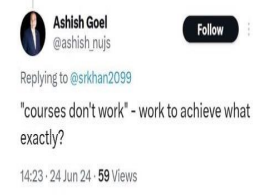
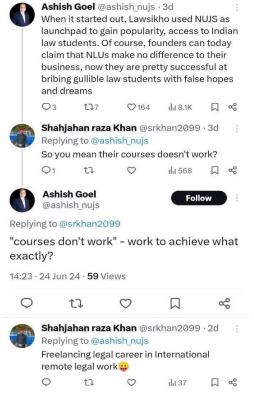
4. It is stated that defendant no. 1 as a response to the aforesaid Lead Tweet, quote tweeted [A re-tweet with comment. In other words, when a user reposts, another user tweet and adds their own comment or thoughts to it. This feature allows user to share someone else’s tweet and add their own context and perspective to it] the said Lead Tweet on his personal X handle on 22.06.2024 at 01:41 p.m. with his reactionary comment, which started a conversation thread between defendant no. 1 and other users of the X platform. During the course of this conversation thread, defendant no. 1 while responding to another ‘X’ user posted a reply tweet [Document no. 8 to the plaint] at 06:32 p.m. on 22.06.2024, which according to the plaintiffs herein contained defamatory elements (‘Impugned Tweet No. 1’)
4.1 Plaintiff no. 2 has stated that the quote tweeted his response to defendant no. 1’s aforesaid reply tweet from his personal X handle at 06:43 p.m. on 22.06.2024. Plaintiff no. 2 has placed on record [Document no. 9 to the plaint] his response tweet (Plaintiff no.2’s response tweet).
4.2 It is stated that defendant no. 1 once again in reply to aforementioned Plaintiff no. 2’s response tweet (quote tweet) published his response on his personal X handle at 06:51 p.m. [Document no. 10 to the plaint] on 22.06.2024 (‘Impugned Tweet No. 2’) and as per the plaintiffs this reply tweet of defendant no. 1 is defamatory in nature.
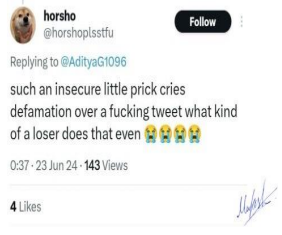
4.3 It is stated that defendant no. 4, who is anonymous to the plaintiffs published a reply tweet at 12:37 a.m. [Document no. 11 to the plaint] on 23.06.2024 in this conversation thread, which contained the alleged unwarranted and malicious attack on plaintiff no. 2’s character, causing damage t



AI
Defamation claims arising from social media interactions require substantial evidence of harm and context consideration; provocative exchanges may negate defamation claims.

Defamation plaint rejected under Order VII Rule 11 CPC: social media posts in casual conversational groups read impressionistically in context; no cause of action absent identifiability, substantial ....
The right to freedom of speech and expression is protected, but it does not entitle anyone to resort to speech that is defamatory. In a defamation suit, the Defendant has the burden of proving the tr....

The twits made by the petitioner did not constitute the offence of defamation under Sections 499 & 500 of IPC.

The judgment established the balance between freedom of speech and expression and the right to reputation, and granted interim relief to protect the reputation of the plaintiffs.


The court clarified that defamatory statements made on social media can significantly harm a person's reputation, warranting damages even if the plaintiff does not prove exact injury amounts.
The court ruled that the right to freedom of speech takes precedence over defamation claims unless a strong prima facie case is established, underscoring the necessity to balance fundamental rights.
The court established that defamatory statements made on social media can lead to liability, regardless of the defendant's belief in their truth, and awarded damages for reputational harm.



An indispensable Tool for Legal Professionals, Endorsed by Various High Court and Judicial Officers
Please visit our Training & Support
Center or Contact Us for assistance

Scan Me!
India’s Legal research and Law Firm App, Download now!


For Daily Legal Updates, Join us on :



 Back to top


