
 Back
Back





IN THE HIGH COURT OF GUJARAT AT AHMEDABAD
ILESH J.VORA, R.T. VACHHANI, JJ.
Rameshbhai Bachubhai Vaidhukiya - Appellant
Versus
State of Gujarat & Anr. – Respondents
R/Criminal Appeal (Against Conviction) No. 695 of 2020 With R/Criminal Confirmation Case No. 2 of 2020
Decided On : 06-02-2026
Key Points: - The prosecution failed to establish a complete unimpeachable chain of circumstantial evidence beyond reasonable doubt. (!) (!) (!) - The court acquitted the appellant due to lack of reliable evidence, including issues with DNA profiling, chain of custody, and absence of corroboration for eyewitness testimony. (!) (!) (!) - The court emphasized admissibility and reliability concerns of forensic DNA evidence, noting the need for proper demonstration of methodology and chain of custody. (!) (!) (!)
| Table of Content |
|---|
| 1. death reference confirmation and case background (Para 1 , 2 , 3 , 4 , 5 , 6) |
| 2. details of the prosecution's evidence (Para 7 , 8 , 9) |
| 3. appellant's arguments against conviction (Para 10 , 11 , 12 , 13) |
| 4. prosecution's response to appellant's arguments (Para 14 , 15) |
| 5. court's analysis of evidence (Para 16 , 17 , 18 , 19) |
| 6. consideration of circumstantial evidence (Para 20 , 21 , 22 , 23 , 24 , 25 , 26) |
| 7. fundamental principles on proof of guilt (Para 27) |
| 8. judgment and order of acquittal (Para 28 , 29) |
JUDGMENT :
ILESH J. VORA, J.
1. The death reference has come up before this Court for confirmation of a Death Sentence awarded to the appellant – sole accused – Ramesh Bachubhai Vadhukiya, by judgment dated 17.03.2020, passed in Special POCSO (Atro) Case No.28 of 2018, whereby, the Additional Sessions Court at Rajkot, has convicted the appellant accused for the following offences and sentenced as tabulated hereinunder:
| Conviction under Section | Punishment | Fine | In default of fine |
|---|---|---|---|
| 302 of IPC | Death Sentence | Rs.5,000/- | RI for 2 years |
| 376(f)(n) of IPC | Death Sentence | Rs.5,000/- | RI for 2 years |
| 363 of IPC | RI for 7 years | Rs.1,000/- | RI for 1 year |
2. The appellant herein has also questioned the legality and correctness of the judgment of conviction and order of death sentence by preferring conviction appeal (Criminal Appeal No.695 of 2020).
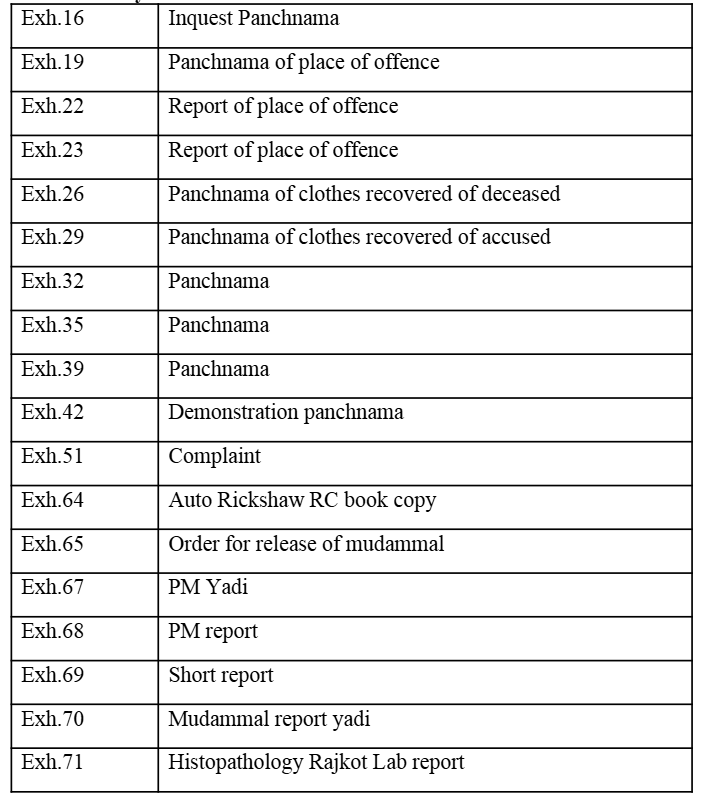
3. The prosecution case, in nutshell, is that, The appellant accused Ramesh Bachubhai was tried and prosecuted for the offence of rape and murder allegedly committed on 3 years old child. The child was kidnapped and then, taken to a secluded place of City Rajkot and to satisfy the lust of the accused, she was sexually abused and due to her screaming, the accused smashed her head with the floor and then, thrashed her face and head with the stone. The incident occurred on 09.02.2018 in the noon hours. The parents of the victim were labourers and when they were busy with their labour work, the accused secretly kidnapped the deceased child who was playing nearby the workplace and then, she was taken by the accused at the old I.I.T Hostel, PTC Ground at Rajkot and the building was in a dilapidated condition and taking advantage of the situation, the child was sexually abused and then, killed by the accused. The parents were in search of the child and in the evening, they lodged a complaint with Thorada Police Station, Rajkot against the unknown person for kidnapping their child. At relevant time, the child had wear yellow frock and leggings and plastic bangles on her hands. On 11.02.2018, the dead body of the child was found and accordingly, the post-mortem on her body being conducted by PW.7 – Dr. Pratik Varu and according to his opinion, the cause of death was multiple injuries on the head and face and there was a sign of recent genital penetration. The necessary blood samples and samples for DNA Profile being taken from the body of the deceased child. The I.O. took visit the place of occurrence and prepared a spot panchnama (Exh.33) and seized and recovered: (i) a quilt in red cover with blood stains marks; (ii) yellow frock; (iii) leggings; (iv) pieces of shirt; (v) pieces of plastic broken bangles; (vi) juite bag and (vii) stones with blood stain marks.
According to prosecution case, the accused after committing the offence, had left the place and purchased a cigarette from the pan shop, owned by PW.13 – Ashraf Harun and the pan shop owner noticed bloodstains on the pant of the accused and when the explanation sought by the pan shop owner about how the blood stains came on the pant, the accused-appellant replied to the query that, there was an accident. After leaving the pan shop, the accused, came to be arrested by the Kuwadava Police, Rajkot, in another offence of murder and the said offence, his clothes marked with blood stains had been seized by the Kuwadava Police. (Kuwadava Police Station CR No.I-19 of 2018 for the offence punishable under Sections 302 and 394 of the Indian Penal Code).
AI
The prosecution failed to establish a reliable chain of circumstantial evidence necessary for conviction, leading to the acquittal of the accused.


The conviction was based on circumstantial evidence, with DNA and witness testimonies establishing the accused's guilt, affirming the death sentence as the case fell within the rarest of rare categor....

The judgment establishes that circumstantial evidence must form a complete, unbroken chain directly linking the accused to the crime, which warranted a life sentence in this case.

Circumstantial evidence, particularly the 'last seen' principle, can suffice for conviction in rape and murder cases yet demands rigorous scrutiny for reliability.
The prosecution failed to establish a complete chain of circumstantial evidence required for a conviction in a murder case, rendering the conviction legally unsound.


The court held that conviction based on circumstantial evidence requires a complete, unbroken chain of circumstances that unerringly point to guilt, which was not established in this case.



An indispensable Tool for Legal Professionals, Endorsed by Various High Court and Judicial Officers
Please visit our Training & Support
Center or Contact Us for assistance

Scan Me!
India’s Legal research and Law Firm App, Download now!


For Daily Legal Updates, Join us on :



 Back to top


