
 Back
Back





IN THE HIGH COURT OF KERALA AT ERNAKULAM
ANIL K. NARENDRAN, HARISANKAR V. MENON, JJ.
VINOD S.R. S/O S. RAMACHANDRAN – Petitioner
Versus
TRAVANCORE DEVASWOM BOARD – Respondent
WP (C) No. 5786 of 2024
Decided On : 29-07-2024
Writ Petition - Temple Advisory Committee Management - Article 226 of the Constitution of India, Rule 155 of the Rules of the High Court of Kerala, 1971 - The court discussed the principles of natural justice and the requirement for decision-makers to provide reasons for their decisions, referencing case law that emphasizes the importance of transparency in administrative actions. The court found that the Devaswom Commissioner's actions were arbitrary and lacked proper reasoning, which influenced its decision to issue an interim order restraining certain committee members from participating in committee activities.
Fact of the Case:
The petitioner, a devotee of Sree Krishna Swamy Temple, filed a writ petition under Article 226 of the Constitution seeking to quash communications regarding the newly elected Temple Advisory Committee, alleging that the decisions made by the Devaswom Commissioner were arbitrary and violated principles of natural justice.
Finding of the Court:
The court found that the Devaswom Commissioner failed to provide adequate reasoning for the decisions made regarding the Temple Advisory Committee, which constituted a violation of natural justice. The court emphasized the necessity for administrative bodies to issue 'speaking orders' that clearly articulate the rationale behind their decisions.
Issues: Whether the communications issued by the Devaswom Commissioner regarding the Temple Advisory Committee were arbitrary and whether the petitioner had the right to challenge these decisions under Article 226 of the Constitution.
Ratio Decidendi: The court held that the failure to provide reasons for administrative decisions is a violation of the principles of natural justice, which can lead to arbitrary governance. The court referenced established case law to support the necessity of transparency in administrative actions.
Final Decision: The writ petition was dismissed as withdrawn, allowing the petitioner the right to challenge the Devaswom Board's order in a new petition with proper pleadings.
JUDGMENT :
ANIL K. NARENDRAN, J.
1. The petitioner, who is a devotee of Sree Krishna Swamy Temple, Neyyattinkara, which is a temple under the management of the 1st respondent Travancore Devaswom Board, has filed this writ petition, invoking the extraordinary jurisdiction of this Court under Article 226 of the Constitution of India, seeking a writ of certiorari to quash Ext.P4 communication dated 22.01.2024 issued by the 3rd respondent Deputy Devaswom Commissioner, (P&SGRC), issued on behalf of the 2nd respondent Devaswom Commissioner, Ext.P5 list dated 29.01.2024 of members of the newly elected Temple Advisory Committee of Sree Krishna Swami Temple, Neyyattinkara; and Ext.P6 communication dated 01.02.2024 of the 3rd respondent Deputy Devaswom Commissioner (P&SGRC), issued on behalf of the 2nd respondent Devaswom Commissioner, whereby the 4th respondent Assistant Devaswom Commissioner, Neyyattinkara has been informed that approval has been granted to the Temple Advisory Committee of that temple with the members in Ext.P5 list. Ext.P4 communication dated 22.01.2024 refers Ext.P3 judgment of this Court dated 22.02.2023 in W.P.(C)No. 9241 of 2021 and connected matters, i.e., W.P.(C) Nos.25720 of 2021 and 35870 of 2022.
2. On 14.02.2024, when this writ petition came up for admission, the matter was admitted on file. The learned Standing Counsel for Travancore Devaswom Board took notice for respondents 1 to 4. Notice on admission by special messenger was ordered to respondents 5 to 11. By the order dated 14.02.2024, the learned Standing Counsel was directed to make available for the perusal of this Court the files relating to Ext.P4 order dated 22.01.2024.
3. On 19.02.2024, when this writ petition came up for consideration, after perusing the files relating to Ext.P4 order dated 22.01.2024 this Court passed an interim order directing respondents 1 to 4 to restrain respondents 5 and 10, who are the President and Vice-President of the Temple Advisory Committee of Sree Krishna Swami Temple, Neyyattinkara, in associating with the activities of that Committee, for a period of two weeks. Paragraphs 4 to 12 of that order read thus:
“4. The learned Standing Counsel has made available perusal of this Court the files relating to Ext.P4 communication dated 22.01.2024. The learned counsel for the petitioner and the learned counsel for the party respondents were also permitted to peruse the files handed over by the learned Standing Counsel.
5. Page No. 513 of that file contains a report dated 04.01.2023 of the 4th respondent Assistant Devaswom Commissioner, addressed to the 2nd respondent Devaswom Commissioner. Ext.P4 communication dated 22.01.2024 is available at page No. 617. The office note on page No. 40 contains a note with Sl.Nos.110 and 111, which is stated to have been placed before the Devaswom Commissioner. That office note contains two initials made on 23.01.2024. One initial at page 40 appears to be that made by the person who has written the office notes at Sl.Nos.110 and 111 and another initial, which according to the learned Standing Counsel for Travancore Devaswom Board, is one made by the then Devaswom Commissioner, namely, C.N.Raman, who was the 8th respondent in W.P.(C)No. 43139 of 2023, against whom a writ of quo warranto was issued. The screenshot of the office note at Sl.Nos.110 and 111 is reproduced hereunder:
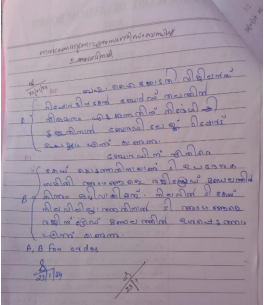
6. Other than the initial stated to have been made by the then Devaswom Commissioner, the office note does not contain any decision taken by the Devaswom Commissioner on the request made by respondents 5 to 11. The reasons stated in the office note at Sl.Nos.110 or 111 find no place in Ext.P4 communication dated 22.01.2024 addressed to 4th respondent Assistant Devaswom Commissioner.
7. An order passed by the Devaswom Commissioner on the request made by respondents 5 to 11 for re-inducting them into the registered mandalam, so as to enable them to participate in the general body meeting for electing the members of the Temple
AI
The necessity for administrative bodies to provide clear reasoning for their decisions is fundamental to ensuring compliance with the principles of natural justice.

The extension of a Temple Advisory Committee's term must comply with statutory provisions and prior court rulings, and cannot be granted for minor works.

The court ruled that suspended members of the Temple Advisory Committee cannot participate in an Ad Hoc Committee for temple management, emphasizing timely proceedings and investigation into Kuthaka ....
Point of Law : ‘Worshipper’ is a person who shows reverence and adoration for a deity. Right to worship is a civil right, of course in an accustomed manner and subject to the practice and tradition i....
Removal of members from Temple Advisory Committee violated principles of natural justice; due process was not followed.
Temple Advisory Committees must operate strictly within the authority granted by the Travancore Devaswom Board, and deviations from prescribed conduct can lead to legal challenges and sanctions.
Only the Temple Advisory Committee can conduct religious rites and collect contributions in temples managed by the Cochin Devaswom Board, as per statutory provisions.



An indispensable Tool for Legal Professionals, Endorsed by Various High Court and Judicial Officers
Please visit our Training & Support
Center or Contact Us for assistance

Scan Me!
India’s Legal research and Law Firm App, Download now!


For Daily Legal Updates, Join us on :



 Back to top


