
 Back
Back





IN THE HIGH COURT OF KERALA AT ERNAKULAM
P.V.KUNHIKRISHNAN, J
Noushad K S/o Abdul Kareem K K – Appellant
Versus
State Of Kerala – Respondent
BAIL APPL. NO. 2241 OF 2025
(A) Bharatiya Nagarik Suraksha Sanhita (BNSS), 2023 - Section 482 - The court emphasized the necessity for a balanced investigation in criminal cases, stating that unilateral acceptance of a complainant's statement is impermissible. The court noted the potential for false allegations, particularly in cases involving sexual assault, and highlighted the duty of police to investigate both sides thoroughly. (Paras 2, 4)
(B) Bail - The court reiterated that bail is the rule and jail is the exception, allowing bail under stringent conditions while emphasizing the importance of fair trial rights. (Paras 12, 13)
Facts of the case:
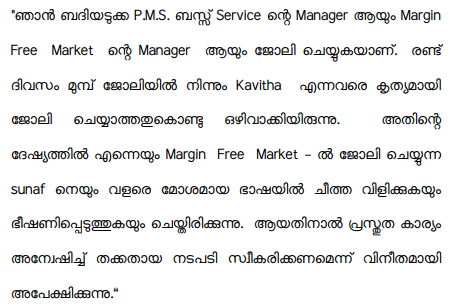
The petitioner, accused in Crime No.111/2025, faced allegations of sexual assault from a former employee, who was dismissed for inefficiency. The petitioner claimed the allegations were false and presented evidence supporting his defense. (Paras 5, 6)
Findings of Court:
The court found that the investigating officer failed to consider the petitioner's prior complaint and evidence, indicating a need for a thorough investigation. Bail was granted with conditions to ensure cooperation with the investigation. (Paras 10, 11)
Issues: The main issues included the validity of the allegations against the petitioner and the adequacy of the investigation conducted by the police.
Ratio Decidendi: The court ruled that the investigating officer must consider all evidence, including complaints from the accused, and cannot solely rely on the complainant's statement. The court emphasized the importance of common sense in deciding whether to charge individuals in minor cases. (Paras 2, 4, 10)
Result: Bail application allowed with stringent conditions.
The case involves the appellant, Noushad, who is accused of sexual assault and other related allegations. The investigation initially focused on the complainant's statement, but the court emphasized that investigations must consider both the complainant’s and the accused’s versions to ensure fairness and prevent false allegations. The petitioner argued that the allegations were false and supported his defense with evidence, including an audio clip of the complainant allegedly threatening him and criticizing his performance at work. The court noted that the investigating authorities had not thoroughly investigated the complaint filed by the petitioner prior to the registration of the case and that evidence provided by the petitioner should have been examined during the investigation. The court highlighted the importance of a balanced investigation and emphasized that the police should not rely solely on the complainant’s statement, especially in cases where there are indications of falsehood. Ultimately, the court granted bail to the petitioner under strict conditions, emphasizing that the investigation should continue thoroughly, and any false allegations should be addressed appropriately.
ORDER :
This Bail Application is filed under Section 482 of the Bharatiya Nagarik Suraksha Sanhita (BNSS), 2023.
2. Investigation of a criminal case means investigation of the case of the complainant and the accused. There cannot be any unilateral investigation of the case put up by the complainant alone. Merely because the de facto complainant is a lady, there is no presumption that, in all cases, her versions are gospel truth, and the police can proceed based on her statement without considering the case of the accused. Nowadays, there is a tendency to implicate innocent people in criminal cases with serious allegations of sexual assault. If the police find that the allegations of such women against men are false, they can very well take action against the complainants also. The law permits for the same. But some of the police officers are not ready to take such action, apprehending that it will backfire on them. No such apprehension is necessary. The court will take care of the interest of such officers, if their findings are correct. The damages caused to a citizen because of false implication cannot be compensated by payment of money alone. His integrity, position in the society, reputation, etc, can be ruined by a single false complaint. The police authorities should be alert and vigilant, to find the truth in criminal cases during the investigation stage itself. Nowadays, it may take years to consider the case of such innocent persons by a court of law, if a charge sheet is filed. In such situations, the investigating authorities should think twice before registering and filing charge sheets in such cases. The court is burdened with several cases in which serious questions of law and facts are involved. Hence, it is the duty of the police to separate the chaff from the grain, before submitting final reports in criminal cases.
3. I had occasion to consider a similar situation earlier. In Rohit Krishna v. State of Kerala & Anr. [2023 (6) KHC 249] this court observed like this:
“xxxx xxxx xxxx
15. This is a strange situation in which a case is registered for affixing a poster on an electricity post which according to prosecution caused a damage to the tune of Rs.63/- to the Electricity Board. Since, S.140 of the Electricity Act is added, the matter has to be considered by the special court, which is a Sessions Court. The Sessions Court has to spend a lot of time to dispose a sessions case. The Sessions Court has to take cognizance of the offence based on the final report and has to issue process to the accused, the process server or the authority concerned has to serve summons to the accused, the accused has to engage a lawyer, appear before the Sessions Court and get bail, the Sessions Court has to frame charge as per the provisions of the Criminal Procedure Code, the prosecution has to adduce evidence, the defence has to cross examine the witness, thereafter, the statement under S.313 Cr.P.C. is to be recorded, then the defence evidence if any has to be recorded, thereafter, the matter has to be heard. Subsequently, the Sessions Judge has to pronounce a judgment. The allegation in a nutshell is that there is a loss of Rs.63/- to the Electricity Board by affixing a poster of a recognized political party on the electric post using gum. A certificate is issued by the Asst. Engineer, Electric Section, Kunnamkulam to the effect that for removing the poster from the electric post, Rs. 63/- each is necessary. For this purpose, a sessions trial is to be conducted by a court of law. Whether this is to be allowed is the question. A Police Officer has a duty to decide whether a case is to be charge sheeted or not, in the facts and circumstances of each case. Common sense is to be used by the investigating authority in these types of cases. A Sessions Judge has to spend several days to dispose of these types of cases, when there is pendency of major cases awaiting trial. As I stated earlier, S.95 of the IPC says that nothing is an offenc

The court established that investigations must consider both complainant and accused statements, emphasizing that unilateral acceptance of a complainant's version is impermissible, particularly in se....

The court emphasized the accountability of police officials and the seriousness of extortion and abduction charges, asserting that dropping bailable offences without justification undermines the inte....

The court underscored that serious allegations against police personnel warrant higher accountability and that bail may be denied when fundamental rights and public trust are at stake.


Point of Law : Criminal Law - Criminal Trial - Anticipatory bail application - Statements of witnesses recorded by the Investigating Officer, the allegation of intimidation with intent to humiliate a....

The judgment emphasizes the need for fair investigation and clarifies the exceptional circumstances for transferring investigation to the CBI.


The main legal point established is that the presumption of innocence, the need for a speedy trial, and the balance between personal liberty and the investigational right of the police are crucial fa....



An indispensable Tool for Legal Professionals, Endorsed by Various High Court and Judicial Officers
Please visit our Training & Support
Center or Contact Us for assistance

Scan Me!
India’s Legal research and Law Firm App, Download now!


For Daily Legal Updates, Join us on :



 Back to top


