
 Back
Back





IN THE HIGH COURT OF KERALA AT ERNAKULAM
A. BADHARUDEEN, J.
John Mathai S/o Varghese Mathai – Appellant
Versus
State of Kerala – Respondent
Crl. Rev. Pet. No. 1463 of 2024
Decided On : 10-09-2025
Key Points: - The court held that at discharge, strong suspicion (not mere suspicion) is required; prosecution materials indicating conspiracy (e.g., board minutes) can justify proceeding to trial. (!) (!) - Board minutes of 147th and 149th meetings are prima facie evidence of conspiracy and can support rejection of discharge. (!) - Allegations of loss calculations and AG reports are matters for trial, not discharge. (!) (!) - The trial court correctly dismissed discharge pleas since prosecution materials showed strong suspicion; AG report lacks evidentiary value at discharge. (!) - If two views are possible, the more favorable to the accused should be chosen; however, in this case, the materials indicated strong suspicion requiring trial. (!) (!)
ORDER :
1. Crl.R.P.No.3 of 2025 has been filed by accused Nos.5 and 6 in C.C.No.22 of 2011 pending before the Enquiry Commissioner and Special Judge, Thrissur, under Prevention of Corruption Act, 1988 (`PC Act’ for short hereafter), arising out of Crime No.7 of 2008 of VACB, Palakkad, and they impugn the order in Crl.M.P.No.244/2024 dated 12.12.2024, whereby the learned Special Judge dismissed the plea of discharge at their instance. Petitioners in Crl.R.P.No.3/2025, officiated as the Chief Secretary of the Kerala State and Director of Mining and Geology respectively, retired from service on 31.10.2006. They subsequently held positions such as Chairman of Public Sector Restructuring Committee, internal audit member and member of Board of Directors of Malabar Cements.
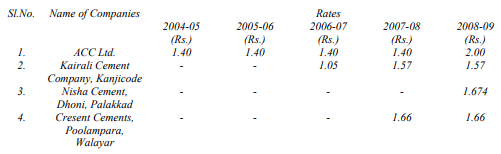
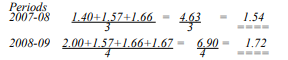
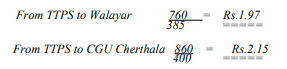
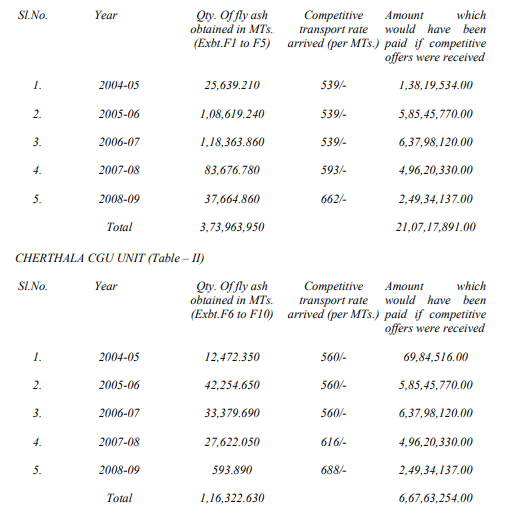
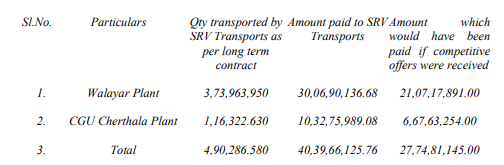
2. The prosecution case is that pursuant to a criminal conspiracy entered into by accused Nos.1 to 4 on 18.11.2004, accused No.1 as the Managing Director of Malabar Cements Limited had executed a long term agreement with accused No.3, the proprietor of M/s. SRV Transports for the transportation of Dry Fly Ash from TTPS, (Tuticorin Thermal Power Station) under the Tamil Nadu Electricity Board to Malabar Cements Limited, at Walayar and CGU Cherthala Plants, without inviting competitive tenders and at an exorbitant rate, with the intention of obtaining undue pecuniary advantage to accused No.3 and thereby obtained pecuniary advantage to accused No.3 to the tune of Rs.16,10,88,434.08 by corrupt and illegal means. Based upon the above contract, accused No.3 falsely claimed an amount of Rs.6,28,029.17 by showing that the fly ash was transported from Tuticorin, but it was transported from Mettur thermal power station, thereby cheated the authorities of Malabar Cements Limited (`MCL' for short).
3. Thereby Malabar Cements sustained a loss of Rs.16,17,16,372/- and accused No.3 had achieved a corresponding pecuniary gain. The Ex-officio Directors were included as accused on the allegation that they had participated in the 149th meeting of the Board of Directors held on 28.01.2005 during which the long-term agreement executed by accused No.1 with accused No.3 on 18.11.2004 was placed and got ratified. The further allegation is that in the 147th meeting of the Board of Directors convened on 06.08.2004, the Ex-officio Directors (accused Nos.5 to 7 and another Ex. Office Director Mr. Joseph Mathew) had suggested the Managing Director to further negotiate with M/s. ARK Woods and Metal (P) Ltd. (`ARK Ltd.' for short) regarding the rates and other conditions and got it scrutinized by the Company's legal counsel. In compliance with that suggestion, all the relevant documents, minutes of the Board meeting etc. were forwarded to the Legal Counsel Sri. B.S. Krishnan designated Senior Lawyer of M/s. B.S Krishnan Associates by accused No.2, on 10.11.2004 for his scrutiny and after such scrutiny, the draft agreement was prepared by the said legal counsel and the same was executed on 18.11.2004. On the above basis, it is alleged that the accused have committed offences punishable under Section 13 (1)(c) &) (d) r/w 13 (2) of Prevention of Corruption, Act 1988, and Section 409, 420, 468, 471 and 120 (B) of Indian Penal Code (`IPC' for short). This allegations led to cognizance of the matter by registering C.C.No.02/2011.
4. In Crl.R.P.No.1463/2024 filed by accused Nos.5 and 6 in C.C.No.02/2011, a connected case in C.C.No.22/2011, they are challenging order dated 12.12.2024 in Crl.M.P.No.244/2024 as per which the Special Judge dismissed the discharge plea of the petitioners. The allegation herein is that pursuant to the contract entered on 18.11.2004, as the outcome of conspiracy hatched between accused Nos.1 to 4, the Managing Director of Malabar Cements and the other officials of the Malabar Cements, the 1st accused execluded, a long term agreement with the 3rd accused quoting high rate for supply of dry fly ash for a period of 9 years and thereafter supplied dry fly ash for a period of 9 year
At discharge stage, strong suspicion (not mere suspicion) is required to deny discharge; prosecution materials creating strong suspicion (like board minutes indicating conspiracy) justify proceeding ....

Legal advisors must act prudently to protect their client's interests; negligence or misconduct may lead to criminal charges.


Criminal allegations must establish intent and deceit; mere civil disputes do not warrant criminal proceedings. Prosecution engaged in recovery efforts mischaracterized as crime.

The judgment emphasizes the need for expedited trials concerning offences under the Prevention of Corruption Act, 1988 and highlights the principles to determine whether a prima facie case is made ou....
The court affirmed the trial court's ruling of prima facie evidence against the accused for corruption and conspiracy, warranting further proceedings.

The main legal point established in the judgment is that conspiracy can be proven by circumstantial evidence, and the material on record must be evaluated to determine the existence of the ingredient....

In cases of criminal conspiracy, better evidence than acts and statements of co-conspirators is hardly ever available.

In tender-related fraud cases, a conspiracy can be inferred from circumstantial evidence, allowing for charge framing even without direct evidence.

The court upheld the necessity of trial for charges framed under the Prevention of Money Laundering Act, emphasizing that prima facie evidence supports the petitioner’s involvement in fraudulent acti....



An indispensable Tool for Legal Professionals, Endorsed by Various High Court and Judicial Officers
Please visit our Training & Support
Center or Contact Us for assistance

Scan Me!
India’s Legal research and Law Firm App, Download now!


For Daily Legal Updates, Join us on :



 Back to top


