
 Back
Back





IN THE HIGH COURT OF KERALA AT ERNAKULAM
BECHU KURIAN THOMAS, J.
Jomon Jaison S/o Jaison Sibi - Appellant
Vs.
The State Of Kerala - Respondent
W.P.(C) Nos.4399 & 1480 of 2026
Decided On : 08-06-2026
| Table of Content |
|---|
| 1. challenge to government prospectus regarding normalization of academic marks. (Para 1 , 2 , 3 , 4 , 5) |
| 2. historical context and procedural updates of the normalization process. (Para 6 , 7 , 8 , 9) |
| 3. evaluation of normalization methodologies and judicial non-interference. (Para 10 , 11 , 12 , 13 , 14) |
| 4. judicial limits on reviewing expert policy and academic matters. (Para 15 , 16 , 17 , 18 , 19 , 20 , 21) |
JUDGMENT :
BECHU KURIAN THOMAS, J.
Petitioners challenge Clause 1.4 and 9.7.4 of the Prospectus for Admission to Professional Degree Courses 2026 (for brevity hereafter referred to as ‘Prospectus 2026’) issued by the Government of Kerala. The challenge raised by the petitioners relates to subject weightage and standardisation formula incorporated in the Prospectus 2026 insofar as it relates to the preparation of rank list for Engineering courses. Since the reliefs sought for in these two writ petitions are similar and the issues are identical, they are considered and disposed of by this common judgment. Reference to Exhibits in this judgement shall be with regard to those produced in W.P.(C) No. 4399 of 2026.
2. Petitioners are students studying in CBSE schools and intended to take part in the entrance examination to be conducted in the State of Kerala. According to the petitioners, contrary to the earlier system, a standardisation procedure was brought in 2012, to maintain uniformity among the students from the different Boards like CBSE, ICSE and Kerala Board of Public Examination. Petitioners allege that the standardisation procedure brought in 2012 continued till 2025. However, after the conduct of the entrance examination of 2025, the Government brought in a change in the standardisation methodology, which was challenged before this Court. The implementation of the new scheme after publishing the prospectus was interfered with by this Court. In the meanwhile, when the Prospectus 2026 was published, the Government introduced a normalization method, which according to the petitioners, create great prejudice to the students of CBSE as it is implemented without any expert study, contrary to the views expressed by the experts and that too based on a recommendation of a body called an Internal Committee, which did not have any expert. Petitioners allege that the change in the formula is a departure carried out arbitrarily, without any scientific evaluation and in a highly prejudicial manner affecting the entire student community at large. It is in such circumstances that the petitioners have approached this Court, challenging the Prospectus 2026.
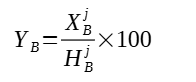
3. A counter affidavit has been filed on behalf of the Commissioner for Entrance Examinations, stating that the Government is entitled to stipulate prescriptions in the prospectus reflecting the policy of the Government in the matter relating to admission to professional courses and the new normalization method, adopted by the State, cannot put the petitioners into any disadvantages position. It is asserted that the new method has been brought in and adopted for the purpose of removing the disparity which otherwise resulted in the earlier standardisation formula. According to the second respondent, admissions to the professional degree courses for the year 2026-27 is being proceeded with as per the provisions of the prospectus approved by the Government as early as on 01.01.2026. Prior to that, an Internal Committee consisting of the Commissioner for Entrance Examination, the Director of Technical Education and the Director of SCERT, was constituted to review the standardisation process. The said Committee reviewed the standardisation method, its formula and the various complaints and as it revealed a downward revision of the actual marks secured by students of Boards with high statistical averages, it was realized that the said method caused persistent disadvantage for students from such Boards and undue advantage to some others. The Committee finally decided to adopt
The court declined to interfere with academic policy concerning examination normalization, holding that technical evaluation methods fall within the domain of expert authorities. Judicial interventio....

Courts shall not interfere in academic policy matters or expert-led examination evaluation systems under writ jurisdiction unless the policy is shown to be patently arbitrary, unconstitutional, or co....

Amendments to admission criteria after examination undermine transparency and fairness, constituting a violation of constitutional principles.
The court upheld that changing admission criteria post-examination is arbitrary and violates fairness principles, enforcing that established rules must be maintained throughout the admission process.

The standardization of academic marks for undergraduate admissions is a policy matter to be determined by the government upon consideration of representations submitted by affected parties.
State governments possess authority to prescribe minimum admission standards within their jurisdiction, emphasizing merit while accommodating special categories.

The impugned note was quashed as it was found to be contrary to the Rules of 2006, irrational, arbitrary, and discriminatory.



An indispensable Tool for Legal Professionals, Endorsed by Various High Court and Judicial Officers
Please visit our Training & Support
Center or Contact Us for assistance

Scan Me!
India’s Legal research and Law Firm App, Download now!


For Daily Legal Updates, Join us on :



 Back to top


