Back


2026 Supreme(Raj) 443
HIGH COURT OF JUDICATURE FOR RAJASTHAN BENCH AT JAIPUR
CHANDRA PRAKASH SHRIMALI, J.
Achleshwer Meena S/o Sh. Jatashanker Meena - Petitioner
Versus
State Of Rajasthan, Through P.P. - Respondent
S.B. Criminal Miscellaneous (Petition) No. 3729 of 2024
Decided On : 17-03-2026
Important Points
Subject
Criminal Law - Criminal Procedure
Act Referred
Headnote
(B) Constitution of India - Article 22(1) - Right to be informed of grounds of arrest - Mandatory requirement to communicate full particulars of the offense or grounds for arrest to the arrested person in a language they understand - Non-compliance violates the fundamental right to personal liberty under Article 21 and vitiates the arrest and subsequent remand orders, though it may not necessarily vitiate the overall investigation or trial.
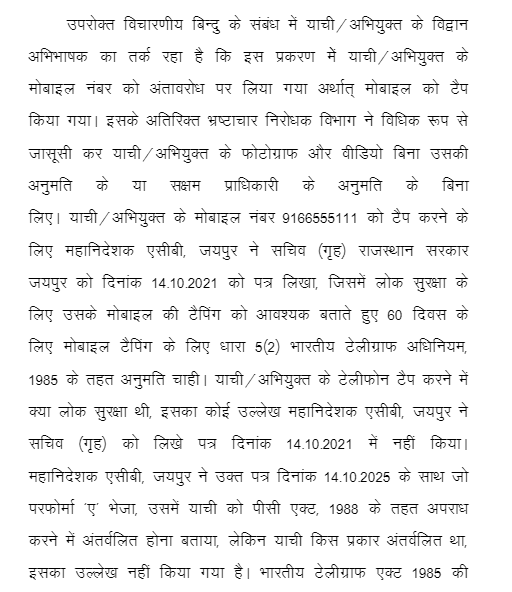
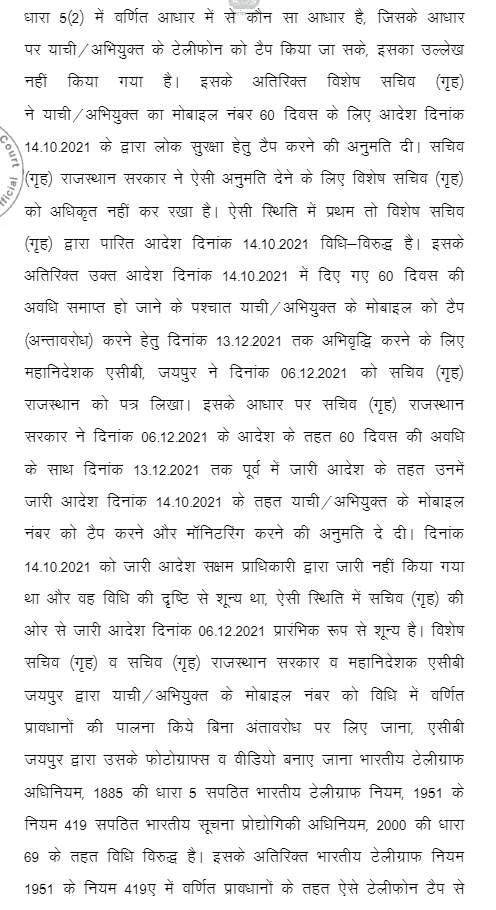
(C) Indian Telegraph Act - Section 5(2) - Interception of messages and telephone tapping - Right to privacy as an integral part of the right to life and personal liberty under Article 21 - Telephone tapping is a violation of privacy unless justified by a procedure established by law - Interception is only permitted upon the occurrence of a "public emergency" or in the "interests of public safety," and must follow a fair, just, and reasonable procedure.
Facts of the case:
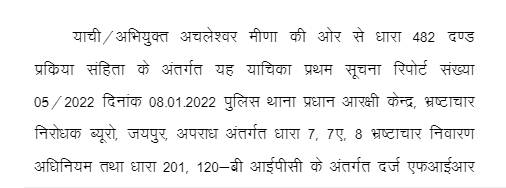
The court considered multiple legal challenges regarding the legality of conducting investigations and discrete inquiries for extended periods before registering an FIR, the failure to properly communicate grounds of arrest to detainees, and the unauthorized interception of telephone conversations in the absence of a declared public emergency or public safety risk.
Findings of Court:
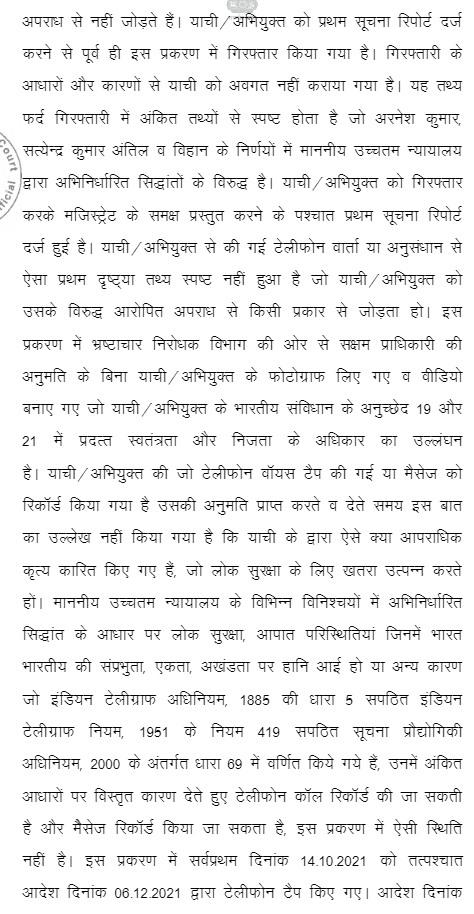
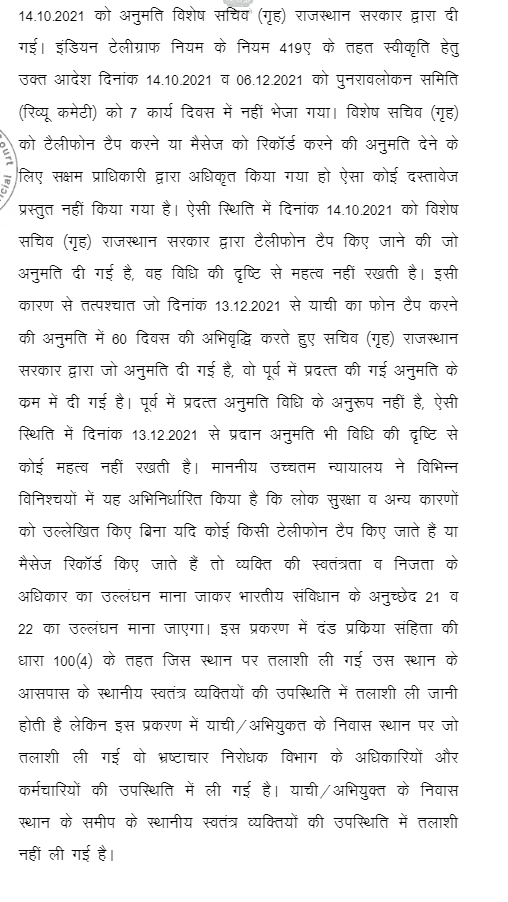
The court found that registration of an FIR is mandatory to ensure transparency, prevent embellishment of facts, and provide judicial oversight. It held that the constitutional safeguard of informing an arrested person of their grounds of arrest is mandatory. Additionally, it determined that telephone tapping without a legitimate public emergency or public safety justification is ultra vires and violates the fundamental right to privacy.
Issues: (1) Is investigation or preliminary inquiry prior to the registration of FIR permissible in law? (2) What is the effect of non-compliance with the mandatory requirement to inform an arrested person of the grounds of arrest? (3) Whether telephone interception is valid without the existence of a public emergency or public safety interest?
Ratio Decidendi: The registration of an FIR is a sine qua non for beginning a criminal investigation to protect the rights of the accused and the complainant. Constitutional mandates under Article 22(1) are essential to validate an arrest; failure to adhere to this renders the arrest and remand illegal. The right to privacy is a fundamental right, and any state encroachment via telephone tapping must meet a strict threshold of "public emergency" or "public safety" and be governed by a fair procedure to be constitutional.
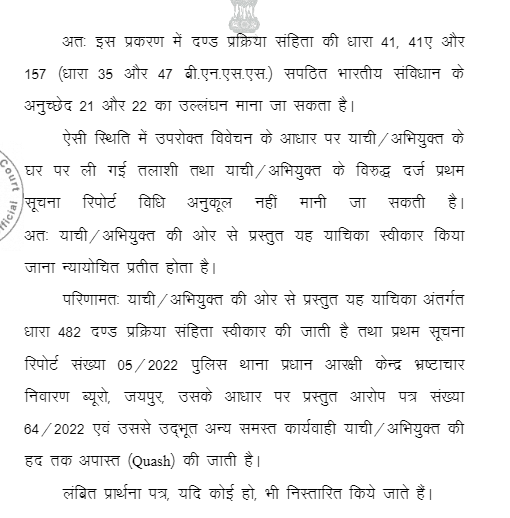
Result: The impugned orders and proceedings were set aside as unconstitutional and without jurisdiction due to the violation of statutory and constitutional mandates.
Legal Category Hierarchy
-
practice and procedure
-
criminal procedure
- first information report
- investigation
- preliminary enquiry
- search and seizure
-
evidence
- admissibility
-
criminal procedure
-
constitutional law
-
fundamental rights
- right to life and personal liberty
- right to privacy
-
rights of arrested person
- grounds of arrest
- right to bail
-
fundamental rights
-
crime and sentencing
-
offences against the state
- interception of messages (Para 5)
-
prevention of corruption act
- investigation under lokayukta act
-
food safety and standards act
- exclusive jurisdiction
-
offences against the state
For the Petitioner: Mr. Sudhir Gupta, Mr. Parth Gupta
For the Respondent: Mr. Manvendra Singh, PP, Mr. Devi Singh, PP
ORDER :
CHANDRA PRAKASH SHRIMALI, J.
1. Rakesh Kumar Meena Vs State of Rajasthan & Other connected matters S.B. Criminal Miscellaneous (Petition)No. 6395/2022; Order dated: 07.03.2025
2. Surinder Kumar & Ors. Vs State of Pb and others, CRM-M-5292-2024; Order dated 05.02.2024
3. Lalita Kumari Vs Govt. of U.P and ors. [2013] 14 SCR 713; Order dated; 12.11.2013
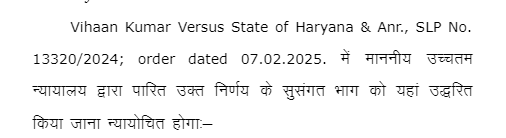
4. Vihaan Kumar Vs State of Haryana & Anr, 2025 INSC 162; Order dated; 07.02.2025
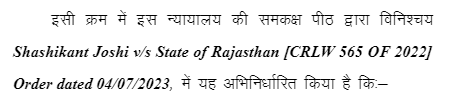
5. Sashikant Joshi Vs State of Rajasthan & ors; S.B. Criminal Writ Petition No. 565/2022; Order dated; 04.07.2023
6. Hukam Chand Shyam Lal Vs UOI & Ors; (1976) 2 SCC 128; Order dated; 17.12.1975
7. People's Union of Civil Liberties (PUCL) Vs Union of India (UOI) & Ors; MANU/SC/0149/1997; Order dated; 18.12.1996
8. Justice K.S. Puttaswamy (RETD.) and Anr. Vs Union of India & Ors; [2017] 10 S.C.R. 569; Order dated; 24.08.2017
9. Anuradha Bhasin Vs Union of India and other connected matters ; WRIT PETITION (CIVIL) No. 1031 OF 2019; Order dated; 10.01.2020
10. Central Bureau of Investigation Vs K.L.D. Nagasree & ors; Petition(s) for Special Leave to Appeal (Crl.) No.(s). 5584/2025; Order dated; 15.04.2025
11. Government of India Rep. by the Secretary Vs K.L.D. Nagasree & Ors. and other connected matters; 2023 SCC OnLine AP 1834; Order dated; 20.07.2023
12. Vinit Kumar Vs Central Bureau of Investigation & Ors; Writ Petition No. 2637 OF 2019; Order dated 22.10.2019 (Bombay High Court)
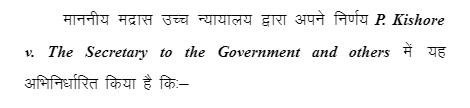
13. P. Kishore Vs The Secretary to the Govt. of India, Ministry of Home Affairs & Ors; W.P. No. 143 of 2018; Order dated; 02.07.2025
14. K.P. Tamilmaran Vs The Secretary by Deputy Superintendent Of Police ; 2025 Live Law (SC) 493; Order dated; 28.04.2025
15. Ashak Hussain Allah Detha @ Siddique and another Vs The Assistant Collector of Customs (P) Bombay and another; 1990 SCC OnLine Bom 3; Order dated; 09.01.1990
16. Directorate of Enforcement Vs Subhash Sharma ;2025 SCC OnLine SC 240; Order dated; 21.01.2025
17. Hanumant Jagganath Nazirkar Vs State of Maharashtra [Through PI of Baramati Taluka Police Station]; 2025 SCC OnLine Bom 2508; Order dated; 27.06.2025
18. Pradeep Nirankarnath Sharma Vs State of Gujarat & Ors; 2025 INSC 350; Order dated; 17.03.2025
19. Directorate of Enforcement Vs Deepak Mahajan & Anr;[1994] 1 S.C.R; Order dated; 31.01.1994
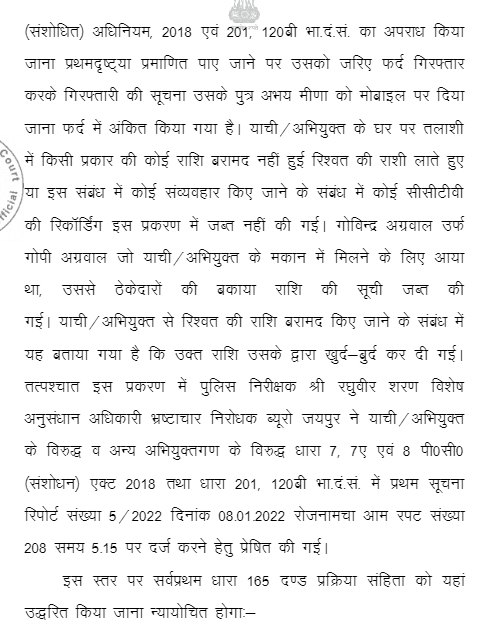
165. Search by police officer
Whenever an officer-in-charge of a police station or a police officer making an investigation has reasonable grounds for believing that anything necessary for the purpose of an investigation into any offence which he is authorised to investigate may be found in any place within the limits of the police station of which he is incharge, or to which he is attached, and that such thing cannot in his opinion be otherwise obtained without undue delay, such officer may, after recording in writing the grounds of his belief and specifying in such writing, so far as possible, the thing for which search is to be made, search, or cause search to be made, for such thing in any place within the limits of such station.
2) A police officer proceeding under sub-section (1), shall, if practicable, conduct the search in person.
3) If he is unable to conduct the search in person, and there is no other person competent to make the search present at the time, he may, after recording in writing his reasons for so doing, require any officer subordinate to him to make the search, and he shall deliver to such subordinate officer an order in writing, specifying the place to be searched, and so far as possible, the thing for which search is to be made; and such subordinate officer may thereupon search for such thing in such place.
4) The provisions of this Code as to search-warrants and the general provisions as to searches contained in section 100 shall, so far as may be, apply to a search made under this section.
5) Copies of any record made under sub-section (1) or sub-section (3) shall forthwith be sent to the nearest Magistrate empowered to take cognizance of the offence, and the owner