
 Back
Back





IN THE HIGH COURT OF JHARKHAND AT RANCHI
ANUBHA RAWAT CHOUDHARY, J.
Smt. Sulochana Devi Wife Of Radhe Shyam Tiwari – Appellant
Versus
Rajkumari Devi Widow Of Late Ganesh Thakur – Respondent
S.A. No. 626 of 2015
Decided On : 12-02-2026
| Table of Content |
|---|
| 1. substantial questions on easement appreciation and equity. (Para 2 , 3 , 4) |
| 2. easement claim via gift deed over obstructed passage. (Para 5 , 6 , 7 , 8 , 9 , 10 , 13) |
| 3. easements governed by justice, equity, good conscience. (Para 11 , 12 , 14) |
| 4. alternative access negates easement under equity. (Para 15 , 16 , 17 , 18 , 19 , 20 , 21 , 24) |
| 5. gift deed prevails over sale via section 48 tpa. (Para 22 , 23) |
| 6. maps show independent staircase and structural changes. (Para 25 , 26 , 27 , 28 , 29 , 30 , 31 , 32 , 33 , 34 , 35 , 36) |
| 7. equity denies easement due to inconvenience, alternatives. (Para 37 , 38 , 39 , 40 , 41 , 42 , 43 , 44) |
| 8. appeal allowed; questions favor no easement. (Para 45 , 46 , 47) |
JUDGMENT :
ANUBHA RAWAT CHOUDHARY, J.
Heard the learned counsel appearing on behalf of the parties.
2. This appeal has been filed against the judgement dated 14.09.2015 and decree dated 28.09.2015 passed by District Judge, IInd, Deoghar in Title Appeal No.16/2004 affirming the judgement dated 15.03.2004 and decree dated 29.03.2004/20.04.2004 passed by learned Subordinate Judge, IInd, Deoghar in Title Suit No.127 of 2000.
3. This appeal has been admitted for final hearing by framing three substantial questions of law as contained in order dated 25.02.2019. However, the third substantial question of law was deleted with the consent of the parties vide order dated 29.02.2025.
4. Consequently, only two substantial questions of law survive for consideration which are as follows:
“(A) Whether right of easement has not been properly appreciated by both the Courts considering the factual aspects available in the plaint itself?
(B) Whether right of easement can be said to be applicable though not applicable without giving proper appreciation to justice, equity and good conscience?”
5. Title Suit No.127 of 2000 was filed by the sole plaintiff namely Ganesh Thakur on 11.12.2000 against the sole defendant namely Smt. Sulochana Devi seeking a decree that the defendant is not entitled to obstruct the common passage used and utilized by the plaintiff and also with a prayer for injunction restraining the defendant from obstructing the common passage of the plaintiff and further a direction upon the defendant to remove the materials wrongfully heaped up near the common passage.
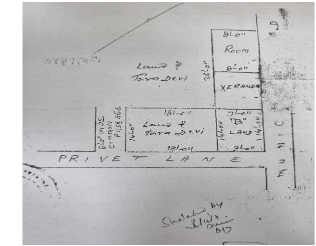
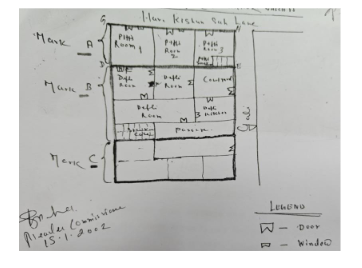
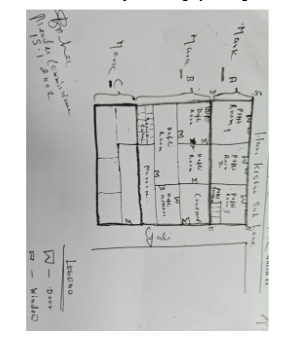
6. The entire case of the plaintiff was based on a gift deed executed by his mother in plot no.507A having an area of 334 sq. ft. and the house thereon with one room, one verandah. The gift deed also conferred right to use and utilize common passage, enter into the courtyard and use the staircase to the roof, which is said to be well marked in the sketch map by virtue of the gift deed dated 06.07.1981.
7. The land adjoining to the gifted property was also owned by the mother of the plaintiff, namely, Tara Devi who sold the same on 08.09.1981 to Krishna Devi (her daughter in law) and said Krishna Devi sold the land to the defendant on 17.11.2000 which included the aforesaid passage area meant for right to use under the gift deed. The case of the plaintiff was that the plaintiff enjoyed the passage for 19 years and the defendant had no right to restrict such use. It was his case that the defendant obstructed the plaintiff from using the common passage and entering into the courtyard and using the staircase to reach the roof house of the plaintiff on 18.11.2000 by words. Consequently, the suit was filed.
8. The defendant filed a written statement denying the allegation and the claim of the plaintiff and also alleged that Tara Devi was an illiterate lady and she had no knowledge of the language in which the deed was written and also asserted that the plaintiff had not exercised/used the passage and the staircase even for a single day. It was also asserted that Tara Devi had transferred 925 sq. ft. by way of sale deed to Krishna Devi on 08.09.1981 by registered deed and after purchasing the same, Krishna Devi came in possession. It was also asserted that there is no sign of use
AI
Where Easement Act inapplicable, easement rights governed by justice, equity, good conscience; right by gift deed extinguished by changed circumstances providing independent access and causing servie....

Court clarified that claims for easementary rights require explicit pleadings and declarations, ruling on injunction based on possession without such declarations is unsustainable.

Easementary rights can be implied from circumstances and do not require explicit mention in pleadings, affirming the right to access property above owned land.

Easementary rights must be evidenced by uninterrupted and peaceable enjoyment for twenty years, as per Section 15 of the Indian Easements Act, to be enforceable.

The main legal point established in the judgment is the requirement for a proper examination of evidence and claims in cases involving right of way, and the need for the court to consider all relevan....

Establishment of easementary rights requires substantiation through historical use or necessity; bona fide purchasers must prove good faith and due diligence.


The court established that an easementary right can be acquired through long-term, uninterrupted use, even if the specific phrase 'as of right' is not explicitly stated in the pleadings, provided the....

(1) Decree of permanent injunction cannot be granted by going against stipulations in agreement to sell.(2) Interpretation of Documents – Where language employed in instrument is clear and unambiguou....



An indispensable Tool for Legal Professionals, Endorsed by Various High Court and Judicial Officers
Please visit our Training & Support
Center or Contact Us for assistance

Scan Me!
India’s Legal research and Law Firm App, Download now!


For Daily Legal Updates, Join us on :



 Back to top


