
 Back
Back





BEFORE THE MADURAI BENCH OF MADRAS HIGH COURT
HON’BLE MR. JUSTICE G. CHANDRASEKHARAN, J.
Arulmigu Soundararaja Perumal Thadicombu – Appellant
Versus
Arulmigu Soundaraja Perumal Thirukoil – Respondent
S.A. (MD) No. 665 of 2023, C.M.P. (MD) No. 15794 of 2023
Decided On : 22-12-2023
INJUNCTION - RELIGIOUS TRUST - CIVIL PROCEDURE CODE, SECTION 100; SPECIFIC RELIEF ACT, SECTION 41(h); TAMIL NADU HINDU RELIGIOUS AND CHARITABLE ENDOWMENTS ACT, 1959, SECTIONS 6 & 45; CIVIL PROCEDURE CODE, SECTION 92 - The court discussed the legal framework surrounding the management of religious trusts, emphasizing that trustees lack the authority to alienate trust properties as per the trust deeds. The court interpreted the provisions of the Tamil Nadu Hindu Religious and Charitable Endowments Act, 1959, affirming the Executive Officer's duty to protect temple properties and the right of beneficiaries to seek injunctions against unauthorized alienation. This legal interpretation was pivotal in upholding the injunction against the first defendant's attempts to sell trust properties.
Fact of the Case:
The plaintiff temple filed a suit seeking a permanent injunction to prevent the first defendant from selling or encumbering trust properties dedicated for religious purposes, as outlined in settlement deeds executed in 1905 and 1923. The first defendant contested the suit, claiming no right to sell the properties and asserting that the temple had no vested interest in them.
Finding of the Court:
The trial court and the appellate court found that the trust deeds explicitly prohibited the trustees from alienating the properties. The courts concluded that the plaintiff, as a beneficiary, had the right to seek an injunction to protect the trust properties from unauthorized sale.
Issues: 1. Whether the plaintiff is entitled to a permanent injunction against the first defendant's alienation of trust properties? 2. Whether the plaintiff has a clear right to sue? 3. Whether the suit is maintainable under Section 92 of the Civil Procedure Code?
Ratio Decidendi: The court held that beneficiaries of a religious trust can maintain a suit for injunction against unauthorized alienation of trust properties. The Executive Officer has a duty to protect the trust properties, and the suit for injunction does not fall under the purview of Section 92 of the Civil Procedure Code, which pertains to different types of relief.
Final Decision: The second appeal was dismissed, confirming the lower courts' judgments and upholding the injunction against the first defendant.
JUDGMENT :
G. CHANDRASEKHARAN, J.
Prayer: Second Appeal filed under Section 100 of Civil Procedure Code, against the judgment and decree, dated 29.06.2010 in A.S. No. 224 of 2005 on the file of the Additional Sub-Judge, Dindigul, confirming the judgment and decree, dated 23.06.2005 in O.S. No. 769 of 2004 on the file of the I Additional District Munsif Court, Dindigul.
1. Challenge is made to the concurrent judgments in A.S. No. 224 of 2005 on the file of the Additional Sub-Judge, Dindigul, dated 29.06.2010, confirming the judgment and decree, dated 23.06.2005 in O.S. No. 769 of 2004 on the file of the I Additional District Munsif Court, Dindigul.
2. The first respondent/plaintiff filed a suit in O.S. No. 769 of 2004 for the relief of permanent injunction that the first respondent should be restrained from selling and encumbering the suit properties belong to the plaintiff temple; that the second and third defendants should be restrained from registering any deed intending to encumber the suit properties; and for costs.
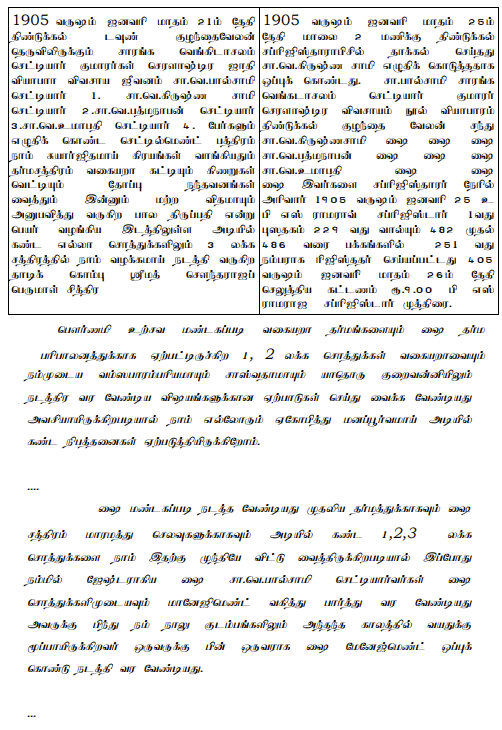
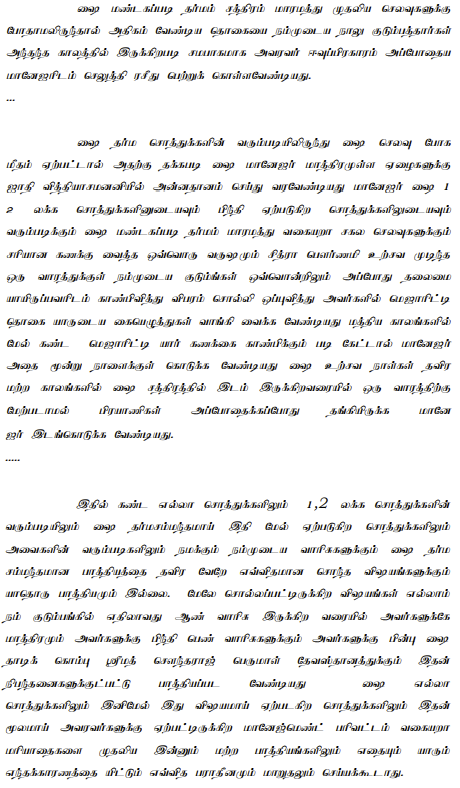
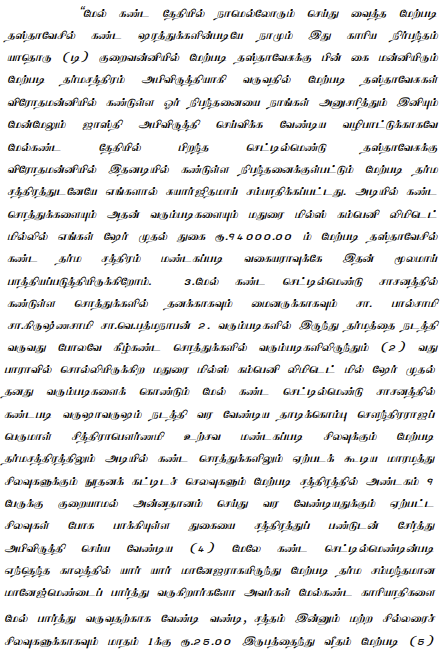
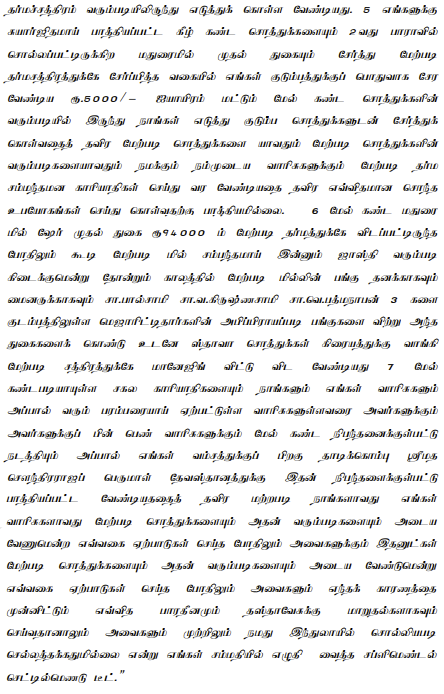
3. The case of the plaintiff/first respondent in brief is that the suit properties belonged to (1) Sa. Ve. Palsamy Chettiar, (2) Sa. Ve. Krishnasamy Chettiar, (3) Sa. Ve. Padmanathan Chettiar (4) Sa. Ve. Umapathy Chettiar, who are the sons of one Saaranga Venkatachalam Chettiar. They have executed a settlement deed(trust deed) on 21st January, 1905, for the purpose of performing the religious obligations during Chitra Pournami Mandakapadi of the plaintiff temple. The suit properties were dedicated for the purpose of performing religious obligations. The object of the trust is to perform the religious obligations during Chitra Pournami festival at plaintiff temple by using the revenue from the properties dedicated to the trust. The trust is to be maintained by the male heirs. They are entitled for temple honours. In their absence, the female heirs and then, the properties to vest with the plaintiff temple. There was also supplementary settlement deed on 01.08.1923. In both the deeds, it is specifically mentioned that the trustees and their heirs are to perform only the religious obligations from the income of the trust and they do not have any powers of alienation/encroachment in respect of the trust properties. In the said circumstances, the first defendant is trying to sell the suit properties to the third parties. First defendant has no right to sell or encumber the suit properties. He is also trying to interfere with the enjoyment of the suit properties by the temple. Thus, the suit is filed.
4. The first defendant filed a written statement stating that as per the obligations in the settlement deed (trust deed), the religious ceremonies are being performed till date. In the absence of male heirs, female heirs are entitled to perform the religious obligations. Till date, there are male legal heirs and they are performing the trust obligations. The allegation that the first defendant is trying to sell the suit property is not correct. The suit properties are not vested with the temple. Only the income from the suit properties is to be used for performing religious obligations. It is decided in W.P. No. 19908 of 1999 that there was no proof that the suit properties belong to the temple. The cause of action pleaded in the plaint is not correct. Thus, the first defendant prayed for dismissal of the suit.
5. On the basis of the pleadings, the following issues were framed for trial:
“(i) Whether the plaintiff is entitled for the relief of permanent injunction prayed for, against the first defendant?
(ii) Whether the plaintiff is entitled for the relief of permanent injunction prayed for against defendants 2 and 3?
(iii) To what relief the plaintiff is entitled for?”
6. During the trial before the trial Court, on the side of the plaintiff, PW-1 was examined and Ex.A1 to A4 were marked. On the side of the defendants, DW-1 was examined and no document was marked.
7. On the basis of oral and documentary evidence, the learned trial
AI

The duty of the Executive Officer to protect the temple's property and the entitlement of the temple in case of mismanagement were central legal principles established in the judgment.
The main legal point established in the judgment is that the Executive Officer has the right to file a suit for temple properties, and the Civil Court has jurisdiction to decide the title of the prop....
The court ruled that temple property cannot be alienated by trustees without obtaining necessary permissions and demonstrating community consent as per applicable law.

Trust properties cannot be alienated by trustees; a plaintiff can seek injunction without declaratory relief if the properties are prohibited from alienation.

A deity cannot be represented in a lawsuit by worshipers without proper legal standing; only identified office bearers of a society can act on its behalf. The temple in question is a private temple b....



An indispensable Tool for Legal Professionals, Endorsed by Various High Court and Judicial Officers
Please visit our Training & Support
Center or Contact Us for assistance

Scan Me!
India’s Legal research and Law Firm App, Download now!


For Daily Legal Updates, Join us on :



 Back to top


