
 Back
Back





IN THE HIGH COURT OF JUDICATURE AT MADRAS
S.M. SUBRAMANIAM, C. KUMARAPPAN, JJ.
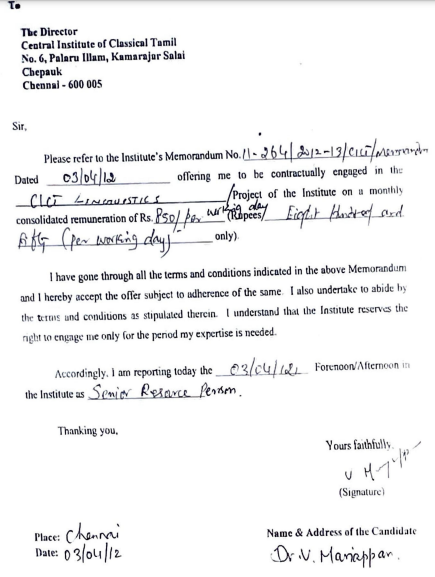
The Union of India, Rep. by its Joint Secretary, New Delhi – Appellant
Versus
D.M. Tamilvanan – Respondent
W.A. Nos. 1170 to 1182 of 2018, 428, 494, 496 of 2021, C.M.P. Nos. 9415 to 9427 of 2018, 1713, 1956, 1957 of 2021
Decided On : 28-06-2024
Regularisation - Employment - Articles 14, 16 - The court discussed the principles of regularisation in employment, emphasizing that only those appointed through a proper recruitment process against sanctioned posts are entitled to regularisation, as per constitutional provisions.
Fact of the Case:
The respondents were appointed temporarily at a Central Institute of Classical Tamil and sought regularisation after serving for 4½ years, claiming their appointments were valid despite being on a contract basis.
Finding of the Court:
The court found that the respondents were appointed on a temporary basis without sanctioned posts and that their claims for regularisation were not supported by the legal framework governing employment.
Issues: Whether the respondents, appointed temporarily, are entitled to regularisation and permanent absorption in the absence of sanctioned posts and proper recruitment processes.
Ratio Decidendi: The court held that temporary appointments do not confer rights to regularisation unless made through a proper recruitment process against sanctioned posts, as established by Supreme Court precedents.
Result: The writ order granting regularisation was set aside, and all writ appeals were allowed.
JUDGMENT :
S.M. SUBRAMANIAM, J.
Prayer in W.A. No. 1170/2018: Writ Appeal filed under Clause 15 of Letters Patent to set aside the order dated 13.10.2017 made in W.P. No. 29551 of 2012 on the file of this Court and allow the writ appeal.
1. The common verdict dated 13.10.2017 passed in batch of writ petitions is under challenge in the writ appeals on hand.
2. The Government of India established a Central Institute of Classical Tamil for comprehensive understanding of history and culture of Tamil Language. The Central Institute of Classical Tamil [hereinafter referred as the 'Institute'] started its work towards development of Tamil language in 2006 with skeleton staff like Programmer, Web Designer, Administrative Staffs, etc. The Institute issued notification on 23.05.2007 calling for applications to fill up various posts both on Academic and Non-Academic sides. Pursuant to the notification, the respondents in all the writ appeals had submitted their respective applications. The Committee constituted conducted an interview and the respondents in the writ appeals had been selected and appointed.
3. The grievances of the respondents in the writ appeals are that at the time of filing of the writ petitions in the year 2012, they have completed services for about 4½ years and by virtue of their long services, they are entitled for regularisation and permanent absorptions in the sanctioned posts in the Institute. The claim of the respondents in the writ appeals are not considered by the appellants. Thus, they have challenged the recruitment notification issued on 12.10.2012 and 17.10.2012 and to regularise their services with effect from their respective date of initial appointment. The Writ Court allowed all the writ petitions granting the relief.
4. Mr. A.R.L. Sundaresan, learned Additional Solicitor General of India assisted by Mr. A. Kumaraguru, learned Central Government Standing Counsel appearing on behalf of the appellants would contend that the initial appointment of the respondents in the writ appeals are made on contract basis. The respondents were appointed temporarily for a period of one year for the day salary. Their salary has been calculated based on the working days and their appointments were purely temporary. At the time of establishing the Institute, posts were not sanctioned and Service Rules were not framed. Therefore, temporary appointments were made by specifying the period of contract. The initial appointments of the respondents in the writ appeals were made on temporary basis for day salary and they were not appointed in the sanctioned posts. The tenure was extended for about four years. Thereafter, the respondents in the writ appeals filed the writ petitions and by virtue of the interim order granted by this Court in the writ petitions and in the writ appeals, they are continuing in service as temporary employees. The Institute originally was established in the year 2005 at Mysore and subsequently it was shifted to Chennai in the year 2008.
5. The learned Additional Solicitor General of India would submit that the Writ Court has not considered the nature of appointment and the conditions stipulated in the order of appointment. The Writ Court proceeded on the basis that the respondents in the writ appeals were appointed through notification and by conducting interview. But not considered the fact that the posts were not sanctioned and the initial appointments were made with specific conditions, which all are stipulated in the order of appointment. The respondents in the writ appeals admittedly accepted the terms and conditions of the appointment and after serving about four years, they have filed the writ petitions seeking regularisation. Thus, the Writ Court ought not to have granted the benefit of the regularisation and permanent absorption, which is running counter to the legal principles settled by the Hon'ble Supreme Court of India in the matter of regularisation.
6. Mr. Balan Haridas, learned counsel appearing
AI
Only employees appointed through a proper recruitment process against sanctioned posts are entitled to regularisation; temporary appointments do not confer such rights.

Employers must clearly specify the nature of appointments in job advertisements; failure to do so leads to regularization of initially contractual positions when recruitment processes are followed.

Contractual employees cannot claim regularization as a matter of right; their employment is project-based and temporary, governed by specific contractual terms.

The court recognized the right of the State to appoint persons on temporary basis to meet its exigencies, and held that the failure of the ATTC to maintain the student to lecturer ratio and the petit....

Temporary or casual employment does not confer legal rights to regularization; adherence to proper recruitment processes is mandatory for permanent appointments.

Temporary employees appointed via constitutional procedures are entitled to regularization, highlighting the need for compliance with recruitment mandates to ensure fairness and uphold employee right....

In order that a mandamus may issue to compel the authorities to do something, it must be shown that the statute imposes a legal duty on the authority and the aggrieved party had a legal right under t....
Appointments made on contractual basis, without following the regular process of selection as per the relevant rules, do not confer any right to the appointee for regularization.

The absence of recruitment rules does not render appointments illegal if a transparent selection process was followed; regularization may be granted based on the nature of service rendered.



An indispensable Tool for Legal Professionals, Endorsed by Various High Court and Judicial Officers
Please visit our Training & Support
Center or Contact Us for assistance

Scan Me!
India’s Legal research and Law Firm App, Download now!


For Daily Legal Updates, Join us on :



 Back to top


