
 Back
Back





IN THE HIGH COURT OF JUDICATURE AT MADRAS
R.N. MANJULA, J.
M/s. Ambica Gen Power, Rep. By its Proprietor Pramod Kumar Daga - Appellant
Versus
The Superintendent Engineer, Tamil Nadu Electricity Board – Respondent
S.A. No. 951 of 2013
Decided On : 28-11-2024
JUDGMENT :
(R.N. Manjula, J.)
(PRAYER: Second Appeal is filed under section 100 of the Code of Civil Procedure, 1908, to set aside the judgment and decree dated 22.09.2011 made in A.S. No. 368 of 2010 on the file of the VI Additional City Civil Court, Chennai, confirming the judgment and decree dated 13.10.2008 made in O.S. No. 5364 of 2007 on the file of the VII Assistant City Civil Court, Chennai.)
The appellant is the plaintiff who had filed the suit for recovery of money and the trial Court has dismissed the same. The appeal preferred by the plaintiff challenging the judgment of the trial Court also dismissed by confirming the judgment of the trial Court. Aggrieved over the same, the appellant / plaintiff has filed the present Second Appeal.
2. The short facts leading to the case of the plaintiff as pleaded by him in the plaint is as under:
2.1 The plaintiff is the dealer of Cocktail Wires in Chennai. The defendant has placed order in P.O.No.29/0607 dated 15.06.2006 and P.O.No.31/0607 dated 15.06.2006 for the supply of TC Fuse wires. The plaintiff was ready to supply the materials and sent a communication dated 03.11.2006 requesting the defendant to amend the value of the order for Rs.3,11,545/- and Rs.3,11,370/-. The defendant did not send any reply.
2.2. The plaintiff has issued legal notice on 08.01.2007 informing the defendant that they cannot supply the materials and called upon the defendant to cancel both the orders and to refund the security deposit. On receiving the plaintiff's lawyer's notice, the defendant sent a letter dated 24.01.2007 wherein he had stated that the materials were not supplied and that a sum of Rs.62,439/- will be recovered from the outstanding bills payable to the plaintiff. A sum of Rs.29,679/- towards liquidated damages and Rs.32,767/- towards difference in price, would be recovered from the outstanding bills payable to the plaintiff. Similarly the defendant has written an another letter dated 25.01.2007 stating that a sum of Rs.1,52,768/- will be recovered from the outstanding bills payable to the plaintiff. The defendant has no authority to claim the above sum by alleging that he suffered damages. Only because of the failure on the part of the defendant to amend the value of the order, the plaintiff could not supply. There is no breach of contract on the part of the plaintiff and hence the plaintiff is not liable to pay any amount.
2.3. Even if it is presumed that the plaintiff is liable to pay any damages to the defendant he ought to have appropriated it against the security deposit paid by the plaintiff by invoking Clause 5 of the Purchase Order but the defendant cannot withhold or adjust at his own whims from the dues payable to the plaintiff for the goods already supplied. The defendant cannot adjudicate himself about the dues without the participation of the plaintiff. Hence the defendant is liable to pay whatever sum he has deducted so far and hence the plaintiff has filed the suit for recovery of a sum of Rs.2,77,937/- with interest @ 27% on the same.
3. The defendant resisted the suit by making his following contention in the written statement :
3.1. The defendant sent various communications from 28.08.2006 to 30.10.2006 and intimated that the plaintiff has failed to deliver the materials and he was also asked to supply the materials within 7 days from the date of receipt of the notice and on his failure to supply, the purchase order will be cancelled without any correspondence. Subsequently, the defendant had also sent the cancellation of purchase order on 24.01.2007 and 25.01.2007. The failure on the part of the plaintiff to supply the materials was not due to the failure to amend the value of the purchase order because the defendant has already stated in his communication dated 10.11.2006 that the amendment is not feasible as per the terms and conditions of TNEB and the plaintiff was asked to supply the materials as per the purchase order.
3.2. The plaintiff had suppressed these communic
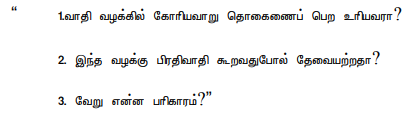
The court ruled that unilateral deductions by the defendant without proper adjudication violated principles of natural justice, leading to the plaintiff's recovery claim being upheld.


Actual damages must be proved for recovery in breach of contract. Clauses implying penalties cannot be enforced without valid demonstration of loss.


The court emphasized the importance of fulfilling payment obligations in a contract and upheld the principle that breach of payment obligations justifies refusal to make further deliveries.
A claimant cannot assert frustration of contract based on force majeure conditions if those conditions were previously contemplated and stipulated in the contract.

The main legal point established in the judgment is the requirement for written and mutually agreed amendments to a contract, and the recognition of mitigation of loss by the plaintiff.

The burden of proof lies with the claimant to substantiate claims with credible documentation, and evidence of timely payments to claimants influence recovery judgments.



An indispensable Tool for Legal Professionals, Endorsed by Various High Court and Judicial Officers
Please visit our Training & Support
Center or Contact Us for assistance

Scan Me!
India’s Legal research and Law Firm App, Download now!


For Daily Legal Updates, Join us on :

 Back to top


