
 Back
Back





IN THE HIGH COURT OF JUDICATURE AT MADRAS
V. Lakshminarayanan, J.
M/s. VAK Engineering Pvt., Ltd. - Petitioner
Versus
The Presiding Officer, Minor Inam Tribunal (Principal Sub Judge Chengalpet) - Respondent
WP No. 33294 of 2017
Decided On : 20-02-2026
| Table of Content |
|---|
| 1. petitioner's challenge to dismissal order (Para 2 , 3 , 4 , 5 , 6) |
| 2. violation of natural justice procedure (Para 8 , 9 , 10 , 11 , 12 , 13) |
| 3. discretion to entertain writ despite alternate remedy (Para 14 , 15 , 16 , 17 , 18) |
| 4. appeal can’t be dismissed on merits if counsel absent (Para 19 , 20 , 21 , 22 , 23) |
| 5. restoration of appeal and interim orders (Para 24 , 25 , 26) |
ORDER :
V. Lakshminarayanan, J.
Heard Mr.Aswin Prasanna for the writ petitioner, Mr.Ramanlal for the respondents 2 and 14 and Mr.M.J.Jassem Mohamed for the respondents 15 and 16.
2. The writ petition challenges the order passed by the first respondent in MICMA No.28 of 1993 dated 12.06.2015 whereby the appeal filed by the petitioner came to be dismissed by the first respondent. Though several grounds have been raised on the merits of the claim, I am not inclined to go through the same in this proceedings. This is for the following reasons:-
3. The matter came up before the first respondent pursuant to an order passed by this court in STA.No.2 of 1996 dated 23.12.2009. By that order, this court, sitting as a special Tribunal, had set aside the earlier order passed by the 1st respondent and had remanded the matter to it for fresh disposal. On the matter being taken up before the first respondent, the counsel representing the writ petitioner (appellant therein) had reported “no instructions”. Following the dictums of the Supreme Court in Malkiat Singh and another Vs. Joginder Singh and others , (1998) 2 SCC 206 and Tahil Ram Issardas Sadarangani and others Vs. Ramchand Issardas Sadarangani and another , 1993 Supp (3) SCC 256, noticing the appellant was not before the Court, the Court ordered notice to the appellant / writ petitioner.
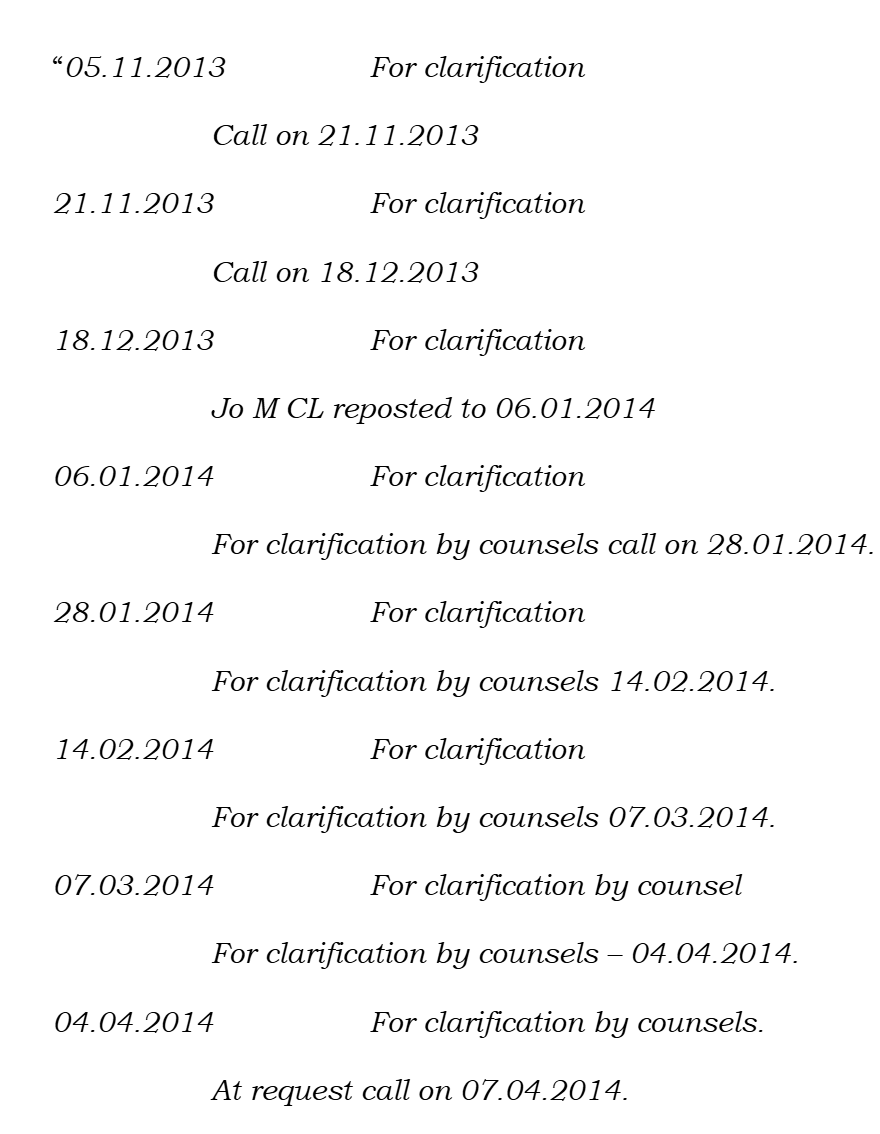
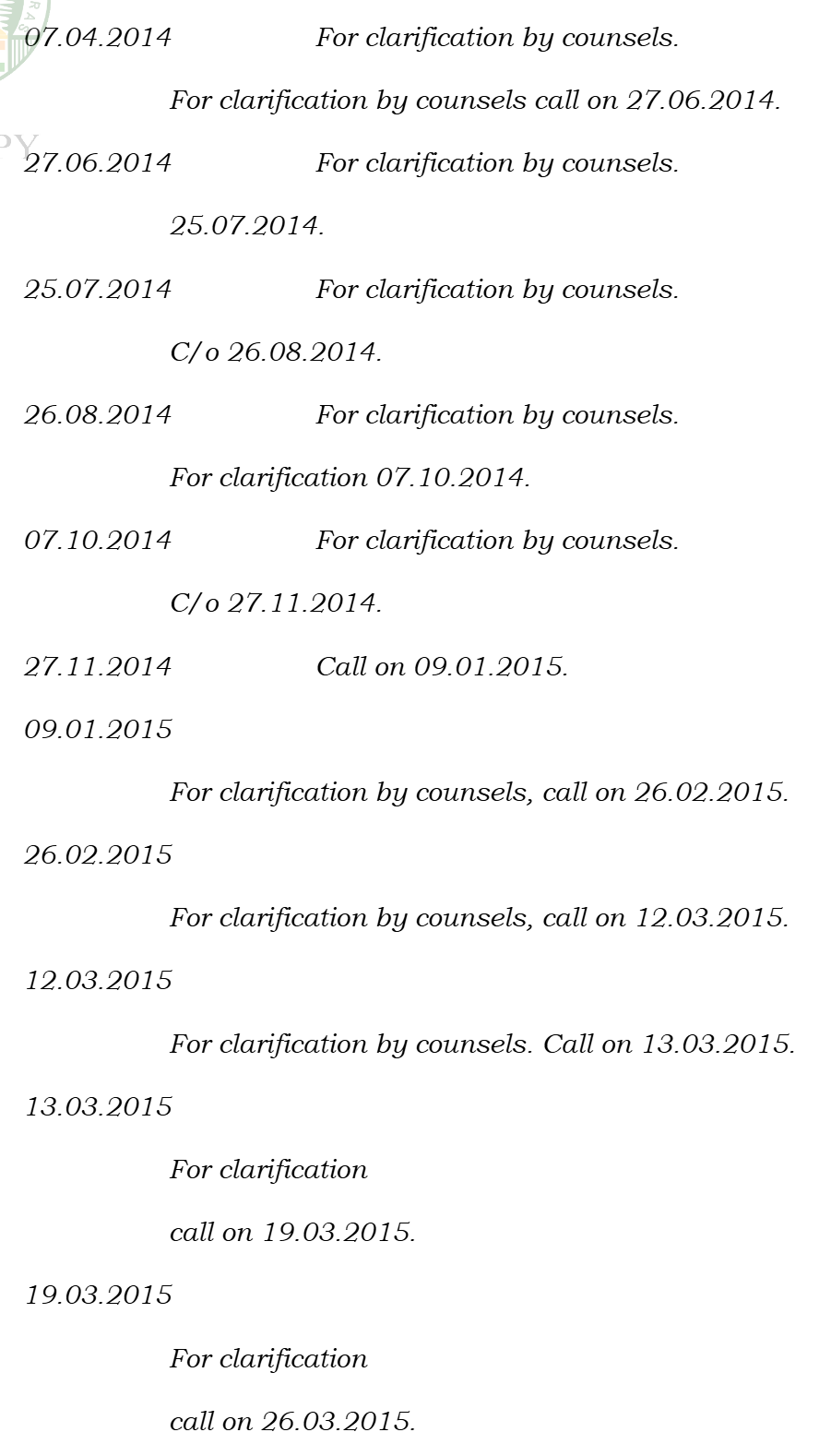
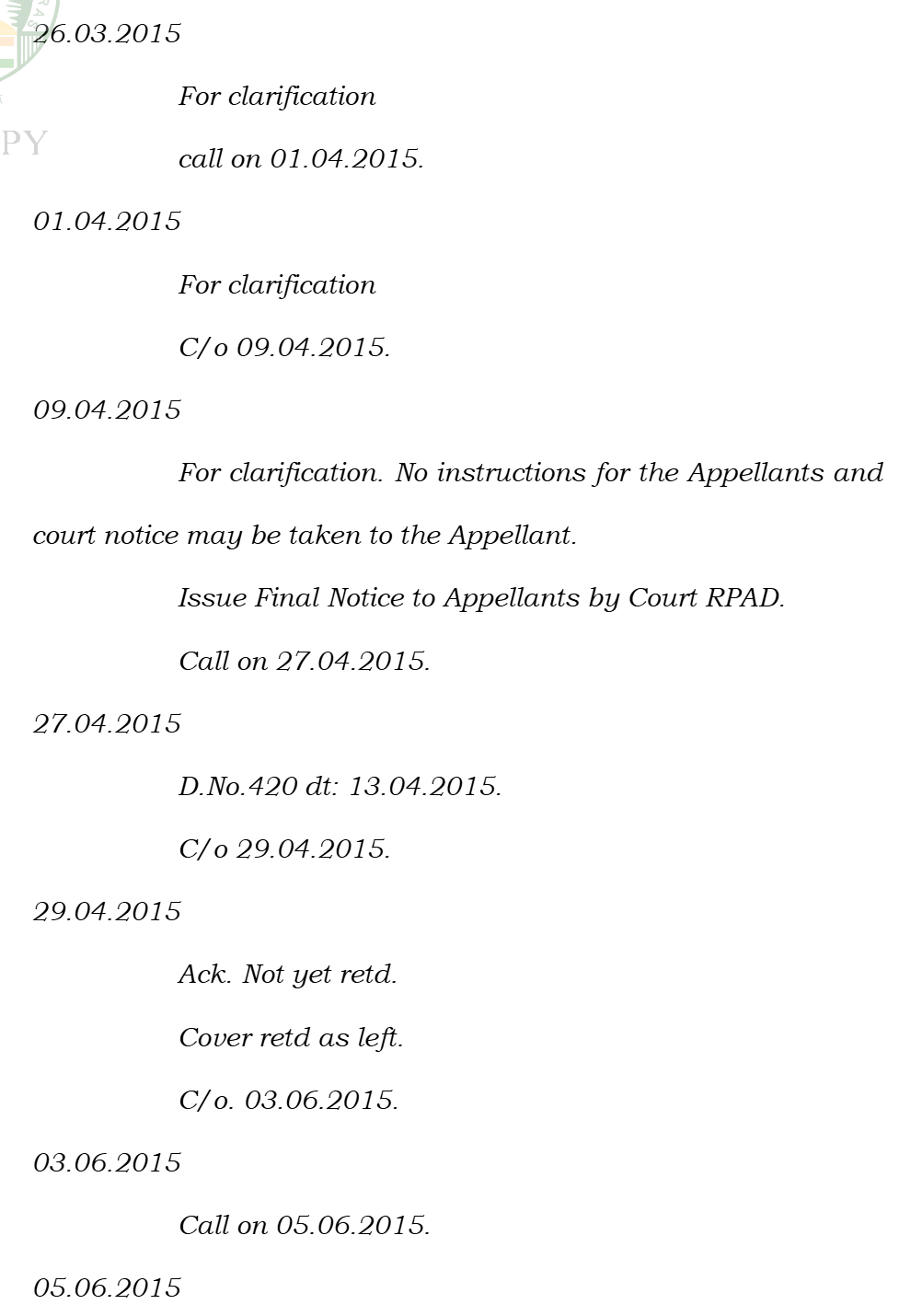
4. The notice was issued on 13.04.2015, fixing the date of hearing on 27.04.2015. On 29.04.2015, the court recorded that the acknowledgement cover had not yet been received, and adjourned the matter to 03.06.2015. On 03.06.2015, the appeal was adjourned further to 05.06.2015. In the meantime, the cover, was however returned to the court with an endorsement “left”.
5. On 05.06.2015, the first respondent heard the counsel for the respondents, namely, the Kundrakudi Adheenam as well as the respondents herein and reserved orders in the appeal. The Court further received written arguments filed by the private respondents herein. Thereafter, it dismissed the appeal on merits. Challenging the same, the present writ petition.
6. In order to satisfy myself, I summoned the records from the file of the 1st respondent. A perusal of the notes paper, which has been sent along with the records, vouchsafes the averments made in the writ affidavit. Without hearing the writ petitioner, the appeal came to be dismissed on merits on 12.06.2015.
7. The records shows that on 13.04.2015, summons had been issued by the court to the writ petitioner in D.No.420/2015. It had been returned by the postal authorities on 15.04.2015. The court had the option, either to dismiss the appeal for default, or issue fresh notice to the writ petitioner. Instead of doing so, the 1st respondent heard the arguments of the respondents alone, and had rendered a lengthy judgment, on the merits of the case, running into several pages dismissing the appeal.
8. First, I find a contradiction in the very impugned order itself. In the first portion of the judgment, the learned Judge has recorded that he heard Mr.S.Thankaswamy and Mr.R.Subramaniam for the appellant. Whereas, in page No.6 of the impugned order, he has recorded that there is no representation for the appellant and that he heard the respondents’ side arguments alone. The contradiction is obvious. The learned Tribunal has recorded in one portion as if the appellant has argued and in other portion of the judgment, he recorded that the respondents 2 to 15 and the counsel for the 16th respondent Kunnakudi Adhinam alone were heard.
9. Secondly, the procedure followed by the 1st respondent is also way off the mark. Th
Judicial bodies must strictly adhere to principles of natural justice, ensuring that both parties are heard before dismissing an appeal on merits.

The court emphasized that any order impacting rights must adhere to the principles of natural justice, requiring a fair hearing before issuance.

The court reinforced that review petitions are not an opportunity to re-argue cases or appeal decisions already made unless clear, patent errors exist.


Natural justice complied when reply considered and hearing offered, even if not availed.
Impugned orders quashed solely for violating principles of natural justice; remitted for fresh consideration.

A statutory alternative remedy is usually required, unless natural justice is violated, which allows for judicial review.

The discretionary power of the court in deciding writ petitions under Article 226 of the Constitution and the exclusion of writ proceedings from the provisions of the Code of Civil Procedure.

Removal of a Sarpanch requires adherence to natural justice principles and independent findings. Failure to present facts disqualifies claims for writ relief.



An indispensable Tool for Legal Professionals, Endorsed by Various High Court and Judicial Officers
Please visit our Training & Support
Center or Contact Us for assistance

Scan Me!
India’s Legal research and Law Firm App, Download now!


For Daily Legal Updates, Join us on :



 Back to top


