
 Back
Back





IN THE HIGH COURT OF JUDICATURE AT MADRAS
V. LAKSHMINARAYANAN, J.
S.N.L.Jayabalan - Appellant
Versus
Arulmigu Ananda Vigneswarar Koil @ Thatta Pillayar Temple, By Its Hereditary Trustee – Respondent
S.A.No.1001 of 2000
Decided On : 04-02-2026
| Table of Content |
|---|
| 1. overview of parties and dispute (Para 1 , 2 , 4 , 5 , 6 , 10) |
| 2. defendants claim of ownership and tenancy (Para 7 , 8 , 9 , 20 , 21) |
| 3. court's admission and procedural notes (Para 14 , 16 , 17 , 18 , 19) |
| 4. relationship of landlord and tenant (Para 28 , 29 , 30 , 31) |
| 5. clarification on permanent tenancy principles (Para 34 , 35 , 36 , 39) |
| 6. defendants' conduct related to claims of tenancy (Para 42 , 43 , 54) |
| 7. court's answers to substantial questions of law (Para 58) |
| 8. final judgment and order (Para 59 , 60) |
JUDGMENT :
V. LAKSHMINARAYANAN, J.
The present appeal arises against the judgment and decree of the learned Additional Subordinate Judge, at Nagapattinam in A.S.No.198 of 1999 dated 11.02.2000 in reversing the judgment and decree of the learned District Munsif at Nannilam in O.S.No.179 of 1996 dated 22.03.1999.
2. The defendants 1 to 3 are the appellants. O.S.No.179 of 1996 is a suit for ejectment, recovery of arrears of rent, for past mesne profits and for costs.
3. For the sake of convenience, the parties shall be referred to as the plaintiffs and the defendants.
4. It is the case of the plaintiff that the suit schedule mentioned property belonged to the temple. The plaintiff, being an idol, the suit was presented by its hereditary trustees. They alleged that on 17.03.1955, one Namasivaya Pattar, who was the father of the plaintiffs, the then trustee of the temple, had entered into an oral lease with one Pushpavalli Ammal, who is the mother of the defendants 1 to 3, for the suit schedule mentioned property. The monthly rent was Rs.5.00. In evidence of the payment of rents, receipts were issued by the temple and were duly signed by Pushpavalli Ammal. Pushpavalli Ammal died on 16.06.1990. On her death, the defendants 1 to 3 became the tenants of the suit property as her legal heirs.
5. There are two houses in the suit property, and the same had been leased out in favour of the defendants 4 and 5. The plaintiffs demanded the defendants to execute a fresh lease deed and also to clear the arrears of rent. As they did not do so, a notice under Section 106 of the Transfer of Property Act was issued on 23.04.1993. The defendants 3 and 4 alone issued a reply. As the demand in the notice had not been complied with, the temple presented the suit for the aforesaid reliefs.
6. Summons were served on the defendants. The defendants 1 to 3 and the defendant 4 filed separate written statements.
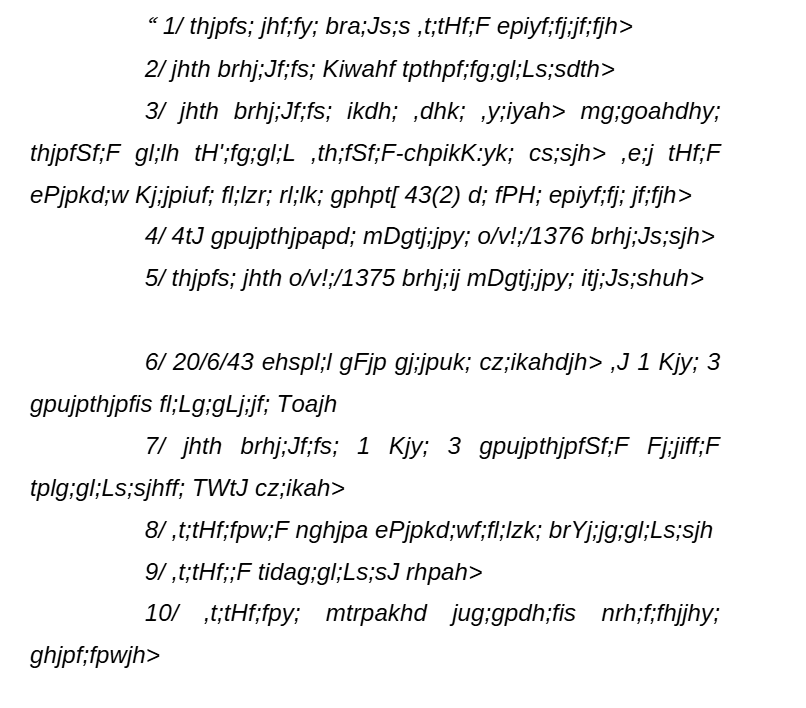
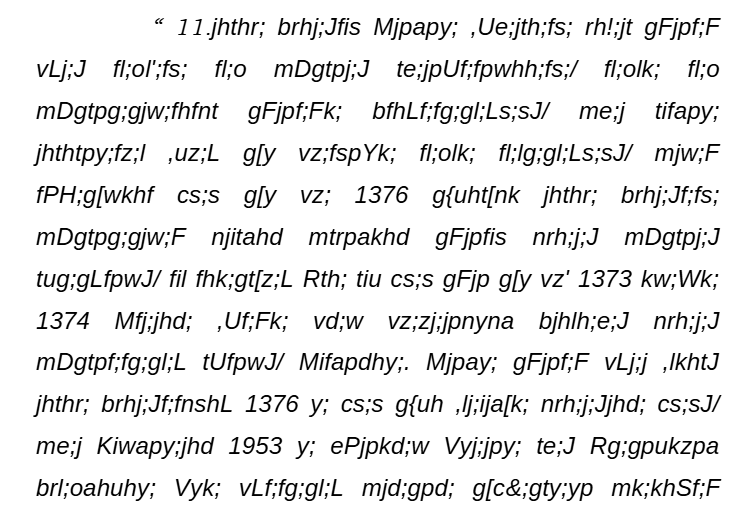
7. According to the defendants 1 to 3, the property situated in Town Survey Nos.1375 and 1376 was purchased by Pushpavalli Ammal from one Subramani Chettiar, under a registered sale deed dated 22.02.1954. Subramani Chettiar had purchased the property in a court auction held on 07.12.1953. Thereafter, he took delivery of the same on 19.02.1954. The said Pushpavalli Ammal executed a “WILL” in favour of the defendants 1 to 3 on 17.10.1988. Upon her death, the defendants 1 to 3 became the absolute owners of the property. They pleaded that Pushpavalli Ammal had erected a compound wall and a fence around the suit schedule mentioned properties, as well as with respect to the properties in Town Survey Nos.1375 and 1376. The adjacent vacant lands were lands appurtenant to the suit properties. They further pleaded that the houses constructed on the suit land belonged to them.
8. The defendants 1 to 3 also pleaded that the suit properties are inam lands and that, with the coming into force of The Tamil Nadu Inam Estates (Abolition and Conversion into Ryotwari) Act , 26 of 1963 (hereinafter referred to as 'Act 26 of 1963'), the defendants 1 to 3 became entitled to the properties. They alleged that whatever right the temple had, had been taken over by the Government. They denied the lease arrangement between the temple and their mother. They claimed that the temple cannot claim any right, title, or interest in the suit properties. They additionally alleged that as the owners of the building, they are entitled to the benefits under the Tamil Nadu City T



A tenant invoking permanent tenancy against a religious landlord must meet a high burden of proof; failure to establish such status leads to eviction.

A tenant is estopped from denying the title of the landlord when he has acknowledged the landlord's ownership through payment of rent.
The court affirmed the temple's ownership of the property, ruling that the tenant's occupation was illegal after lease termination, and the suit for recovery of possession was maintainable.

The main legal point established in the judgment is the entitlement of the temple to maintain a suit for recovery of possession despite the issuance of a joint patta under the Tamil Nadu Minor Inam A....

1. A court is barred from entertaining an issue which has already been decided previously by any court of law. 2. The pre-condition for establishing the tenant-landlord relationship is that the landl....

The existence of a landlord-tenant relationship is established by unchallenged ownership, while denial of title by a tenant does not negate eviction rights against unproven claims.



An indispensable Tool for Legal Professionals, Endorsed by Various High Court and Judicial Officers
Please visit our Training & Support
Center or Contact Us for assistance

Scan Me!
India’s Legal research and Law Firm App, Download now!


For Daily Legal Updates, Join us on :



 Back to top


