
 Back
Back





IN THE HIGH COURT OF ALLAHABAD
KSHITIJ SHAILENDRA, J.
Ashok Kumar Tomar – Petitioner
Versus
State of U.P. and Others – Respondents
Civil Misc. Writ Petition No. 7730 of 2016
Decided On : 19-04-2023
Gratuity - Employee Definition - Payment of Gratuity Act, 1972 - The court interpreted the definition of 'employee' under Section 2(e) and the applicability of Section 1(3)(c), concluding that the petitioner was entitled to gratuity despite the state's claims to the contrary.
Fact of the Case:
The petitioner, a former lecturer and principal, sought gratuity after voluntary retirement. His claims were denied based on interpretations of the Payment of Gratuity Act and a government order regarding retirement age.
Finding of the Court:
The court found that the petitioner qualified as an 'employee' under the Payment of Gratuity Act, rejecting the state's arguments regarding exclusion and the applicability of the government order.
Issues: Whether the petitioner is entitled to gratuity under the Payment of Gratuity Act, considering the definitions and government orders cited by the respondents.
Ratio Decidendi: The court held that the petitioner did not fall under the exclusion clause of the Act and that the government order did not restrict his right to claim gratuity upon voluntary retirement.
Result: The writ petition is allowed, and the impugned orders denying gratuity are quashed.
JUDGMENT :
KSHITIJ SHAILENDRA, J.
1. Heard Shri Siddharth Khare, learned counsel for the petitioner and learned Standing Counsel for the State-respondents.
2. The petitioner was appointed on the post of lecturer in 1982 in an aided educational institution. Thereafter, pursuant to the process issued for appointment on the post of Principal, the petitioner applied and was appointed on the post of Principal on 23.10.2002.
3. The date of birth of the petitioner being 5.11.1959, when he reached age of 50 years in 2009, he opted for voluntary retirement after completing the length of service of 27 years, 9 months and 28 days. The voluntary retirement of the petitioner was accepted by the authorities.
4. While the retirement dues of the petitioner were not being paid, petitioner filed Writ-A No. 58376 of 2010, which was disposed of by this Court vide order dated 22.9.2010, whereby the Joint Director of Education, Saharanpur Region Saharanpur was directed to consider the grievance of the petitioner with regard to non-payment of his dues. Pursuant to the order dated 22.9.2010, passed by this Court, the Joint Director of Education, Saharanpur, passed an order dated 9.12.2010, whereby the payment of pension to the petitioner was granted, however the gratuity was refused. Thereafter, the petitioner filed filed P.G. Case No. 2 of 2012 before the Controlling Authority under the Payment of Gratuity Act, 1972 (herein after referred to as 'the Act, 1972'). The said authority vide order dated 6.9.2013 directed the respondents to pay a sum of Rs. 6,46,041, as the amount of gratuity to the petitioner.
5. Challenging the order dated 6.9.2013, the State filed Writ-C No. 5108 of 2014, which was dismissed by this Court vide order dated 27.1.2014 on the ground of availability of alternative remedy by filing statutory appeal.
6. Thereafter, the respondents filed P.G.A. Appeal No. 2 of 2014 before the appellate authority under the Act, 1972, which has been allowed by the impugned order dated 3.12.2015.
7. This petition was filed in the year 2016 and during the pendency of the writ petition, an affidavit was filed on behalf of respondents annexing therewith another order dated 11.9.2020, whereby the Deputy Director of Education (Intermediate), Saharanpur Division Saharanpur again denied gratuity to the petitioner by placing reliance upon Government Order dated 29.8.1981. The petitioner by means of an amendment application challenged the order dated 11.9.2020. The amendment application was allowed and, therefore, the said order is also under challenge.
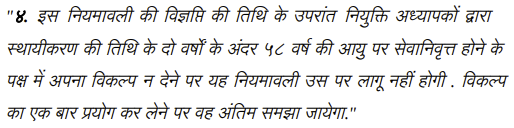
8. Shri Siddharth Khare, learned counsel for the petitioner, submits that the order impugned is based upon wrongful interpretation of Section 2 (e) of the 1972 Act and authority has taken a wrong view that the petitioner falls within the exclusion clause of the definition 'employee', as he is an employee of the State Government. Shri Khare further submits that another ground taken for denying the gratuity to the petitioner is applicability of Government Order dated 29.8.1981, which, in fact, does not apply in the case of the petitioner. He further submits that even the subsequent order dated 11.9.2020 is based upon same proposition of the applicability of the Government Order dated 29.8.1981.
9. Shri Khare has referred to the definition of 'employee' as contained under Section 2 (e) of the Act, 1972, which reads as follows:
“(e) “employee” means any person (other than an apprentice) employed on wages, in any establishment, factory, mine, oilfield, plantation, port, railway company or shop to do any skilled, semi-skilled, or unskilled, manual, supervisory, technical or clerical work, whether the terms of such employment are express or implied, and whether or not such person is employed in a managerial or administrative capacity, but does not include any such person who holds a post under the Central Government or a State Government and is governed by any other Act or by any rules providing for payment of gratuity.”
10.
AI
The court established that the definition of 'employee' under the Payment of Gratuity Act includes the petitioner, entitling him to gratuity despite state claims of exclusion.
Voluntary retirement constitutes an option for gratuity eligibility, regardless of not opting to retire at the age of 60.

Entitlement to gratuity for teachers retiring at 60 years is established by interpreting Government Orders and previous judgments, irrespective of retirement date and age options.
Teachers in basic institutions governed by state rules are not considered employees under the Gratuity Act, denying them gratuity benefits.

Employees of aided educational institutions are entitled to gratuity for their entire service period, as per the applicable rules and acts.


Benefits for Payment of Gratuity to Vocational Part-Time Teachers - Act does not draw a distinction between a fulltime employee/a part time employee/ad-hoc employee etc and does not speak of any spec....
Part-time vocational teachers are entitled to gratuity under the Payment of Gratuity Act as they fall within the definition of 'employee' post-amendment, despite arguments regarding their temporary e....



An indispensable Tool for Legal Professionals, Endorsed by Various High Court and Judicial Officers
Please visit our Training & Support
Center or Contact Us for assistance

Scan Me!
India’s Legal research and Law Firm App, Download now!


For Daily Legal Updates, Join us on :



 Back to top


