
 Back
Back





IN THE HIGH COURT OF ALLAHABAD
SAURABH SHYAM SHAMSHERY, J.
Gaurav Kumar – Appellant
versus
State Of Up And 2 Others – Respondent
WRIT - A No. – 18731, 10148, 17482, 18750, 4841 of 2024 WRIT - A No. – 1334, 18 of 2025 WRIT - A No. - 839 of 2023
Decided on : 06-03-2025
(A) U.P. Secondary Education Services Selection Board Act, 1982 - Rule 12 - Recruitment process for Trained Graduate Teachers - Petitioners challenged the reduction of advertised vacancies and non-allocation of colleges despite being on the select list. Court found Board's action in reducing vacancies unjustifiable and emphasized the obligation to prepare a larger select panel, not less than the advertised vacancies. (Paras 4, 5, 8, 12, 16)
(B) Indefeasible right to appointment - Court reiterated that mere selection does not confer an indefeasible right to appointment, referencing Sudesh Kumar Goyal v. State of Haryana, emphasizing the need for timely recruitment processes. (Paras 16)
Facts of the case:
Petitioners participated in a recruitment process for T.G.T. posts and were selected but were not allotted colleges due to a reduction in advertised posts. They filed petitions after a prolonged wait for resolution. (Paras 2, 6, 7)
Findings of Court:
The Board was mandated to prepare a select panel larger than the advertised vacancies, with no discretion to reduce it, and the petitioners' claims were dismissed due to lack of available posts. (Paras 4, 12, 17)
Issues: The main issues were whether the Board's explanation for reducing vacancies was plausible and whether a timeline should be fixed for the recruitment process initiated in 2013. (Paras 8, 10)
Ratio Decidendi: The court held that the Board must adhere to statutory rules regarding vacancy determination and selection processes, and that candidates do not have an indefeasible right to appointment merely by being selected. (Paras 4, 16)
Result: Writ petitions dismissed.
Hon'ble Saurabh Shyam Shamshery,J.
1. Heard S/Sri Prabhakar Awasthi, Abhishek Kumar Saroj, Rahul Agarwal, Ganesh Shanker Srivastava, Ashwani Kumar Yadav, Ashutosh Pandey and Praveen Kumar Mishra, learned advocates for petitioners, S/Sri K. Shahi, Anil Kumar Singh and Aakash Rai, learned advocates for UP Education Services Selection Commission, Sri Ashish Kumar Nagvanshi, Sri D.P. Singh and Sri Rajesh Kumar Tiwari, learned advocates appearing for State.
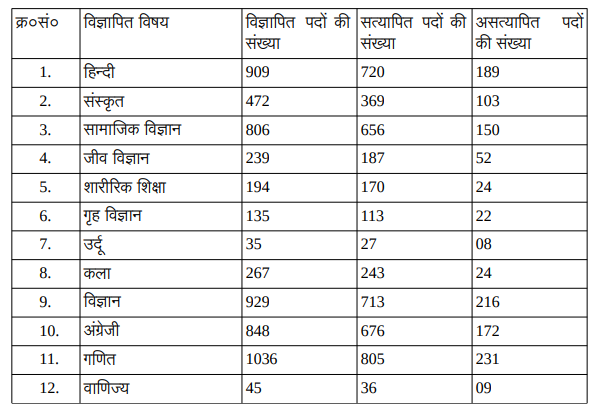
2. Number of petitioners in present bunch of writ petitions are in long drawn litigation and are waiting for outcome of their grievances which commenced when they have participated in a direct recruitment process initiated for appointment of numbers of Trained Graduate Teachers (T.G.T.) in different subjects in numbers of Non-Government Inter Colleges/High Schools in State of U.P. by Uttar Pradesh Secondary Education Services Selection Board (hereinafter referred to as “Board”) through an Adv. No.01/2013, in which they were declared successful.
3. Some of petitioners being aggrieved that since number of posts. so advertised, were reduced and due to that they were not allotted colleges, therefore, they filed a Writ A No. 22128 of 2018 (Sanjay Kumar and others vs. State of U.P. and others) that in terms of Rule 12 of U.P. Secondary Education Services Selection Board Act, 1982 read with Rules of 1998, the Board ought to have proposed a longer select panel (but not larger than25%) in the said recruitment process.
4. The said writ petition was disposed of by an order dated26.11.2018 and its relevant part is mentioned below :-
“The issue raised lies in a narrow ambit.
The conduct of recruitment by the Board is regulated by the provisions of theU.P. Secondary Education Services Selection Board Act, 1982 read with Rules 1998. Rule 11 regulates determination of vacancy while Rule 12 provides for procedure for direct recruitment. Sub-Rule 8 of Rule 12 clearly provides that in the case of vacancy on the post of lecturer or teacher L.T. Grade. The select panel shall be larger (but not larger than 25%) of the number of vacancies. Rule 12(8) of the Rules 1998 is reproduced hereinafter:-
"The Board then, for each category of post, prepare panel of those found most suitable for appointment in order of merit as disclosed by the marks obtained by the after adding the marks obtained under sub-clause (4) or sub- clause (5) above, as the case may be, with the marks obtained in the interview. The panel for the post of Principal or Headmaster shall be prepared institution- wise after giving due regard to the preference given by a candidate, if any, for appointment in a particular institution whereas for the posts in the lecturers and trained graduates grade, it shall be prepared subject-wise and group-wise respectively. If two or more candidates obtain equal marks, the name of the candidate who has higher quality points shall be placed higher in the panel and if the marks obtained in the quality points are also equal, then the name of the candidate who is older in age shall be placed higher. In the panel for the post of Principal or Headmaster, the number of names shall be three times of the number of the vacancy and for the post of teachers in the Lecturers and Trained graduate grade, it shall be larger (but not larger than twenty-five per cent) than the number of vacancies.
Practical exigencies like non-availability of notified vacancies would not justify the Board from adopting a procedure which is in derogation of what is laid down by the statutory scheme itself.
There is no discretion vested in the commission to provide a panel on the post of teachers in lecturer and L.T. Grade, which may be less than the number of vacancies. Vacancy itself has been defined under Rule 2(e) of the Rules 1998 in following words:-
"Vacancy" means a vacancy arising out as a result of death, retire- ment, resignation, termination, dismissal or removal of a teacher or creation of new post or appointment or promotion of the incum
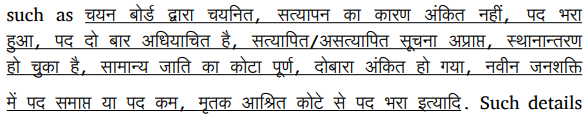
The court emphasized the obligation of the Board to prepare a select panel larger than advertised vacancies, reaffirming that mere selection does not confer an indefeasible right to appointment.

Selection boards have discretion to prepare waiting lists up to 25% of vacancies, not mandated to reach exactly that number, ensuring reasonable timelines for the recruitment process.

Appointment – A Panel or a Merit List cannot be treated as if it exists in perpetuity, which will facilitate making appointments as and when required – Even when vacancies are notified and adequate n....

Candidates on a merit list do not have an indefeasible right to appointment if they fail to meet the prescribed cut-off marks, emphasizing the need for fair recruitment processes.


The government is not obligated to fill all advertised posts, and candidates have no fundamental right to be appointed.

The main legal point established in the judgment is the right of the petitioners to be considered for appointment, the obligation of the employer to publish the panels, and the impact of pending cour....
The court established that recruitment processes must adhere to the legal framework in place at the time of vacancy and emphasized the necessity of public advertisement for fair selection.



An indispensable Tool for Legal Professionals, Endorsed by Various High Court and Judicial Officers
Please visit our Training & Support
Center or Contact Us for assistance

Scan Me!
India’s Legal research and Law Firm App, Download now!


For Daily Legal Updates, Join us on :



 Back to top


