
 Back
Back





IN THE HIGH COURT OF JUDICATURE AT ALLAHABAD LUCKNOW
SINGH CHAUHAN, ABDHESH KUMAR CHAUDHARY, JJ.
Sanjay Rai – Appellant
Versus
State of U.P. – Respondent
CRIMINAL APPEAL No. - 475, 671, 672, 673 of 2020
Decided on : 05-06-2026
| Table of Content |
|---|
| 1. factual background and prosecution case presentation. (Para 5 , 6 , 7 , 8 , 9 , 10 , 11 , 12 , 13 , 14 , 15 , 16 , 17 , 18 , 19 , 20 , 21 , 22 , 23 , 24 , 25) |
| 2. trial court analysis and conviction reasoning. (Para 26 , 27 , 28 , 29 , 30 , 31 , 32 , 33) |
| 3. parties' contentions and debate on investigation quality. (Para 34 , 35 , 36 , 37 , 38 , 39 , 40 , 41 , 42 , 43 , 44 , 45 , 46 , 47 , 48 , 49 , 50 , 51 , 52 , 53 , 54 , 55 , 56 , 57 , 58) |
| 4. appellate scrutiny of flawed investigative procedures. (Para 59 , 60 , 61 , 62 , 63 , 64 , 65 , 66 , 67 , 68 , 69 , 70 , 71) |
| 5. application of circumstantial evidence principles and requirement of proof beyond reasonable doubt. (Para 72 , 73 , 74 , 122 , 123 , 124 , 125 , 126) |
| 6. evidence re-appreciation and evaluation of individual roles. (Para 75 , 76 , 77 , 78 , 79 , 80 , 81 , 82 , 83 , 84 , 85 , 86 , 87 , 88 , 89 , 90 , 91 , 92 , 93 , 94 , 95 , 96 , 97 , 98 , 99 , 100 , 101 , 102 , 103 , 104 , 105 , 106 , 107 , 108 , 109 , 110 , 111 , 112 , 113 , 114 , 115 , 116 , 117 , 118 , 119 , 120 , 121) |
| 7. final acquittal based on failure to bridge evidentiary gaps. (Para 127 , 128 , 129 , 130 , 131) |
JUDGMENT :
Abdhesh Kumar Chaudhary, J.
1) Heard Sri I.B.Singh, learned Senior Advocate, Sri Atul Verma, Adarsh Chandra Srivastava, Apoorv Dev, Ayush Chaudhary, Eshan Kumar Gupta, Prashant Kumar Singh, Rakesh Kumar Chaudhary, Ramakar Shukla, Vaibhav Upadhyay, Vinod Kumar Yadav, Ishan Baghel, Sanjeet Kumar Singh, learned Counsels for the appellants and Sri S.P. Singh, learned Additional Government Advocate for the State of U.P.
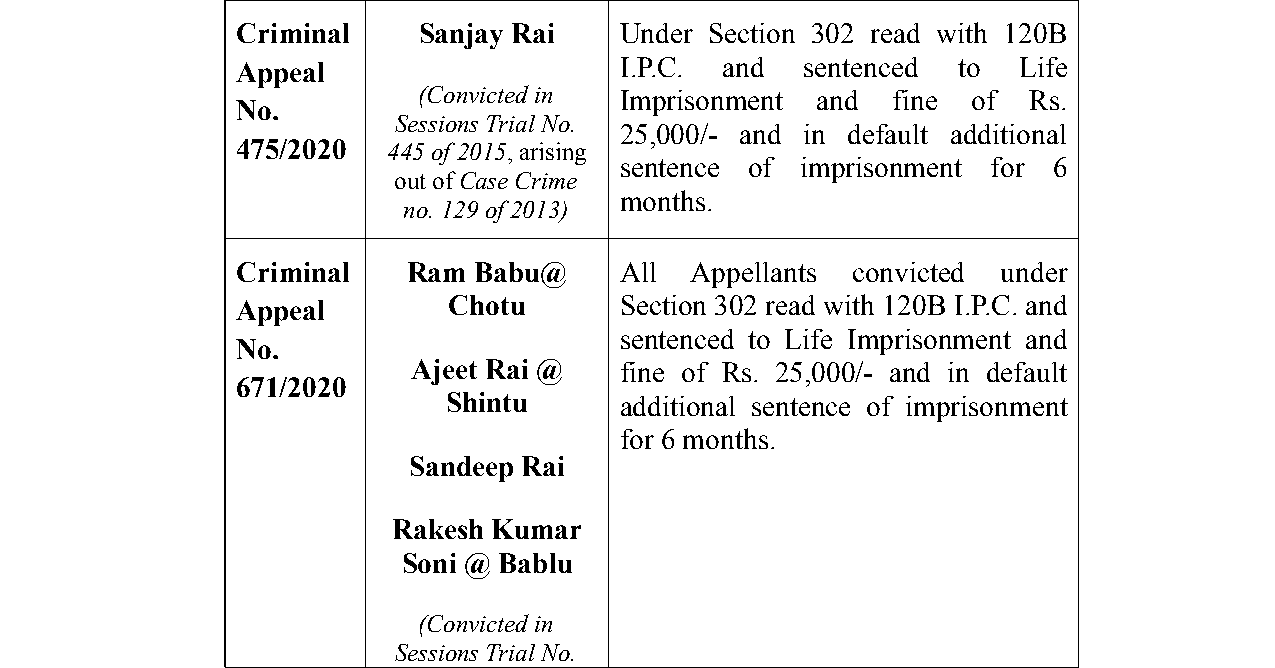
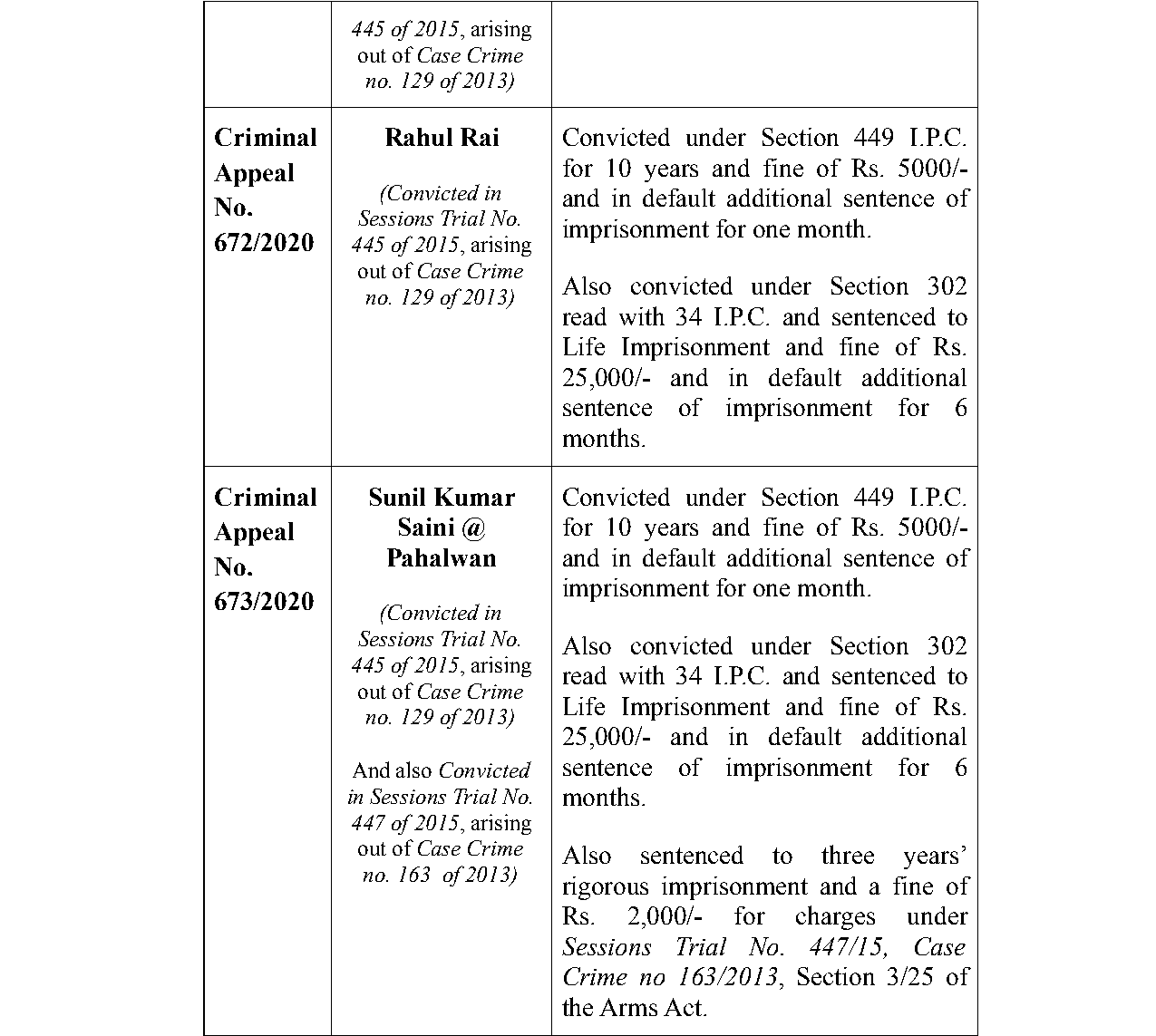
2) The present Criminal Appeals filed under Section 374(2)of the Code of Criminal Procedure, 1973 (hereinafter referred as to “Cr.P.C.”) arises out of a common impugned judgment and order dated 28.02.2020, passed by the learned Trial Court in Sessions Trial No. 445 of 2015, arising out of Case Crime no. 129 of 2013; and Sessions Trial No. 447 of 2015, arising out of Case Crime no. 163 of 2013; Police Station - Indira Nagar, Lucknow whereby the Appellants have been convicted and sentenced for various offences, which can be depicted as per the following tabular chart:-
CASE OF THE PROSECUTION
3) Shorn of unnecessary details, the factual matrix leading up to the filing of the present Criminal Appeals is delineated herein below:
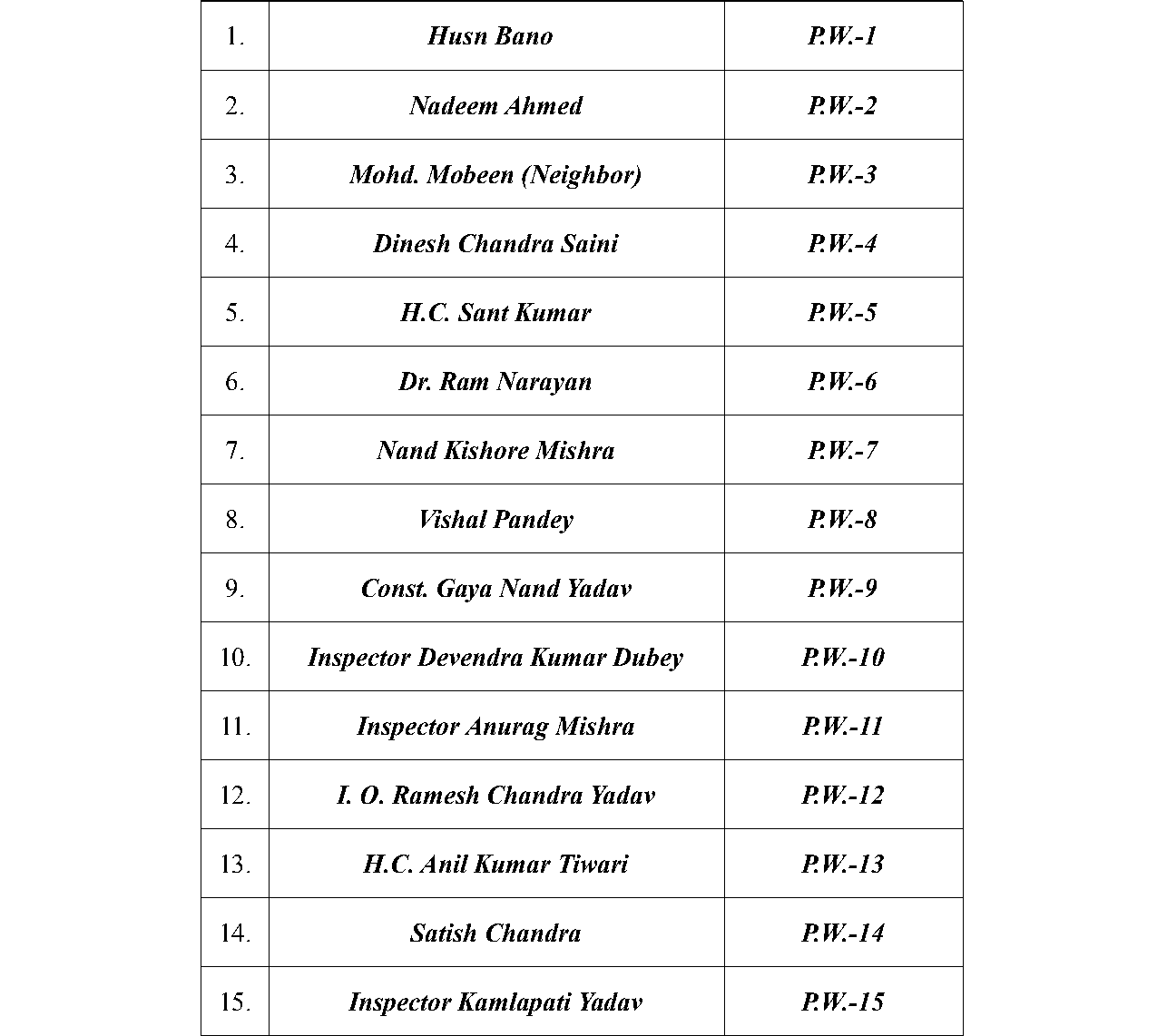
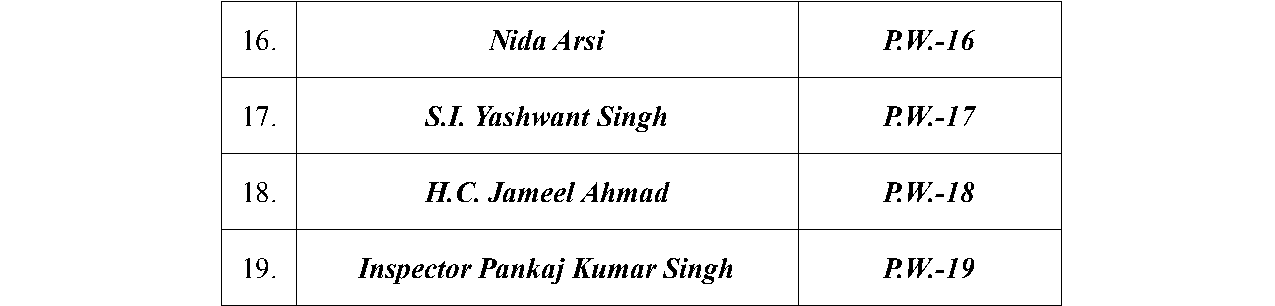
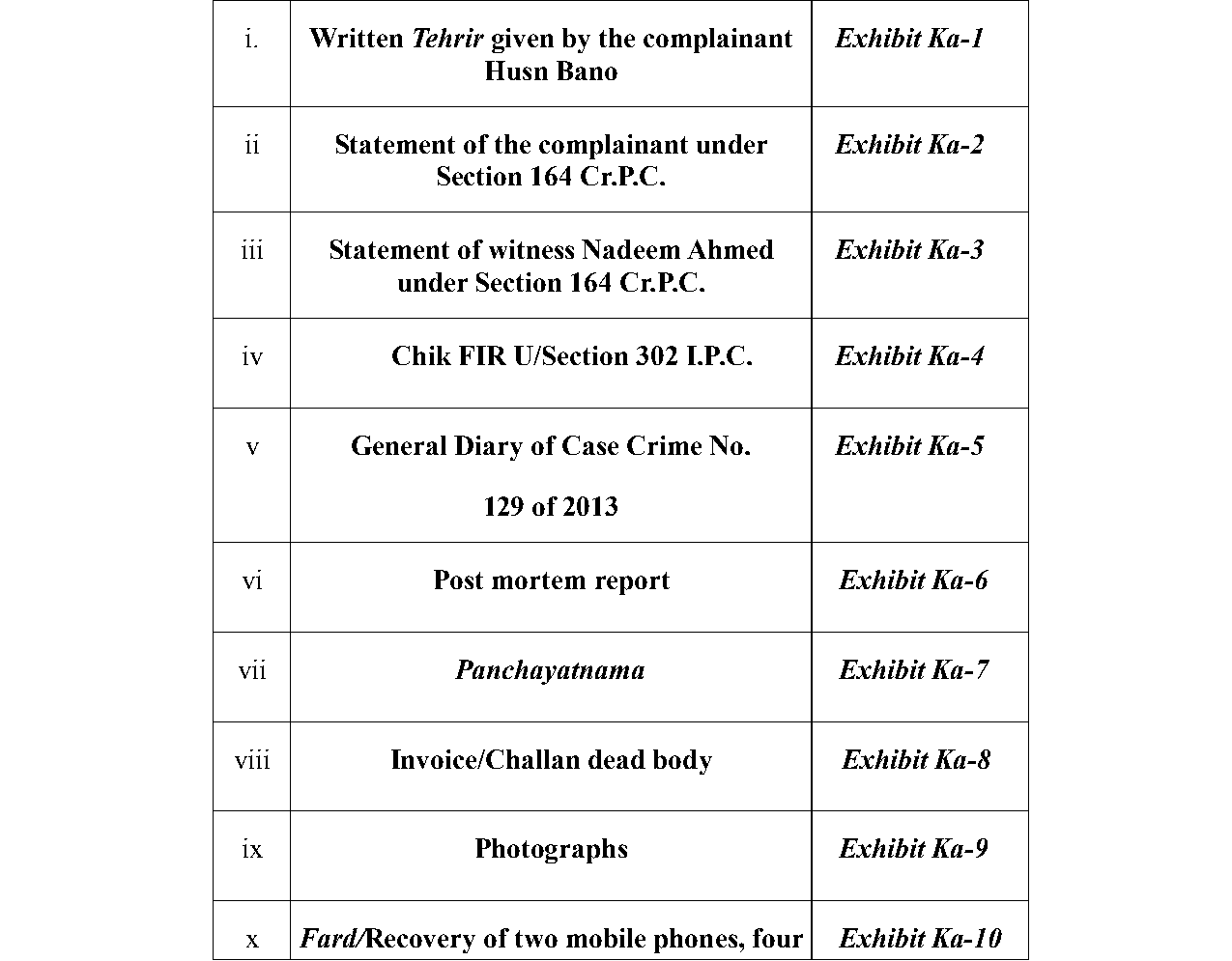
3.1) In the present case, with respect to an incident which occurred on 29.05.2013, a written report/tehrir (Exhibit Ka-1) was filed with Police Station Indira Nagar, Lucknow, by the informant namely Husn Bano, (P.W.-1) stating that on 29.05.2013, at around 10:30 PM, her nephew Maaz Ahmad Siddiqui, son of Khurshid Ahmed Siddiqui, aged about 14 years, was watching television while sitting on his bed inside her house, situated at Faridi Nagar, Lucknow. During that time, three men arrived on a motorcycle and called out to open the door. As soon as her other nephew Faizan Siddiqui, aged about 11 years, opened the door, all three men entered the house and fired indiscriminately at her nephew Maaz Ahmad with their firearms, causing grievous injuries and leaving him bleeding and writhing in pain on the bed, while the accused fled from the scene.
3.2) Since her nephew Maaz Ahmad was seriously injured, her sons namely Nadeem (P.W.-2) and Adib along with the neighbours took him to the Trauma Center, where he succumbed to the firearm injury, while reaching the hospital. The informant suspected that the said incident was orchestrated by one Arif, the brother-in-law of Faheem and his family members, who all were the resident of Bhakamau. Thus, a request was made for taking necessary legal action by filing a report.
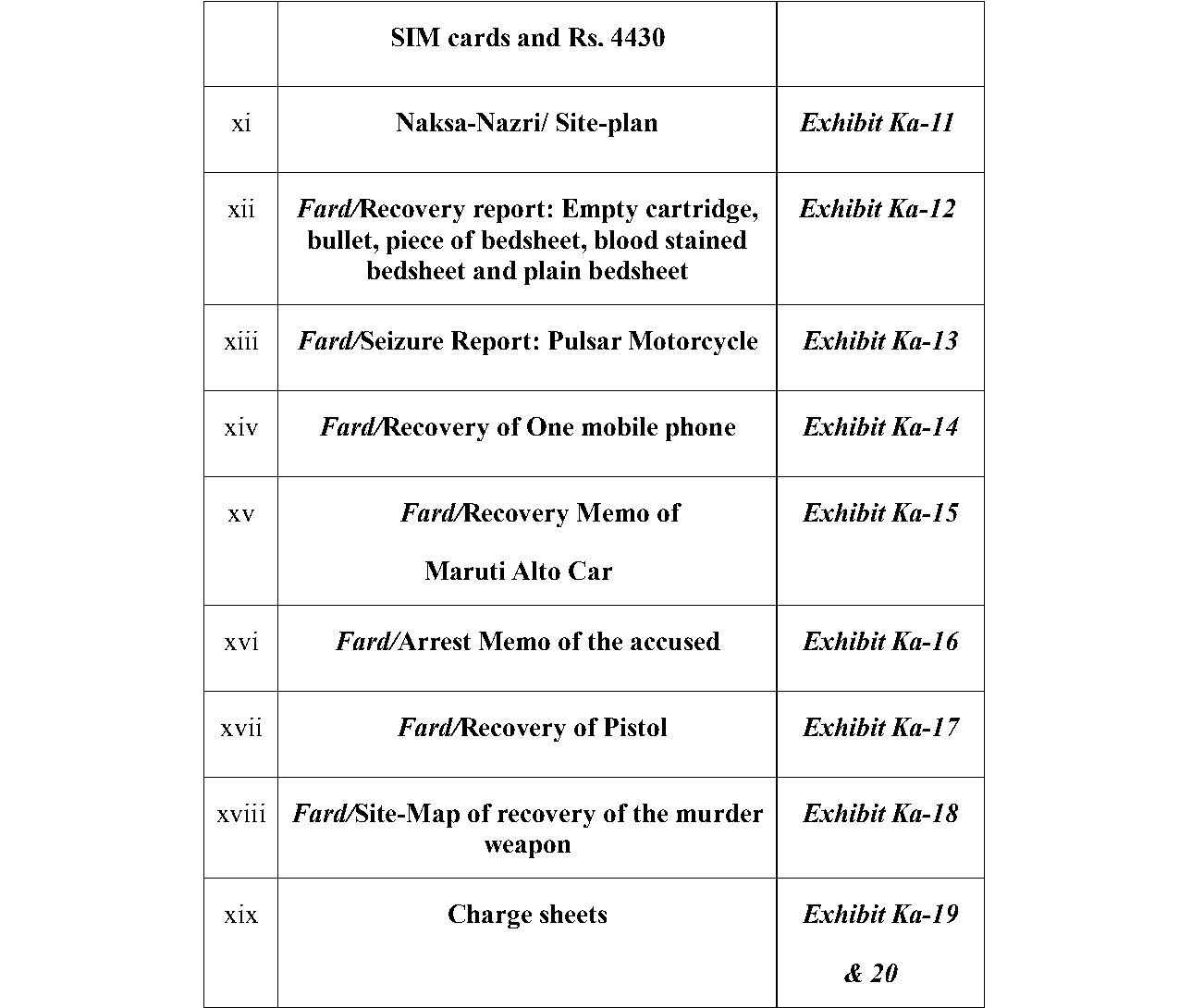
3.3) Based on the aforesaid given written complaint, a First Information Report (F.I.R.) was registered against Arif and his family members as well as three unknown assailants, under Section 302 of the Indian Penal Code, Case Crime No. 129 of 2013 (Exhibit Ka-4), at Indira Nagar Police Station and the investigation was thereafter handed over to the Inves
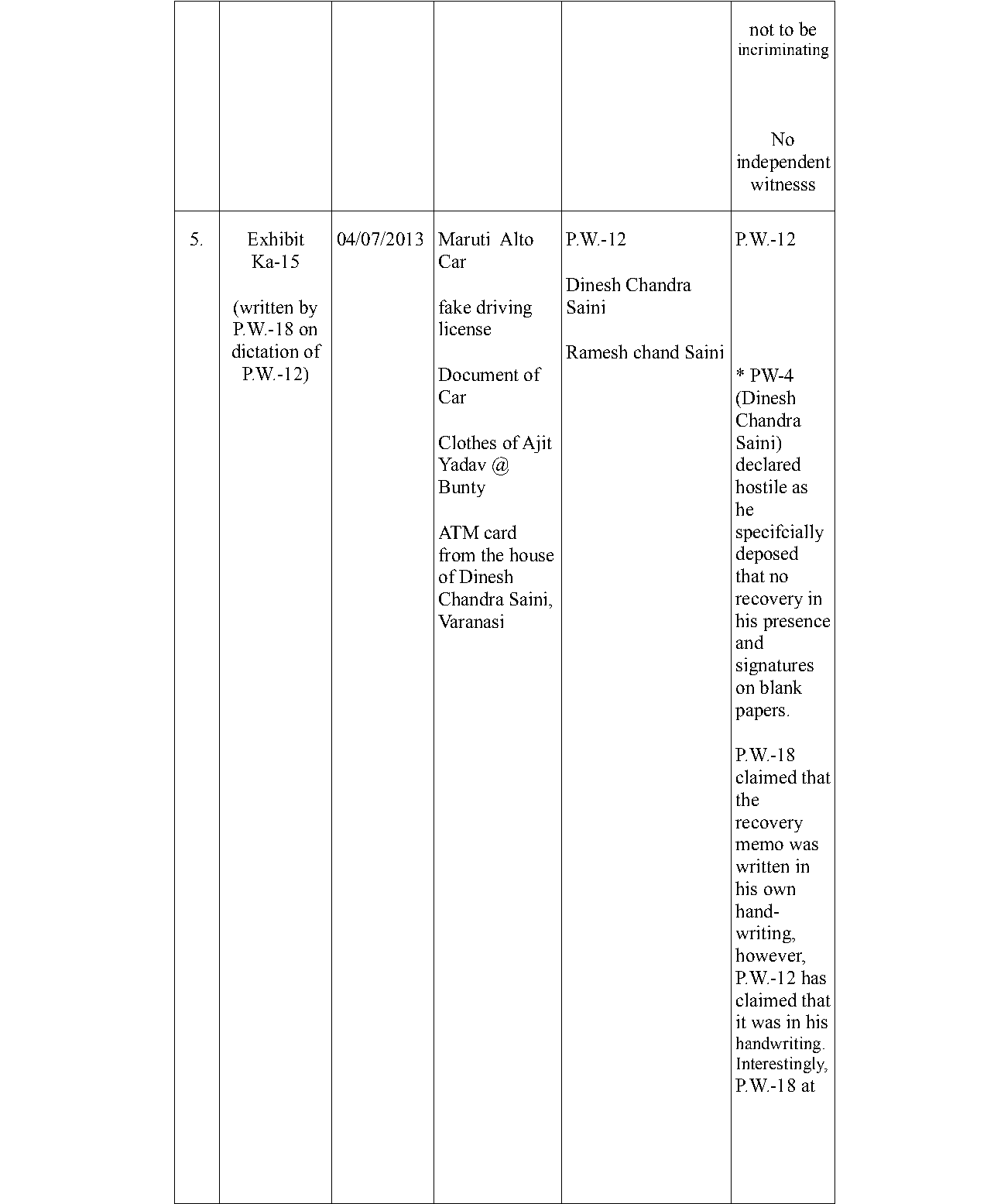
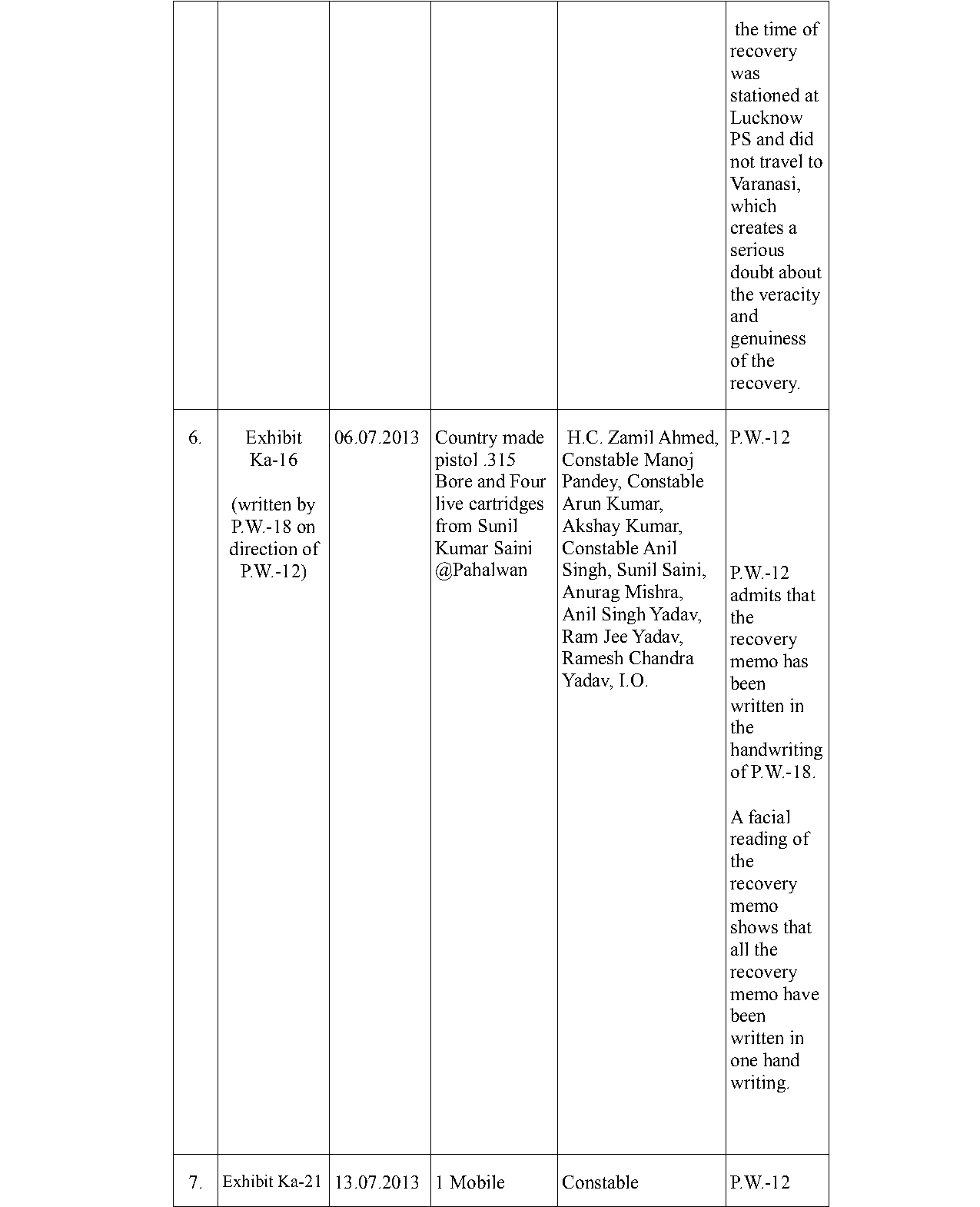
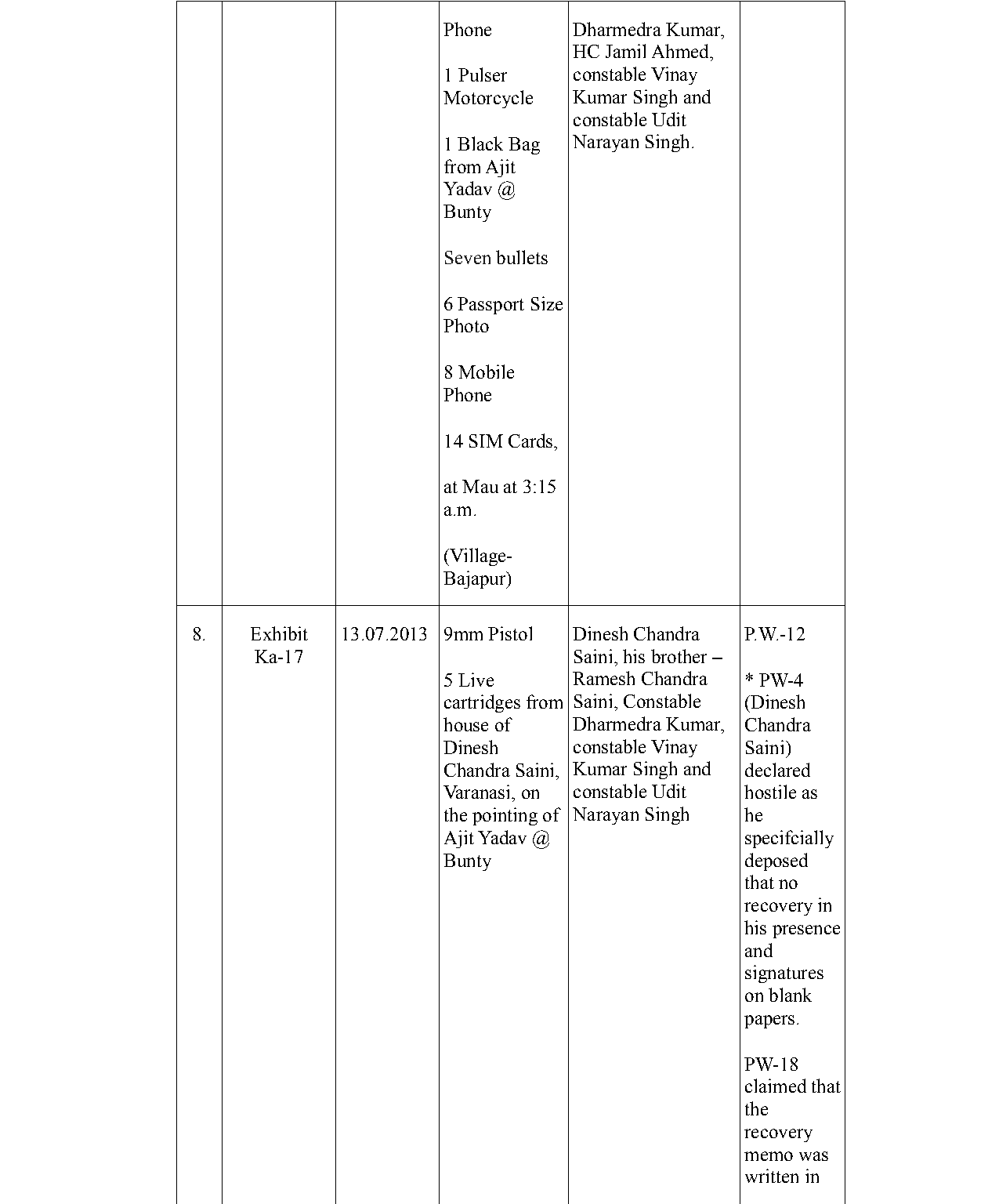
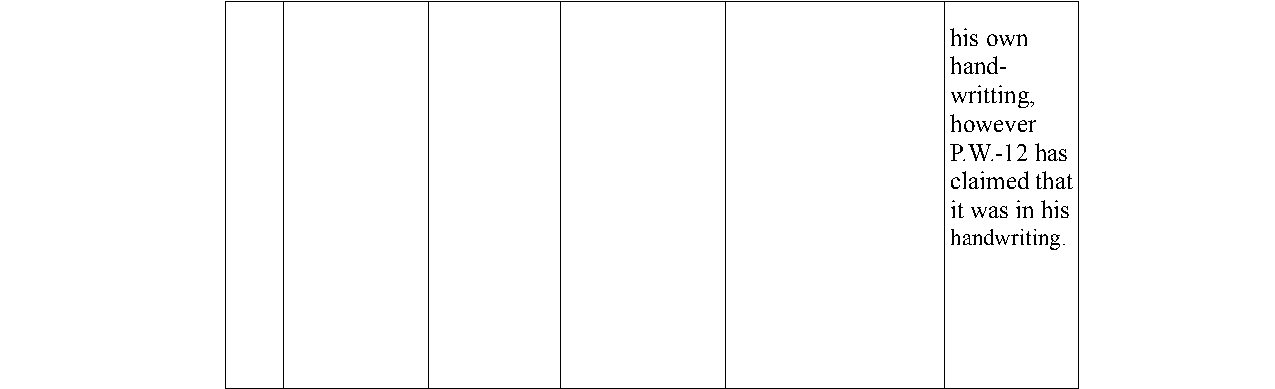
AI

Criminal Law – Appeal against conviction – Theory of last seen – Reliability of - The last seen theory comes into play where the time gap between point of time when Accused and deceased were seen las....
In criminal cases based on circumstantial evidence, the prosecution must establish a complete and conclusive chain of evidence that excludes all reasonable hypotheses of innocence; mere suspicion is ....

A conviction based on circumstantial evidence requires a complete, unbroken chain of evidence. Improvements in oral testimonies, failure to link weapons through forensic reports, and recoveries from ....

The prosecution must prove guilt beyond reasonable doubt, particularly in circumstantial evidence cases, where motive and the validity of recoveries are crucial.



An indispensable Tool for Legal Professionals, Endorsed by Various High Court and Judicial Officers
Please visit our Training & Support
Center or Contact Us for assistance

Scan Me!
India’s Legal research and Law Firm App, Download now!


For Daily Legal Updates, Join us on :



 Back to top


