
 Back
Back





HIGH COURT OF JUDICATURE AT ALLAHABAD
MAHESH CHANDRA TRIPATHI, KUNAL RAVI SINGH, JJ.
Surendra Pal Singh – Petitioner
Versus
State Of U.P. And Others – Respondents
Writ C. No. 36811 of 2024
Decided On : 25-05-2026
| Table of Content |
|---|
| 1. procedural initiation and relief sought in the writ petition. (Para 1 , 2) |
| 2. factual history regarding land acquisition, construction permission, and conversion of land use. (Para 3 , 4 , 5 , 6 , 7 , 8 , 9 , 10 , 11 , 12 , 13 , 14 , 15 , 16 , 17 , 18) |
| 3. summary of rival contentions regarding jurisdictional authority and process compliance. (Para 19 , 20 , 21) |
| 4. maintainability of writ petition versus alternative statutory remedies under the act. (Para 24 , 25 , 26) |
| 5. judicial analysis of land use conversion legality, adherence to master plan, and statutory authority. (Para 27 , 28 , 29 , 30 , 31 , 32 , 33 , 34) |
JUDGMENT :
Kunal Ravi Singh, J.
[1] Heard Sri S.D. Singh and Sri Vinod Kumar Singh, learned counsels for the petitioner, Sri Ajit Singh Rana, Additional Chief Standing Counsel for respondent No. 1 and Sri Sri J.N. Maurya along with Sri Shiv Prakash Gupta, learned counsels for respondent No. 2 to 5 and Sri Ashish Kumar Singh, learned Senior Advocate assisted by Sri Diptiman Singh, learned counsel for respondent No. 6. Learned counsel for the respective parties have filed their written submissions, which are taken on record.
[2] The present writ petition has been filed for the following reliefs :-
“(i) Issue a suitable writ, order or direction in the nature of certiorari quashing the impugned order dated 01.06.2024 passed by Secretary, Meerut Development Authority, Meerut and 16.08.2024 passed by Chief Town Planner, M.D.A., Meerut (Annexure No.1 to this writ petition).
(ii) Issue a suitable writ, order or direction in the nature of mandamus commanding the respondent authorities not to give effect to the impugned order referred to above and stay its effect and operation and all further proceedings consequent thereupon during the pendency of the writ petition.
(iii) Issue any other suitable writ, order or direction as this Hon'ble Court may deem fit and proper under the facts and circumstances of the case.
(iv) Award cost of petition in favour of the petitioner.”
FACTS :
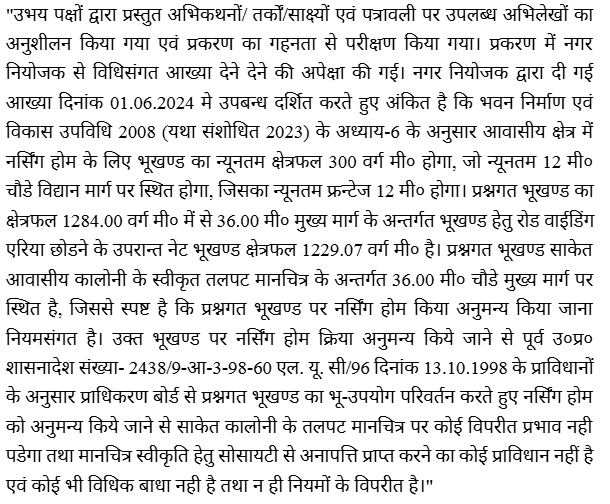
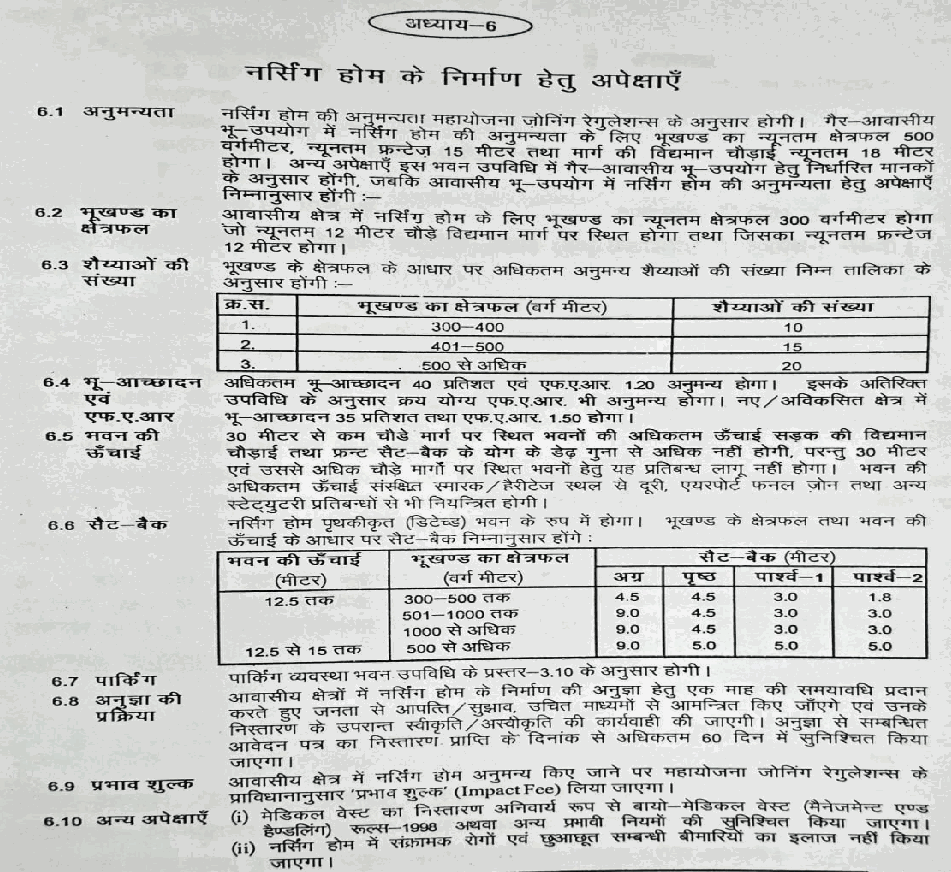
[3] The present dispute relates to plot no. B-167 situated at Saket, District - Meerut admeasuring 1500 sqm whose owner is respondent no. 6. The genesis of the dispute is the construction permission granted by Meerut Development Authority, Authority from residential use to development of a Nursing Home.
[4] The land was initially acquired by The Meerut Housing Cooperative Society Ltd., Society by means of Gazette dated 12.02.1949. The Society thereafter converted the acquired land into plots for sale to its members. Ultimately the said plot came to be sold to the respondent no. 6 by means of a sale deed dated 24.01.1985.
[5] The respondent no. 6, who became the owner and in possession of the Plot No. B-167, made an online application dated 16.04.2019 for sanction of map for commercial/ Nursing Home over the said plot under Section 15(1) of the U.P. Urban Planning and Development Act, 1973 (hereinafter referred to as ‘the Act, 1973’). The said application being registered as MAP20190416171344243, came to be rejected by the Authority on 20.07.2019 due to lack of essential No Objection Certificates, NOC. The rejection order was communicated to respondent no. 6 by means of letter dated 08.08.2023.
[6] Thereafter, the respondent no. 6 again filed an online application dated 01.10.2020 for sanction of map for the purpose of residential construction over the said plot. The said application bearing no. MDA/BP/20-21/0076, was allowed on 28.01.2021 with certain conditions. Before the application was filed, the respondent no. 6 had obtained NOC from the Society on 17.07.2020.
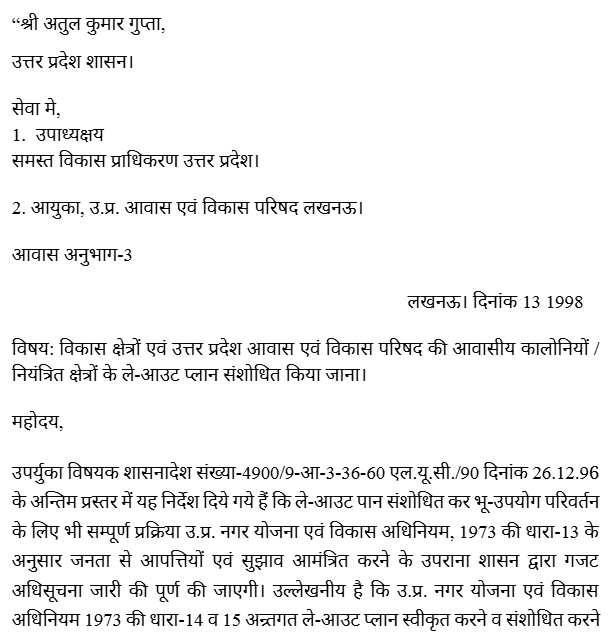
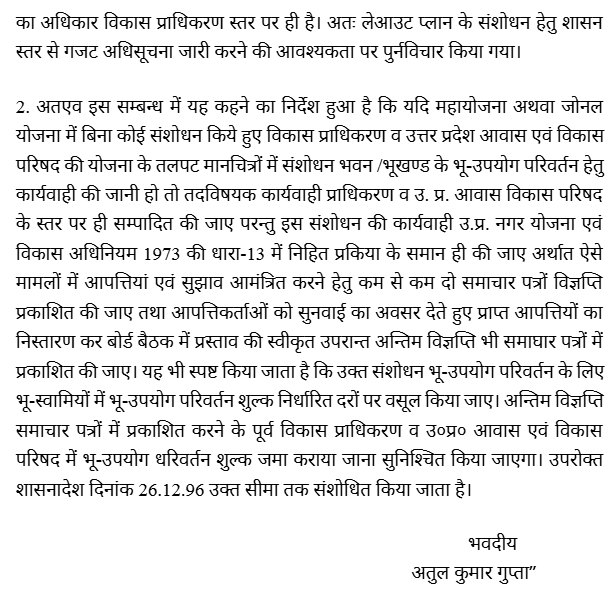
[7] The petitioner thereafter made various complaints to different authorities with regard to violation of the sanctioned map. The initial grievance of the petitioner was mainly on the ground that the construction being carried out was in violation of the sanctioned map.
[8] In pursuance of the complaint filed by the petitioner that the construction, being carried out in violation of the sanc
AI

Unauthorized use of a building for a nursing home without permission violates urban planning laws and may result in rejection of compounding proposals.

Accrued rights from previous land use approvals must be respected despite new regulations; Town Planner's jurisdiction to deny building plan approval was not established.

Prior development permissions granted under repealed rules remain valid despite subsequent regulatory changes, and cannot be revoked retroactively by new laws.

The judgment establishes the principle that compliance with statutory requirements, including obtaining prior permission and adhering to master plans and bye-laws, is mandatory. Non-compliance can le....

Point of law : Right of a person to construct residential houses in the residential area is a valuable right. The said right can only be regulated in terms of a regulatory statute but unless there ex....



An indispensable Tool for Legal Professionals, Endorsed by Various High Court and Judicial Officers
Please visit our Training & Support
Center or Contact Us for assistance

Scan Me!
India’s Legal research and Law Firm App, Download now!


For Daily Legal Updates, Join us on :



 Back to top


