Back
Back





2026 Supreme(Ker) 828
IN THE HIGH COURT OF KERALA AT ERNAKULAM
RAJA VIJAYARAGHAVAN V, K. V. JAYAKUMAR, JJ.
Vijayan T.C. – Petitioner
Versus
State Of Kerala – Respondent
WP(C) NO. 4011 OF 2026
Decided On : 07-04-2026
For the Petitioner: Sri.R.Krishna Raj, Sri.R.Pratheesh (Aranmula), Smt.E.S.Soni, Smt.Laxmi Priyaa N.P., Shri.Arun Raj
For the Respondent: Smt.R.Ranjanie, Sc, Malabar Devaswom Board, Sri.MAHESH V Ramakrishnan Adv., Rashmi K.M., Sr Gp
Non-hereditary trustees disqualified if active politicians or busy professionals; appointing authority must verify complaints and provide hearings.
Headnote:The Madras Hindu Religious and Charitable Endowments Act governs the appointment of non-hereditary trustees for temples under the Malabar Devaswom Board. Petitioner, a devotee, challenged the proposed appointment of individuals alleged to be involved in mismanagement, malpractices, and political activities during prior temple committee roles. Court directed the Board to verify complaints, conduct enquiry, and ensure compliance with eligibility criteria before appointments. Key issues: Whether proposed trustees are disqualified under notice clauses 3(f) and 3(g) for being busy professionals and active politicians. Ratio: Disqualifications including political involvement are factual matters for adjudication by appointing authority with hearing opportunity, per prior directives in temple trustee appointments. Writ petition disposed directing detailed consideration of objections, verification of allegations, notice to parties, and hearing before decision on appointments.
| Table of Content |
|---|
| 1. petitioner's complaints on proposed trustees' past mismanagement and political affiliations. (Para 2 , 3 , 4 , 11) |
| 2. arguments on statutory violations and board's compliance assurances. (Para 5 , 6) |
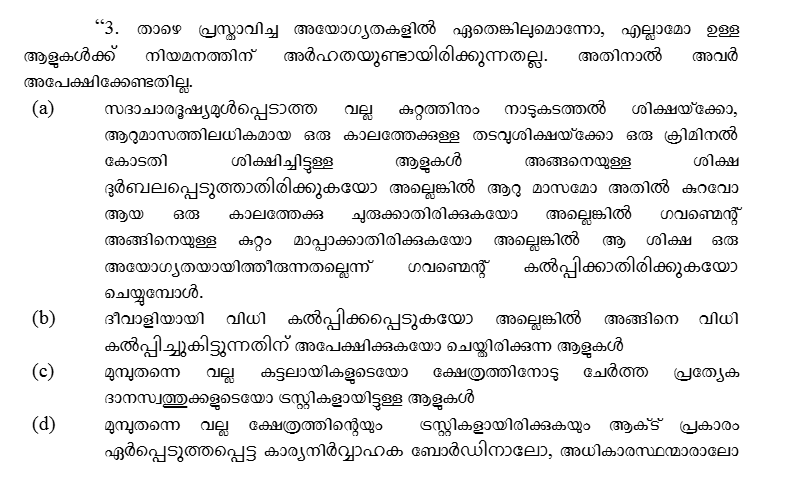
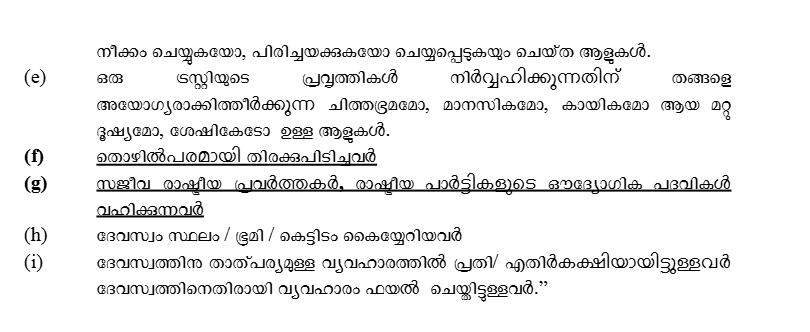
| 3. disqualifications under notice clauses for professionals and politicians. (Para 8 , 9 , 10) |
| 4. prior precedents mandate enquiry, hearings, and verification before appointments. (Para 12 , 13 , 14) |
JUDGMENT
K. V. Jayakumar, J.
This Writ Petition is filed under Article 226 of the Constitution of India , claiming the following relief:
“To restrain the Malabar Devaswom Board from appointing the respondents 6 to 10 as members of the non-hereditary trustee board of Thrikkkalayoor Sree Mahadeva temple as they are ineligible to be appointed by the issue of a writ of mandamus or such other writ or order or direction.”
2. The petitioner is a devotee of the Thrikkalayoor Sree Mahadeva Temple. The grievance of the petitioner is that the Malabar Devaswom Board is proceeding to appoint the party respondents as non-hereditary trustees of the said temple without duly considering the complaints submitted by the petitioner and other concerned devotees. These complaints allege that the party respondents were involved in illegal and corrupt activities during their tenure as members of the Temple Festival Committee. It is further alleged that all the party respondents are active members of the CPI(M).
3. The learned counsel for the petitioner would submit that the Malabar Devaswom Board had issued a notification inviting applications for the constitution of a non-hereditary trustee board for the Thrikkalayoor Sree Mahadeva Temple. Upon scrutiny of the applications received, the Board shortlisted the party respondents for appointment as members of the said trustee board. Aggrieved by the proposed appointments, the petitioner and other devotees submitted complaints before the Devaswom Board, raising serious allegations of mismanagement, malpractices, and misappropriation of funds on the part of the party respondents.
4. According to the learned counsel for the petitioner, the party respondents, who had earlier served as members of the Temple Festival Committee, have failed to submit audited financial statements for the financial years 2023–2024 and 2024–2025. It is also contended that irregularities have been noticed in the collections made by the Festival Committee during their tenure.
5. The learned counsel for the petitioner pointed out that the respondents 6 to 10 are active workers of CPI(M), a political party, and the issue is placed before the Area Committee. The learned counsel for the petitioner further submitted that the area committee of Malabar Devaswom Board has not considered the objections and the Board is going to appoint the party respondents as non-hereditary trustees, violating the provisions of the Madras Hindu Religious and Charitable Endowments Act (for the sake of brevity, ‘the Madras HR & CE Act’) and the directives issued by this Court in Muraleedharan M. v. Malabar Devaswom Board , 2024 KHC 953
6. In response, Smt. R. Ranjanie, learned Standing Counsel for the Malabar Devaswom Board, would submit that the appointment of the non-hereditary trustees in the temple would be conducted strictly in accordance with the Madras HR & CE Act, Annexure-R2(1) notice dated 30.07.2025 and the directives issued by this Court from time to time. The Board will conduct an enquiry as to the alleged misappropriation of funds.
7. We have heard the submissions of Sri. Krishna Raj, learned counsel for the petitioner and Smt. R. Ranjanie, learned Standing Counsel for Malabar Devaswom Board and perused the records.
8. The principal grievance highlighted by the petitioner is that the respondent/Board is trying to appoint non-hereditary trustees, violating the relevant statutory provisions and disregarding directions issued by this Court. According to the petitioner, respondents 6 to 10 are disqualified for appointment under Clauses 3(f) and 3(g) o