Searching Case Laws & Precedent on Legal Query.....!
Analysing the retrieved Case Laws
Scanned Judgements…!



Searching Case Laws & Precedent on Legal Query.....!
Analysing the retrieved Case Laws
Scanned Judgements…!
Sanath Roy VS State of Kerala Represented by the Circle Inspector of Police - Crimes
, 2024 0 Supreme(Kar) 427).Mahant Digamber Tejgiri alias Mauni Baba alias Tarsaim Singh VS State of Uttarakhand - Crimes
).Analysis and ConclusionTo prove mobile evidence under the Indian Evidence Act, it is essential to produce a valid Section 65B certificate verifying the electronic record's authenticity. Proper seizure, forensic verification, and expert testimony are crucial for admissibility. Evidence lacking these formalities is likely to be rejected, weakening the prosecution's case. When electronic evidence is properly supported, it can be a strong piece of proof under Sections 27 and 65B, especially when linked with other corroborative evidence.
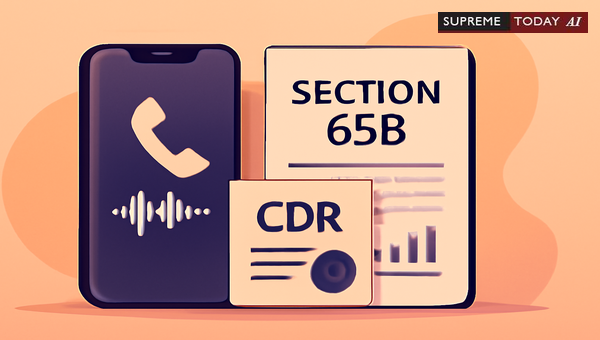
In today's digital age, mobile phones generate vast amounts of data— (CDRs), messages, locations—that can be pivotal in legal proceedings. But how do you ensure this evidence holds up in court? The question How to Prove Mobile Evidence according Indian Evidence Act is increasingly relevant for lawyers, investigators, and litigants navigating criminal, civil, or commercial cases. Under the (as amended), from mobiles are admissible only with strict compliance, primarily through . This guide breaks down the process, requirements, pitfalls, and precedents to help you understand the framework. Note: This is general information, not specific legal advice. Consult a qualified lawyer for your case.
of the Indian Evidence Act provides a special provision for the admissibility of , recognizing their unique nature compared to traditional documents. Without proper authentication, mobile evidence like CDRs, IMEI details, or location data risks rejection. Courts have repeatedly held that (CDRs) relating to mobile phones can be admissible as evidence if they are accompanied by a valid certificate. This certificate authenticates the electronic record and confirms its admissibility in court. 2021 0 Supreme(Guj) 667
The and emphasize strict compliance. For instance, failure to produce the certificate renders evidence unreliable: Several documents confirm that the prosecution must produce a certificate under (4) to establish the authenticity of mobile phone records. Without this, the CDRs are considered inadmissible or unreliable. 2021 0 Supreme(Guj) 667
To prove mobile evidence effectively:
Issuance by Responsible Official: The certificate must be issued by a person in a responsible position at the service provider (e.g., ). It should certify that the record is a computer-generated electronic record and was produced in the ordinary course of business. 2019 0 Supreme(Del) 2288
2018 0 Supreme(Cal) 92
Detailed Contents: Include specifics like mobile number, IMEI, period of records, and . The certificate should verify the authenticity of the electronic record, including details like IMEI numbers, mobile numbers, and the . (From additional sources on admissibility 2025 0 Supreme(Guj) 1519, 2023 0 Supreme(Jhk) 1037, 2023 0 Supreme(Chh) 553)
Mandatory Production: As one case notes, the mandatory certificate under Section 65 B of the has not been produced by the Investigating Officer. 2024 0 Supreme(UK) 4 Without it, evidence fails.
A certificate alone isn't enough; witness testimony is vital. The or service provider representative must be examined to explain record generation and authenticity. Witnesses such as the or authorized personnel from the service provider must testify to the authenticity of the records and the process of their generation. 2019 0 Supreme(Del) 2288
Additionally:- Proof of Ownership: Link CDRs to the device/user via (CAF), identity proofs, and . Ownership and Source of Mobile Devices: Merely producing CDRs without proof of ownership or proper certification is insufficient. 2019 0 Supreme(Del) 2288
- Seizure and Forensics: Seize phones/SIMs properly and send for . Verify IMEI and obtain expert reports. Mobile phones and SIM cards should be seized properly and sent to forensic labs. The absence of forensic verification... weakens the evidence. 2023 0 Supreme(Jhk) 1037 2023 0 Supreme(Chh) 553
Under , facts discovered from accused's possession (e.g., mobile-linked recoveries) can be proved.
2024 0 Supreme(Kar) 427
Even with records, errors derail cases:
Mahant Digamber Tejgiri alias Mauni Baba alias Tarsaim Singh VS State of Uttarakhand - Crimes
Other sections like 106 (facts especially within accused's knowledge) may shift onus, but electronic proof still needs 65B backing. Appellant living in the house... Thus, the onus shifts on him under of the Indian Evidence Act. 2023 0 Supreme(Del) 610
Courts demand rigor:- Strict Compliance Mandated: Courts emphasize the importance of strict compliance with . Failure to produce a proper certificate renders the electronic record inadmissible. 2021 0 Supreme(Guj) 667- Device Authenticity: Prove mobile ownership/recovery beyond CDRs. 2021 0 Supreme(Guj) 667- Admissibility of Provider Records: Certified CDRs from providers are credible if verified. The admissibility of record of the mobile locations provided by the Mobile Service Provider. 2023 0 Supreme(Del) 5701- Rejection Without Forensics: Cases dismissed for lacking 65B or lab reports. 2025 0 Supreme(Guj) 1519 2023 0 Supreme(Jhk) 1037
In dowry or rape cases, electronic evidence must align with broader proofs, but 65B remains non-negotiable. The nowhere says that the evidence of the victim... cannot be accepted unless it is corroborated. 2024 0 Supreme(UK) 4
For strength:- Use as primary evidence under with officer testimony. 2023 0 Supreme(Chh) 553- Corroborate with discoveries or presumptions (e.g., dowry deaths). The presumption under of Indian Evidence Act is rebuttable, hence now onus shifts on the accused. 2021 0 Supreme(All) 627- Business disputes? Link transactions via certified records. 2025 0 Supreme(Raj) 420
Proved – A fact is said to be proved when... the Court either believes it to exist. sets the standard, achievable via 65B-compliant mobile data. 2021 0 Supreme(UK) 705
To successfully prove mobile evidence:- Secure a valid certificate from the service provider early.- Examine nodal witnesses thoroughly.- Document , ownership, and forensics.- Avoid sole reliance on uncertified CDRs.
To prove mobile phone records, ensure that a valid certificate is produced... The witness from the service provider should be examined. This aligns with precedents, ensuring evidence withstands scrutiny. 2021 0 Supreme(Guj) 667
By following these steps, become powerful tools. Stay updated on amendments, as digital evidence evolves. For tailored advice, engage legal experts.
#IndianEvidenceAct, #Section65B, #MobileEvidence


EVIDENCE ACT . ... Therefore, the trial Court has rightly discarded the said evidence of CDR for want of certificate under Section 65-B of the Indian EVIDENCE ACT , which was correctly done as per law in our view also. ... Therefore, adverse inference under Section 114-(g) of the Indian EVIDENCE ACT is to be drawn for non-examination ....

Evidence Act. ... Evidence Act, 1872. ... Since the whole occurrence is based on the electronic evidence, the admissibility of the same can be only if the certificate under Section 65(B) of the Indian Evidence Act is adduced. ... He has not verified the IMEI number of the seized mobile. He has not given identity under Section 65(B) of....

and the electronic evidence, and, (iv) The mandatory certificate under Section 65 B of the Indian Evidence Act, 1872 has not been produced by the Investigating Officer. ... The Indian Evidence Act, 1872 nowhere says that the evidence of the victim of rape cannot be accepted unless it is corroborated in material particulars. Conviction can be based on....

and the electronic evidence, and, (iv) The mandatory certificate under Section 65 B of the Indian Evidence Act, 1872 has not been produced by the Investigating Officer. ... The Indian Evidence Act, 1872 nowhere says that the evidence of the victim of rape cannot be accepted unless it is corroborated in material particulars. Conviction can be based on t....

section 106 of the Indian Evidence Act 1872. ... Evidence Act . ... Evidence Act . ... Evidence Act . ... Evidence under section 27 of the Indian Evidence Act : 15.

If the said evidence is not sufficient to attract Section 106 of the Indian Evidence Act, according to us, the accused has no burden to prove any fact, in the facts and circumstances of this case. ... Those are cases where the accused were fastened with liability to disclose facts in terms of Section 106 of the Indian Evidence Act on the peculiar facts....

The call details of the said phone numbers 98265 60052 and 74406 05889 are marked as Ex.P20 and P-21 respectively, which have been duly supported by the Certificate u/s 65B of the Indian Evidence Act. ... The Pen-Drive is duly supported by the Certificate (Ex.P-32) issued u/s 65-B of the Indian Evidence Act. The seizure memo of Ex.P-12 is supported by Vivek Tiwari (P.W.2) and Sanjay Kuma....
and cash amounting to Rs.16,500/-, MO5 and MO6 mobile phones, MO1 purse and MO2 identity card were seized, which are admissible under Section 27 of the Indian Evidence Act (the Evidence Act). ... As the best evidence to prove the ownership of MO6 mobile phone has not been adduced by the prosecution, we are unable to place any reliance....

Accordingly, the present application filed by the defendant no. 1 u/s 139 of the Indian Evidence Act is hereby dismissed." 9.1. ... Counsel for the defendant no. 1 preferred to file on record the above said application u/s 139 of the Indian Evidence Act. 8. ... The admissibility of record of the mobile locations provided by the Mobile Service Provider ....

EVIDENCE ACT r/w Section 27 of the Indian EVIDENCE ACT , so as to say that, except the fact that accused No.1 sold the mobile phone to CW.19 and then he directed the PW.19-Investigation Officer towards the accused, no other interpretation that can be ... under Section 6 of the EVIDENCE ACT on account of its proximity of time to the act#HL_E....

29. When the alleged occurrence of money i.e. Rs.11,18,600/- is prima facie found to be in connection with the business deal and same seems to be justified in view of the statements of the witnesses who are connected in the alleged chain of the said transaction then the alleged charges against the petitioner do not have any basis so as to bring conviction of the accused petitioner for the said charges. 30. The learned Public Prosecutor has come with the submission that the transcript....

Appellant living in the house with the deceased at the relevant time when the death was caused has also been proved. Thus, the onus shifts on him under Section 106 of the Indian Evidence Act to prove that how the deceased died.

According to it, “Proved – A fact is said to be proved when, after considering the matter before it, the Court either believes it to exist, or considers its existence so probable that a prudent man ought, under the circumstances of the particular case, to act upon the supposition that it exists." How to prove a thing, it is provided in the Indian Evidence Act, 1872 (for short, “the Evidence Act").

In the light of discussion made above, prosecution has established that the death of the deceased was dowry death. It is for the accused to show that the death of the deceased did not result from any cruelty or demand of dowry by the accused persons/appellant. The presumption under Section 113B of Indian Evidence Act is rebuttable, hence now onus shifts on the accused to prove as to how the deceased died.

Learned counsel for the applicant submits that reliance on electronic records which are stated to be on the strength of the recovery of mobile phones and conversations between the two has neither been proved in Court, nor any admissible evidence was led in terms of Section 65-Bof the Indian Evidence Act to prove the said calls and the trial court only drew inferences on the basis of the statements made by the prosecution witnesses which did not substantiate and prove the utilization ....


An indispensable Tool for Legal Professionals, Endorsed by Various High Court and Judicial Officers
Please visit our Training & Support
Center or Contact Us for assistance

Scan Me!
India’s Legal research and Law Firm App, Download now!


For Daily Legal Updates, Join us on :



 Back to top


