


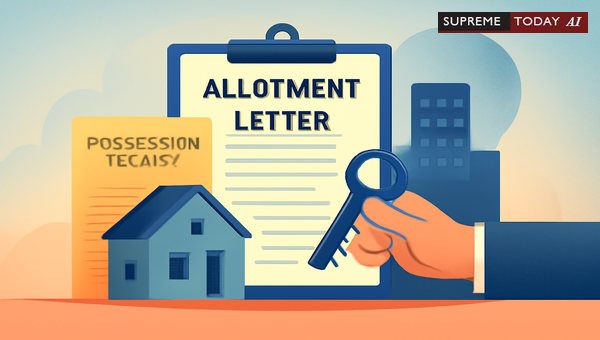
Can Grant Possession Rights?
In the world of property dealings in India, receiving an often feels like a major milestone—whether from a government auction, housing scheme, or development authority. But a common question arises: Kya ke adhar par possession mana jaa skata hai? (Can possession be claimed on the basis of an ?) Many allottees assume this document alone hands them the keys to . However, Indian courts have consistently ruled otherwise. This blog post dives deep into the legal nuances, backed by key judgments, to clarify what it really takes to claim possession lawfully.
Note: This is general information based on judicial precedents and not specific legal advice. Consult a qualified lawyer for your situation.
Understanding Allotment Letters and Possession
An is typically issued after a bid acceptance or draw of lots in property auctions or schemes run by bodies like or . It signals initial selection but is far from a . Courts view it as a mere process of identification, not a 2010 6 Supreme 714 2010 0 Supreme(SC) 766.
demands more: proof of bid acceptance, full or requisite payments, execution of contracts or lease deeds, and compliance with timelines. Without these, entering the property could be deemed unauthorized, even turning the claimant into a 2018 0 Supreme(SC) 1193.
Key Legal Requirements for Valid Possession
To establish lawful possession, allottees must fulfill several formalities:- Bid Acceptance and Allotment Confirmation: Simply being the highest bidder isn't enough; official acceptance is mandatory 2018 0 Supreme(SC) 1193.- Payment Proof: Deposit required amounts promptly, often 25% within 2010 6 Supreme 714.- Contract or : Possession is often conditional on registering a lease or 2025 5 Supreme 354. For example, The date of Possession of Plots shall be fixed by the Regional Manager after registration of itself 2025 5 Supreme 354.- Timely Compliance: Failure to accept or pay leads to valid cancellation, with courts presuming receipt of letters sent by registered post 2010 6 Supreme 714 2010 0 Supreme(SC) 766.
In one case, the appellant failed to produce an , acceptance, or payment receipts for a quarter auctioned in . The court held there was no between the appellant and the which could justify appellant’s entry in quarter No. 6 as being legal, labeling the possession as that of a from inception 2018 0 Supreme(SC) 1193.
Landmark Court Rulings on Allotment and Possession
Indian judiciary has addressed this repeatedly, emphasizing procedural rigor:
- Mere Allotment Insufficient: Mere draw of lots/allocation letter does not clothe the person selected with a legal right to allotment 2010 6 Supreme 714. The allottee must send acceptance and deposit funds, or face cancellation 2010 0 Supreme(SC) 766.
- Conditional Possession in Schemes: 's obligation to deliver possession arises only post- registration. Non-compliance justifies withholding possession and potential cancellation 2025 5 Supreme 354.
- Burden of Proof on Claimant: Courts place the onus on the allottee to prove compliance. Presumption of knowledge applies to communications sent properly 2010 6 Supreme 714.
These rulings underscore that selection via allotment is preliminary; rights vest only upon fulfillment of conditions.
Contrasts with Tenancy and Scenarios
While allotment cases are strict, offer some protections but still hinge on compliance. For instance, under the Act and , tenants face for rent defaults or denial of landlord's title without notice 2004 0 Supreme(All) 1339. Issues like Kya prativadi ne kiraya ada karne men chook (default) kiya hai? highlight how non-payment mirrors allotment defaults, leading to possession loss 2004 0 Supreme(All) 1339.
Similarly, unauthorized alterations or conversions in rented properties can materially change the structure, warranting : Extensive alteration made in building which had affected in changing the nature of property materially and structurally, diminishing it in value and utility—Liable to be evicted 2010 0 Supreme(All) 2005.
In release applications for , courts assess and procedural notices, but possession remains conditional on valid tenancy 2011 0 Supreme(All) 1071. These cases reinforce that possession, whether allotted or tenanted, isn't absolute without meeting obligations—paralleling limitations.
Though protected tenancy rights may persist without physical possession if not terminated properly (requiring Gazette notifications) 2021 6 Supreme 540, this doesn't apply to fresh allotments, where additional proofs are non-negotiable.
Exceptions and Limitations
No major exceptions exist where an alone suffices:- All cited cases demand extra proofs like payments or deeds 2018 0 Supreme(SC) 1193 2010 6 Supreme 714 2010 0 Supreme(SC) 766 2025 5 Supreme 354.- Cancellations are a last resort if default intent is clear, but non-compliance voids possession claims 2010 6 Supreme 714.- Factual disputes must be raised early with evidence; courts won't entertain them on pure questions of law later 2010 6 Supreme 714 2010 0 Supreme(SC) 766.
Practical Recommendations for Allottees
To avoid disputes:1. Act Promptly: Upon receiving the , send formal acceptance and make deposits within deadlines to counter any presumption of default.2. Gather Documents: Maintain records of bid acceptance, payments, contracts, and lease deeds.3. Seek Possession Post-Compliance: Insist on formal handover only after all conditions, like registration 2025 5 Supreme 354.4. Challenge Wisely: Authorities must issue notices before cancellation, but don't rely solely on the letter 2025 5 Supreme 354.5. Legal Recourse: For cancellations, focus on procedural lapses rather than mere allotment claims.
Landlords or authorities should similarly document all steps to defend against unauthorized possession claims.
Key Takeaways
- No to Sole Reliance: An is not a possession ticket; it's conditional on further steps 2010 6 Supreme 714.
- Proof is King: Payments, deeds, and compliance establish rights 2018 0 Supreme(SC) 1193.
- Court Consensus: Possession without is trespass 2018 0 Supreme(SC) 1193.
- Broader Lesson: Whether allotments or tenancies, possession demands adherence to terms 2004 0 Supreme(All) 1339.
Understanding these principles can save allottees from costly litigation. For personalized guidance, reach out to a property law expert. Stay informed, comply diligently, and secure your rights properly.
References
- 2018 0 Supreme(SC) 1193: Possession without proofs as trespass.
- 2010 6 Supreme 714: Allotment requires acceptance/payment.
- 2010 0 Supreme(SC) 766: Reiterates selection not rights.
- 2025 5 Supreme 354: Possession post-lease registration.
- 2021 6 Supreme 540: Tenancy protections (limited relevance).












