


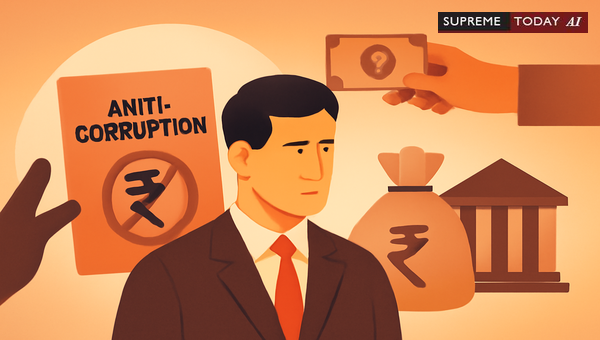
Anti-Corruption Policies' Impact on Governance
Corruption remains a pervasive challenge in India, undermining public trust and hindering development. From rural Panchayats to national schemes, misuse of government funds erodes the fabric of governance. As Mahatma Gandhi aptly noted, The earth provides enough to satisfy every man's need but not every man's greed. A corrupt individual not only exhausts their share but deprives others too.
This blog delves into the impact of anti-corruption policies on governance, particularly focusing on cases involving Pradhans—the elected heads of Gram Panchayats—who handle significant public funds.
What is the impact of anti-corruption policies on governance? These policies, through stringent laws and oversight mechanisms, aim to foster transparency, accountability, and ethical administration. However, their effectiveness depends on enforcement, investigations, and systemic reforms. This article examines key legal frameworks, real-world cases, findings, and recommendations, drawing from judicial precedents and statutory provisions.
Legal Framework Governing Corruption in Panchayats
India's anti-corruption ecosystem is robust, with multiple laws targeting public officials like Pradhans. The stands as the cornerstone, defining offenses such as bribery, extortion, and misuse of public office for private gain. 2021 0 Supreme(Kar) 242 2020 0 Supreme(Chh) 74 Pradhans, as , fall squarely under its ambit.
Complementing this are provisions from the (IPC), including:- : - : Abetment by a public servant- : - : 2022 0 Supreme(Mad) 3572
Government schemes like (PMAY) mandate financial accountability and transparency in fund utilization. 2022 0 Supreme(Mad) 3572 Similarly, MGNREGA () emphasizes rural development but is prone to corruption, impacting employment guarantees and public trust. 2023 0 Supreme(All) 1673
Pradhans' financial and administrative powers are regulated and can be suspended for irregularities. 2023 0 Supreme(All) 1629 (PIL) offers a vital tool for citizens, prompting probes by agencies like the . 2022 0 Supreme(All) 1293
In one case, allegations of fraud in PMAY fund distribution led to accountability for the petitioner as Panchayat Samiti head: allegation is that of fraud committed in distribution of fund allocated for Pradhan Mantri Awas Yojna, and the petitioner has been held accountable for utilization of the fund of the panchayat samiti. 2024 Supreme(Online)(Pat) 2488
Key Findings from Judicial Scrutiny
Courts consistently affirm that corruption is a serious issue affecting government schemes. 2023 0 Supreme(Del) 3032 2021 0 Supreme(Guj) 395 2023 0 Supreme(All) 1673 The judiciary stresses thorough investigations and accountability. 2022 0 Supreme(Mad) 3572 2020 0 Supreme(Chh) 74
Pradhans must adhere to anti-corruption laws, with prompt probes into allegations. 2021 0 Supreme(Kar) 242 2023 0 Supreme(All) 1629 2022 0 Supreme(All) 1034 Consequences are dire: loss of trust, economic harm, and weakened rule of law. 2021 0 Supreme(Guj) 395 2022 0 Supreme(Gau) 499
Real cases highlight these impacts:- In a matter, complaints against a Pradhan member triggered scrutiny, though documentation gaps were noted.
- A case clarified fund receipt rules for , absent state allocations. 2023 0 Supreme(All) 1084- Vigilance failures in addressing corruption underscored manual protocols: The court emphasized the need for the to effectively address corruption allegations, conduct preliminary enquiries, and take appropriate actions as per the . 2022 0 Supreme(Mad) 1637- Departmental enquiries against engineers for syphoning funds via fake works revealed systemic issues: In the department, like , this case apparently shows that officials work with common understanding and tuning. It is not directly something to constitute corruption by giving and taking bribe but it is a system of syphoning of public funds. 2013 0 Supreme(All) 2042
Under , District Magistrates can cease Pradhan powers post-preliminary inquiry: If they find that a Pradhan or Up-Pradhan is misusing his powers or is committing financial irregularities, they are required to step in. 2008 0 Supreme(All) 1079
Even religious institutions aren't exempt; anti-corruption applies universally: If any institution commits maladministration or misappropriation of funds or is involved in corruption... is of no concern to the legislature. 2007 0 Supreme(Ker) 626
These findings illustrate how anti-corruption policies deter misconduct but reveal enforcement gaps, positively impacting governance by enabling accountability.
Recommendations for Stronger Governance
To amplify the positive impact of these policies:- Conduct thorough investigations: Adhere to legal provisions for comprehensive probes into Pradhan involvement.- Gather robust evidence: Collect financial records, witness statements, and irregularity documents.- Enforce accountability: Prosecute guilty parties under the Prevention of Corruption Act, potentially removing them from office.- Promote transparency: Publicize proceedings to rebuild trust and deter future acts.- Bolster oversight: Enhance mechanisms in Panchayats, as courts urge preliminary enquiries and intelligence gathering. 2022 0 Supreme(Mad) 1637
In conspiracy charges under IPC and PC Act, courts dismissed irrelevant analogies, affirming public servant prosecutions. 2023 0 Supreme(All) 1084
Broader Implications for Governance
Anti-corruption policies transform governance by curbing fund misuse in schemes like PMAY and MGNREGA. While challenges persist—such as vigilance lapses or delayed enquiries—they foster a culture of integrity. enforcement, even sans notifications, aids international probes: The absence of a government notification under does not invalidate enforcement actions. Related context
Conclusion and Key Takeaways
Anti-corruption policies profoundly shape Indian governance, holding Pradhans accountable and safeguarding public funds. Key takeaways:- Leverage PCA 1988 and IPC for robust action.- Prioritize investigations and transparency.- Strengthen oversight to prevent systemic syphoning.
This article provides general insights based on legal precedents and is not specific legal advice. Consult a qualified lawyer for personalized guidance.
By embedding these policies effectively, India can realize Gandhi's vision of equitable resource distribution, enhancing governance for all.
#AntiCorruptionIndia, #PanchayatReform, #GovernanceIntegrity












