


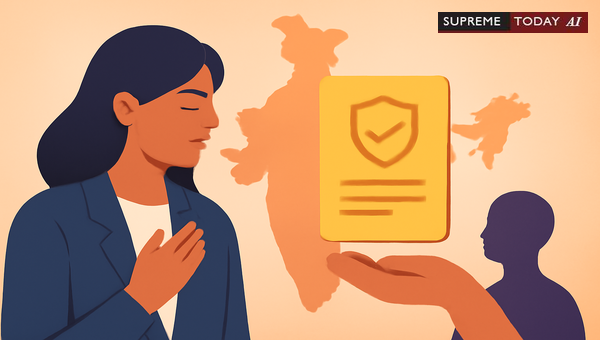
: Does It Extend Protection to Crime Victims in India?
In the Indian legal landscape, of the Constitution stands as a cornerstone, safeguarding the right to life and personal liberty. But a pressing question arises: Benefit of is Available to the Victims or Not? This query strikes at the heart of justice, challenging the traditional view that these primarily shield the accused. As we'll explore, judicial interpretations have progressively affirmed that victims too can invoke for remedies like compensation and fair participation in proceedings. This post delves into the evolving jurisprudence, supported by key precedents, to clarify victims' entitlements—while noting this is general information, not specific legal advice. Consult a qualified lawyer for personalized guidance.
Understanding of the Indian Constitution
states: No person shall be deprived of his life or personal liberty except according to . Long viewed as a shield for the accused, courts have broadened its scope to encompass all persons, including victims. This expansion ensures an orderly society, particularly in heinous crimes, where victims' voices must be heard. 2022 0 Supreme(Kar) 48
The right isn't confined to citizens; it applies to all persons, underscoring its universal nature. 2023 0 Supreme(SC) 5 As observed, right is available not only to citizens but to all persons. This inclusive approach aligns with the modern , where the State must secure dignity, health, and welfare for victims. 2018 3 Supreme 44 2018 0 Supreme(UK) 326
Victims' Rights under : Key Entitlements
Victims and their families explicitly benefit from , gaining a stake in criminal prosecutions. Courts have mandated:
- Voice in Proceedings: Victims deserve participation to uphold justice. 2022 0 Supreme(Kar) 48
- Right to Compensation: Recognized as a , extendable to kin, irrespective of prosecution outcomes.
2016 0 Supreme(UK) 734
This compensation addresses rights violations, with the State obligated to provide relief—even if perpetrators evade capture. 2013 0 Supreme(Gau) 328 2016 0 Supreme(Mad) 2416 The has ruled that lacking statutory provisions doesn't bar redress under , as seen in the Uphaar Tragedy. 2015 0 Supreme(P&H) 1930
In , state liability is clear: State is liable for failing to protect individuals in police custody, requiring compensation for unnatural deaths under . 2023 0 Supreme(P&H) 3062 Here, courts awarded of Rs. 5 lakhs each, emphasizing the duty to ensure safety.
Compensation Mechanisms and State Obligations
mandates a decent human minimum, guiding state compensation. In one case, a petitioner received Rs. 1.8 lakhs plus interest, totaling Rs. 3.3 lakhs, highlighting proactive relief. 2025 0 Supreme(Del) 604
For vulnerable groups like child victims under POCSO, the State's role is pivotal: It is the responsibility of the State to take care of helpless victims of such heinous offences... right to live a dignified life is an integral part of... . 2024 6 Supreme 193 Failure to rehabilitate violates these rights, prompting directives for committees, welfare officers, and schemes from or government programs.
Victim compensation schemes, like Kerala's, must liberally interpret entitlements. Though some gaps exist for POCSO cases, courts urge comprehensive schemes: It is obligatory on part of State Government to formulate a comprehensive victim compensation scheme specifically for victims of sexual offences under . 2023 0 Supreme(Ker) 508 2023 0 Supreme(Ker) 573
Landmark Judicial Precedents
- Police Custody and State Liability: Compensation awarded for deaths, reinforcing protection duties. 2014 0 Supreme(Bom) 1806 2022 0 Supreme(SC) 343 2023 0 Supreme(P&H) 3062
- POCSO and Child Victims: State must provide shelter, education, and reintegration, consistent with . 2024 6 Supreme 193
- Sexual Harassment Victims: Eligible under and POCSO provisions, with remedial statutes favoring victims. 2023 0 Supreme(Ker) 573
- Broader Welfare: as a repository of human rights demands state intervention for dignity and liberty. 2018 3 Supreme 44 2014 0 Supreme(Mad) 1785
These rulings illustrate that victims aren't mere witnesses; they hold enforceable rights. Even without full offender accountability, states must compensate for bodily injury or impairment. 2025 0 Supreme(Del) 604
Challenges and Evolving Protections
While progress is evident, hurdles persist. Retroactive application of schemes like CrPC 357A is limited, as ruled in riot cases. 2025 0 Supreme(Del) 604 Schemes may exclude certain categories, prompting calls for amendments. 2023 0 Supreme(Ker) 508
Moreover, 's allows enforcement against non-state actors, with the State duty-bound to protect liberty from threats. 2023 0 Supreme(SC) 5 This ensures balanced application.
Practical Recommendations for Victims and Advocates
To leverage these rights:- Inform Victims: Educate on entitlements and compensation avenues.- Invoke Precedents: Use cases like Uphaar or custody deaths to bolster claims. 2015 0 Supreme(P&H) 1930 2023 0 Supreme(P&H) 3062- Engage Legal Aid: Approach for immediate relief, like medical aid. 2023 0 Supreme(Ker) 508- Advocate Inclusion: Push for victims' active role in justice processes.
Legal representatives should highlight state obligations under the : In the modern '', it is for the State to ensure these essentials of life to all its citizens, and if possible to non-citizens. 2018 0 Supreme(UK) 326
Conclusion: Empowering Victims through
Yes, the benefits of unequivocally extend to victims, encompassing protection, compensation, and dignified rehabilitation. From affirmations to state-specific schemes, jurisprudence prioritizes victims' justice. This shift transforms from an accused-centric right to a holistic safeguard.
Key Takeaways:- Victims can seek compensation as a fundamental right, independent of convictions.- State bears primary responsibility for relief and protection.- Precedents like custody deaths and POCSO cases provide strong grounds.
References: 2022 0 Supreme(Kar) 48
2016 0 Supreme(UK) 734 2013 0 Supreme(Gau) 328 2016 0 Supreme(Mad) 2416 2015 0 Supreme(P&H) 1930 2014 0 Supreme(Bom) 1806 2022 0 Supreme(SC) 343 2023 0 Supreme(P&H) 3062 2025 0 Supreme(Del) 604 2024 6 Supreme 193 2023 0 Supreme(Ker) 508 2023 0 Supreme(Ker) 573 2023 0 Supreme(SC) 5 2018 3 Supreme 44 2018 0 Supreme(UK) 326
This article is for informational purposes only and does not constitute legal advice. Laws evolve, so verify with current statutes and professionals.
#Article21 #VictimsRights #IndianLaw












