


Who Represents the Deity in a ? Essential Legal Guide
Introduction
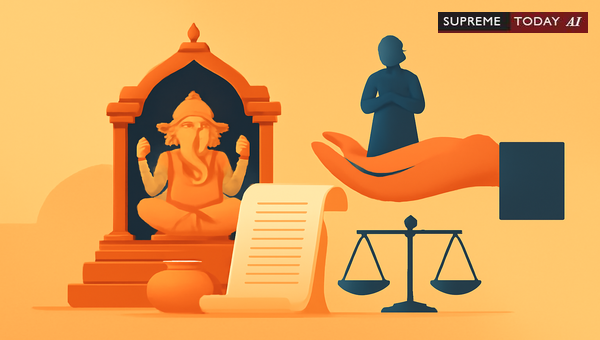
In the intricate world of religious trusts, particularly those involving deities, a key question arises: Who has the authority to represent the deity in a ? This issue blends spiritual reverence with legal precision, as deities are often recognized as capable of holding property but require human intermediaries to act on their behalf. Whether managing temple properties, performing rituals, or litigating disputes, understanding this authority is crucial for trustees, families, and legal practitioners.
This blog post delves into judicial interpretations, statutory frameworks, and practical considerations, drawing from established precedents. Note that this is general information and not specific legal advice—consult a qualified attorney for your situation.
The Legal Foundation: Deity as a Juristic Person
Courts in India have long recognized deities as juristic entities with the capacity to own property and sue or be sued. However, a deity cannot act independently; it functions through human representatives like trustees or shebaits (managers). As noted, A temple and its affairs can only be administered by a human agency, which acts as the of the deity 2023 0 Supreme(Ker) 549.
The , often translating to 'servant' of the deity, serves as its guardian, managing properties and protecting its interests 1990 0 Supreme(Raj) 665. This role ensures the deity's temporal needs—such as property maintenance and ritual performance—are met while upholding the founder's intentions.
Role of the or in Representation
In private trusts, the or holds primary authority to represent the deity. They handle:- Property management and administration.- Hiring priests and overseeing worship ().- Legal actions on behalf of the deity.
For instance, the assumed the role, managing the deity's properties 2023 0 Supreme(Ker) 549. Similarly, the authority to represent a deity in a typically resides with a designated manager or who manages the properties and ensures the fulfillment of religious obligations 2025 Supreme(Online)(MP) 6095 2023 0 Supreme(Mad) 3330.
Trust deeds often delineate these powers, positioning trustees as custodians rather than owners: trustees or shebaits act as representatives of the deity, managing properties and religious functions for the benefit of the deity, temple, and public 2023 0 Supreme(Mad) 3330 2025 0 Supreme(Ker) 1994.
Private vs. Public Trusts: A Critical Distinction
The nature of the trust profoundly impacts representation authority. Private trusts feature identifiable beneficiaries, often family members, with family idols at their core. Public trusts serve the community at large.
Key factors to determine a include:1. Beneficiaries as ascertained individuals.2. Grant in favor of an individual, not solely the deity.3. Temple within the donor's residence.4. Revenue records showing individual possession 2012 0 Supreme(Guj) 170 2011 0 Supreme(P&H) 406.
In cases where the deity is a family idol, the trust is generally considered private, and the authority to represent the deity lies with the family members or designated trustees 1969 0 Supreme(SC) 298 1983 0 Supreme(Ori) 142. Conversely, public deities may be managed by boards or committees, as in the deity is a public deity managed by the trust board 2017 0 Supreme(Ori) 986.
Classification affects oversight: private trusts by family shebaits, public by statutory bodies
Hari Sharan Singh VS State of U. P. - Allahabad
. Courts examine trust deeds, management history, and beneficiary scope for clarity 2023 0 Supreme(Mad) 35.Judicial Precedents Shaping Authority
rulings reinforce or primacy. The has established that the authority to manage a deity's affairs is typically vested in the or a committee of management, which acts on behalf of the deity 2022 0 Supreme(All) 79 1976 0 Supreme(SC) 67.
The must align with the founder's intent: the deity's interests must be maintained, and the or must act in accordance with the intentions of the founder of the trust 1990 0 Supreme(Ori) 163 1959 0 Supreme(SC) 49.
In disputes, courts assess . A registered trust protecting deity properties has standing to challenge mismanagement: petitioner definitely can be said to have the locus to approach this Court more particularly when the acts of persons vested with the authority to preserve properties of ‘Deities’ are sought to be assailed 2023 0 Supreme(HP) 385.
For suits, authority may require judicial determination: the Trial Judge is required to frame an issue as to who has the authority at present to represent the plaintiff no.1 deity and decide the same 2025 Supreme(Online)(Cal) 3422. Next friends or managers must prove 2025 Supreme(Online)(MP) 6095.
Special Considerations and Challenges
Not all endowments qualify as trusts. A will directing abishekams (bathing) and neivethiams (offerings) for personal salvation is private, not charitable: This is of a private nature and cannot be said to be for benefit to the community. Therefore, it cannot be a charitable trust
. Formal dedication like '' and '' is absent in mere wills, distinguishing valid endowments 2019 0 Supreme(All) 92.
In family-managed deities, ancestors as may retain management post-estate vesting: They were also managing the affairs of the Deity, which was a then 2010 0 Supreme(Ori) 355.
Legal recognition hinges on documents and practices: prior sanctions, recitals, and consistent management 2023 0 Supreme(Mad) 35 2025 0 Supreme(Ker) 1994.
Practical Recommendations
To safeguard authority:- Draft clear trust deeds outlining / roles.- Classify the trust accurately (private/public) based on factors like beneficiary identity and location.- Document management practices for court validation.- Seek judicial clarification in disputes over representation.- Review periodically for compliance with evolving laws.
Conclusion and Key Takeaways
Generally, in a , the or holds authority to represent the deity, acting as its human agency. This stems from the deity's juristic status, tempered by private/public distinctions and judicial oversight. Precedents emphasize fiduciary duties aligned with foundational intent.
Key Takeaways:- Deities need human representatives like shebaits.- Private trusts favor family/designated managers; public involve boards.- Courts prioritize trust deeds and .- Always verify with legal experts.
References: 2023 0 Supreme(Ker) 549 1990 0 Supreme(Raj) 665 1974 0 Supreme(Mad) 152 1969 0 Supreme(SC) 298 1983 0 Supreme(Ori) 142 2022 0 Supreme(All) 79 1976 0 Supreme(SC) 67 1990 0 Supreme(Ori) 163 1959 0 Supreme(SC) 49 2023 0 Supreme(HP) 385 2025 Supreme(Online)(Cal) 3422
2023 0 Supreme(Mad) 35 2019 0 Supreme(All) 92 2017 0 Supreme(Ori) 986 2012 0 Supreme(Guj) 170 2011 0 Supreme(P&H) 406 2010 0 Supreme(Ori) 355 2025 Supreme(Online)(MP) 6095 2023 0 Supreme(Mad) 3330 2025 0 Supreme(Ker) 1994
Hari Sharan Singh VS State of U. P. - Allahabad
2024 0 Supreme(Pat) 404.Word count: 1028. This post provides general insights; professional advice is recommended.
#DeityTrustLaw, #PrivateTrust, #ShebaitAuthority












