


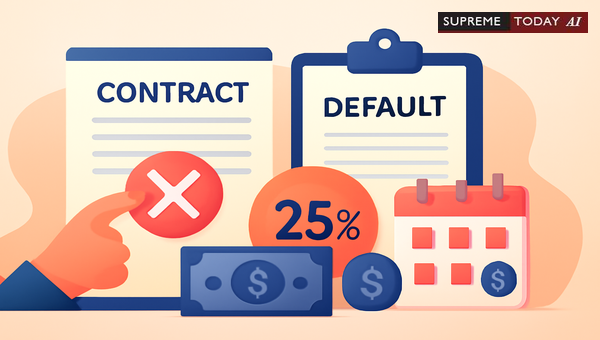
Does Missing 3 Consecutive Installments Automatically Cancel Your Agreement and Forfeit 25%?
In real estate deals, installment purchase agreements, or property allotments, missing payments can have serious consequences. A common clause states: If the Installment is Not Paid for 3 Consecutive Months the Agreement will be Cancelled and the Amount of 25 Percent will be Confiscated. But is this automatic? Does the law support blanket cancellation and without ?
This blog post dives deep into the legal nuances, drawing from contractual provisions and court precedents. We'll explore whether such clauses hold up, the role of notices, and what protections exist for defaulting parties. Note: This is general information, not legal advice. Consult a qualified lawyer for your specific situation.
The Core Legal Issue: After 3 Months?
At first glance, many agreements include strict default clauses. However, the legal documents do not support automatic cancellation or confiscation solely based on three consecutive months of non-payment. Instead, the process typically involves:
- Proper to the defaulting party.
- the default.
- , not punitive measures.
This is emphasized across multiple sources, where cancellation requires procedural safeguards to uphold principles of . 2008 0 Supreme(SC) 991 2012 5 Supreme 552 2006 2 Supreme 400
Contractual Provisions on Payment Defaults
Contracts often outline consequences for late or missed installments, but they rarely make cancellation immediate. For instance:
- 2008 0 Supreme(SC) 991 states that failure to deposit the required amount within the specified period can result in cancellation and of earnest money. This implies a timeline but not instant action.
- 2006 2 Supreme 400 specifies: if an installment is not paid by the due date, a may be served, and if payment is not made within three months, the lease or allotment can be canceled or forfeited, but only after giving the allottee a chance to respond.
- 2009 0 Supreme(SC) 201 notes that default in payment can lead to penalties, , or resumption only after proper notices and opportunity to show cause.
Other sources echo this. In
, it's provided that If the lease amount or the annual installment is not paid within the period of ninety days, further extension of time not exceeding sixty days may be given and the... revoked and the lessee evicted... after forfeiting twelve and half percent (12½) of the lease amount paid. Here, extensions and specific percentages (not always 25%) are mentioned, with implied process.
Similarly, 2025 Supreme(Online)(SC) 4989 allows voluntary cancellation within three months with forfeiting 20 percent of the registration amount. This shows variation in percentages and contexts.
Legal Safeguards: No Automatic Without
Courts consistently rule against arbitrary actions. without violates fairness principles:
- 2015 1 Supreme 129 clarifies that of earnest money or cancellation based solely on default, without procedural safeguards, is invalid.
- 2009 0 Supreme(SC) 201 stresses the authority must follow before resuming or forfeiting property, and penalties must be reasonable.
precedents reinforce that must be proportionate and not automatic or arbitrary.2015 1 Supreme 129
Even where three-month defaults are flagged, safeguards apply:- must be issued.- Chance to explain or pay up is required.- can't be penal; 25% may be reasonable in some cases but challengeable if excessive. 2006 2 Supreme 400 2008 0 Supreme(SC) 991
Insights from Additional Sources: Variations in Practice
While core documents emphasize process, other cases show how clauses operate in reality:
- 2019 0 Supreme(Pat) 448 stipulates if allot fails to pay two consecutive installments allotment in his favour may get cancelled and amount deposited by him will also get ceased. Note the may, indicating discretion, and it's for two months here.
- 2021 0 Supreme(Telangana) 382 highlights that despite a clause for and cancellation if consideration isn't paid within three months, they have neither issued any for cancellation—proving time isn't always essence without .
- 2023 Supreme(Online)(Pat) 6993 allows payment within six months without interest, showing leniency: If the respondents would pay that amount within six months... they shall not be liable for paying interest.
Some sources support 25% after prolonged default:- References indicate default in three consecutive months often leads to cancellation with 10-25% of paid amounts, but after or extensions. 2025 Supreme(Online)(SCDRC) 7172 2025 Supreme(Online)(SCDRC) 974- Flat 25% deductions appear standard in certain allotments post-three months. 2025 Supreme(Online)(NCDRC) 649
However, 2024 8 Supreme 321 counters: Clause 3 does not state that the agreement will be cancelled if the petitioner does not pay the balance amount within three months. Reinforcing no automaticity.
Exceptions, Challenges, and Best Practices
When Clauses Might Be Upheld
- If the contract clearly specifies three-month default triggers with , and is reasonable (e.g., 20-25%), it may stand.
- Voluntary cancellations often forfeit fixed percentages. 2025 Supreme(Online)(SC) 4989
Grounds for Challenge
- Unfair clauses lacking can be struck down as violating . 2015 1 Supreme 129
- (beyond actual loss) is invalid. 2015 1 Supreme 129 2009 0 Supreme(SC) 201
- No issued? Cancellation may be void. 2021 0 Supreme(Telangana) 389
Recommendations for Parties
- Buyers/Allottees: Respond promptly to notices, seek extensions, and document communications.
- Sellers/Authorities: Always issue notices and provide rectification time to avoid litigation.
- Scrutinize clauses for compliance with fairness. Ensure forfeitures are proportionate.
Key Takeaways
- No blanket : Three consecutive months default typically requires and opportunity to cure. 2006 2 Supreme 400 2015 1 Supreme 129
- 25% not universal: Percentages vary (12.5%-25%), must be reasonable.
- is key: Skipping steps risks invalidation.
- Always review your specific agreement and seek legal counsel.
In summary, while contracts may warn of cancellation and 25% confiscation after three months, the law prioritizes over knee-jerk actions. This protects parties while allowing enforcement of legitimate interests.
References
- 2008 0 Supreme(SC) 991: Payment deadlines, cancellation, .
- 2012 5 Supreme 552: Default processes, safeguards.
- 2006 2 Supreme 400: and hearing requirements.
- 2015 1 Supreme 129: Invalidity of automatic .
- 2009 0 Supreme(SC) 201: for penalties.
: 90-day default with extensions.
- 2025 Supreme(Online)(SC) 4989: 20% on early cancellation.
- Others as cited.
Word count: 1028. This post is for informational purposes only.
#InstallmentDefault, #AgreementCancellation, #ForfeitureClause












