


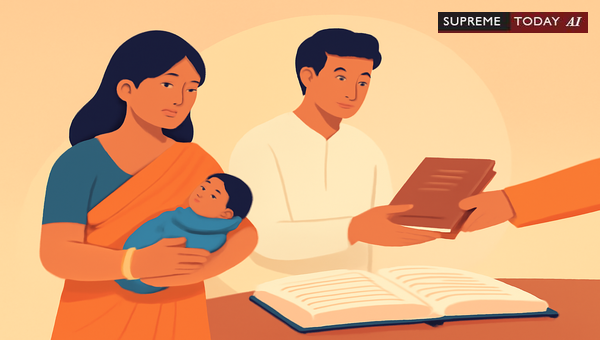
Is Endorsement Proof of Adoption in India?
In family disputes over property inheritance or succession rights, questions about adoption validity often arise. A common piece of evidence cited is an endorsement in a —a traditional family ledger or account book recording births, marriages, adoptions, and other events. But is a endorsement conclusive proof of adoption in India? This question frequently surfaces in courts, especially under Hindu law.
While such entries may indicate family acknowledgment, they fall short of meeting strict legal standards. This post delves into the legal framework, key judgments, and practical insights to clarify this issue, helping you understand what truly proves an adoption.
Understanding Endorsements and Their Role
A or family ledger is a maintained by families, particularly in rural or traditional Indian households. Endorsements in these ledgers might note an adoption, often signed by family members. However, under Indian law, particularly the (HAMA), these are not standalone proof.
The Act mandates specific conditions for a valid adoption, including:- Capacity of parties (Sections 10-11).- Performance of or essential ceremonies where required.- Most critically, the actual giving and taking of the child (Section 11(vi)), described as a —an indispensable requirement. 2025 Supreme(Bom) 635
Courts emphasize that mere documentary entries like endorsements serve as supportive evidence of recognition but cannot substitute for direct proof of these rituals. As held, An endorsement in a is not automatically sufficient to prove adoption. They may raise a but require corroboration. 1966 0 Supreme(Raj) 151 2024 0 Supreme(All) 2119
Legal Principles: Why Entries Fall Short
The Giving and Taking Ceremony
requires clear evidence that the child was physically given by the biological parent(s) to the adoptive parent(s) with intent to transfer custody and rights. This must typically be proved by:- Direct oral testimony from witnesses present at the ceremony.- Formal documents like registered adoption deeds, supplemented by such evidence.
A registered deed alone doesn't suffice: A or endorsement alone does not prove an adoption. (; ). 1982 0 Supreme(Bom) 303 The deed presumes compliance only if the giving and taking is established. (). 1966 0 Supreme(Raj) 151
In one case, even oral evidence failed to specify if the adoption occurred during the lifetime of a key family member or post-death, underscoring the need for precise proof: Even the oral evidence relied upon by the defendants does not reveal whether the adoption was during the lifetime of Ganu... 2025 Supreme(Bom) 635
Judicial Scrutiny of Documentary Evidence
Courts view endorsements skeptically when unsupported:- They do not prove the . 2014 0 Supreme(Bom) 969- Entries can indicate treatment as father and son but lapse of time demands strong evidence: In judging whether an adoption pleaded has been satisfactorily proved or not, we have to bear in mind the lapse of time between the date of the alleged adoption... 2025 0 Supreme(MP) 237
As clarified, When the is not proved, the adoption becomes void and so other things need not be considered. 2014 0 Supreme(Bom) 969
Pandurang Shankar Shivankar VS Muktabai
Even under , no writing was traditionally required, but modern law under HAMA insists on evidentiary rigor, especially when adoption disrupts natural succession. Evidence must be free from all suspicion of fraud and consistent.
Pandurang Shankar Shivankar VS Muktabai
Key Court Judgments on Proof of Adoption
and rulings consistently reinforce these principles:- 1966 0 Supreme(Raj) 151 (para 22): Endorsement in family records supports recognition but isn't conclusive; oral evidence of ceremonies is essential.- 2024 0 Supreme(All) 2119: A registered deed creates a presumption but doesn't prove the act itself—ceremonies and testimony are required.- 2022 0 Supreme(All) 1141** (para 7): Intent to transfer the child must be evidenced beyond entries.
In , invalid adoptions due to missing proof lead to equal shares among heirs. For instance, lack of giving and taking evidence invalidated a claim, affirming shares among biological heirs. 2025 Supreme(Bom) 635
Another ruling dismissed an adoption claim for crossing age limits under Section 10 and absent proof: Since at time of adoption, defendant-3 had already crossed age of 15 years hence adoption is not valid. 2014 0 Supreme(Bom) 969
Exceptions: Ancient Adoptions and Circumstantial Evidence
For ancient adoptions (long ago, where witnesses are unavailable), courts may consider circumstantial evidence:- Consistent family records, including entries.- Treatment as son in conduct, school records, etc.- Long possession of property as adopted child.
However, even here, evidence must be credible and unsuspicious. 1966 0 Supreme(Raj) 151 (para 22); 2024 0 Supreme(All) 2119. Mere entries without corroboration fail, as in cases where adoptee claims were rejected for lacking statutory proof. 2025 0 Supreme(MP) 237
Note: Post-HAMA adoptions ( onwards) face stricter scrutiny than pre-Act customary ones.
Integrating Other Evidentiary Sources
Supporting documents like school records or driving licenses naming adoptive parents can bolster claims but still need the core factum proved. In one injunction suit, school records were noted but adoption failed without giving/taking evidence or consent. 2010 0 Supreme(Kar) 681
cases treat adopted sons equally to natural ones, affirming legal parity once validity is established—but proof remains key. 2022 0 Supreme(Kar) 448
Ceremonies like aren't always mandatory post-HAMA but is. 2016 0 Supreme(Ori) 1016
Practical Recommendations for Proving Adoption
To strengthen your case:- Corroborate entries with witness affidavits on giving/taking.- Register adoption deeds promptly and gather photos/videos of ceremonies.- For old adoptions, compile genealogical records, mutation entries, and consistent conduct evidence.- Consult customs if pre-HAMA.
Courts advise scrutiny: Courts should scrutinize the credibility of endorsements and look for supporting evidence such as witnesses, formal deeds, or recognized customs.
Conclusion and Key Takeaways
A endorsement is valuable supporting evidence but not definitive proof of adoption in India. Valid adoptions demand proof of giving and taking, ceremonies, and compliance with HAMA, backed by oral or direct evidence. Relying solely on ledger entries risks dismissal in disputes over inheritance or rights.
Key Takeaways:- entries show acknowledgment, not validity. 1966 0 Supreme(Raj) 151- Prioritize witness testimony and formal docs.- Exceptions exist for ancient cases with strong circumstantial proof.
This post provides general information based on judicial precedents and is not legal advice. Consult a qualified lawyer for your specific situation.
References:1. HAMA, - Sections 10, 11(vi), 16.2. Key cases: 1966 0 Supreme(Raj) 151, 2024 0 Supreme(All) 2119, 1982 0 Supreme(Bom) 303, 2025 Supreme(Bom) 635, 2025 0 Supreme(MP) 237, 2014 0 Supreme(Bom) 969,
Pandurang Shankar Shivankar VS Muktabai
. #AdoptionLawIndia, #BahiEndorsement, #HinduAdoptionAct


















