


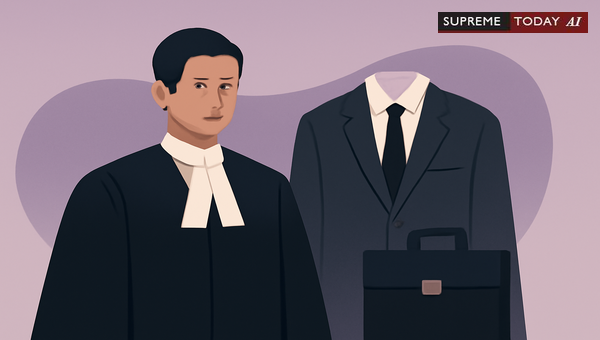
Advocates Act Dress Code: Rules for Lawyers in India
Introduction
In the solemn halls of Indian courts, appearance matters as much as arguments. The dress code for advocates isn't just about style—it's a symbol of professionalism, dignity, and respect for the judicial process. Governed primarily by the , these rules ensure uniformity and decorum. But what exactly does the law say about what lawyers should wear?
If you've ever wondered, What is the dress code under the Advocates Act? this comprehensive guide breaks it down. We'll explore the key provisions, specific requirements for male and female advocates, enforcement authorities, and insights from judicial rulings. Whether you're a practicing lawyer, law student, or curious citizen, understanding these rules can prevent mishaps and uphold court standards. Note: This is general information and not specific legal advice. Consult a qualified professional for your situation.
Authority to Prescribe Dress Code
The , empowers specific bodies to regulate advocate attire. Under (1), can make rules on practice conditions, including dress codes. Similarly, allows the () to prescribe standards 2023 0 Supreme(Mad) 1120 1973 0 Supreme(All) 67.
This authority is exclusive. For instance, the () lacks to impose its own dress code, as it's regulated solely by the under the Advocates Act. In a key ruling, the court quashed an order dated , stating: The Tribunal's order... was found to lack and was deemed illegal, as only can regulate dress code under the Advocates Act 2023 Supreme(Online)(Mad) 49874. The power under Rule 51 of Rules doesn't extend to overriding rules.
retain overarching control, enabling of unauthorized impositions by tribunals 2023 Supreme(Online)(Mad) 49874.
Specific Dress Code Requirements
The rules outline precise attire to maintain court dignity 2023 0 Supreme(Mad) 1120. Here's a breakdown:
For Male Advocates
- Black buttoned coat, chapkan, achkan, black sherwani, with white bands and gowns.
- Alternatively: Black open breast coat, white shirt and collar, white bands, and gowns.
- Long trousers (white, black, striped, or grey) or dhoti—jeans are explicitly excluded2023 0 Supreme(Mad) 1120.
For Female Advocates
- Black full-sleeve jacket or blouse with white collar and bands, or white blouse with bands and black coat.
- Sarees or long skirts in white, black, or subdued colors (no prints), or traditional attire paired with black coat and bands 2023 0 Supreme(Mad) 1120.
These guidelines promote a professional look while accommodating cultural elements.
Optional and Mandatory Attire
Flexibility exists outside higher courts:- Advocate's gown is optional except in the or .- In lower courts, a black tie may replace bands 2023 0 Supreme(Mad) 1120.
However, non-compliance can lead to issues. Courts emphasize adherence, as seen in contempt cases where advocates flouted norms while representing family or themselves. One ruling noted: No bands or gowns had to be worn by the advocate in the public places, but strict court attire is mandatory 2021 0 Supreme(All) 1566.
Legal Validity and Judicial Upholding
Courts have consistently upheld these rules as on the statutory right to practice. The dress code maintains dignity and decorum of the court 1973 0 Supreme(All) 67. It's not arbitrary but a valid regulation under the Act 2015 0 Supreme(Ker) 1276.
In challenges, like those to High Court rules, courts clarified that regulations on dress, conduct, and pleadings are permissible under , provided they don't infringe core practice rights. rules were partially struck down for being unreasonable, oppressive and discriminatory, but the dress code principle stood 2015 0 Supreme(Pat) 570.
highlight enforcement rigor. An advocate using intemperate language and disrupting proceedings faced punishment, with courts stressing professional standards, including attire 2021 0 Supreme(All) 1566. In another case, an advocate was barred from courts until purging contempt, underscoring that even seasoned lawyers must comply 2010 0 Supreme(Bom) 1755.
Tribunals and other bodies can't encroach. The reiterated: The respondent has no to pass the impugned order imposing dress code 2023 Supreme(Online)(Mad) 101623.
Broader Context: Dress Codes Beyond Advocates
While advocate rules are strict, parallels exist elsewhere, though irrelevant to core practice:- Subordinate court staff (e.g., Ahlmads) may face uniform mandates for discipline, upheld as reasonable under 2016 0 Supreme(P&H) 1690. A circular requiring white shirts and maroon ties was deemed valid, dismissing challenges as vexatious 2016 0 Supreme(P&H) 1690.- Educational institutions can prescribe religion-neutral uniforms, as in the Hijab case, promoting harmony without violating
.
These affirm that dress codes, when reasonable, foster uniformity and professionalism.
Practical Tips for Compliance
- Know your court: Check High Court-specific rules, as they may vary slightly.
- Stay updated: or may amend guidelines—monitor notifications.
- Exceptions: When appearing in person (not as advocate), conventional norms may relax, but professionalism prevails 2010 0 Supreme(Bom) 1755.
- Avoid pitfalls: Jeans, prints, or casual wear can invite scrutiny.
Advocates must prevent unfair practices and maintain decorum, including attire 2021 0 Supreme(All) 1566.
Conclusion and Key Takeaways
The dress code under the , is a cornerstone of legal practice in India, enforced by and to uphold judicial sanctity 2023 0 Supreme(Mad) 1120 1973 0 Supreme(All) 67. From black coats and bands to optional gowns, these rules blend tradition with functionality.
Key Takeaways:- Males: Coats/sherwanis, white bands, no jeans.- Females: Blouses/jackets, subdued sarees/skirts.- Gowns mandatory in SC/HCs; ties optional elsewhere.- Exclusive authority: No tribunals like can override 2023 Supreme(Online)(Mad) 49874.- Courts uphold as reasonable for decorum 2015 0 Supreme(Ker) 1276.
Adhering ensures smooth practice. Always verify latest rules from official sources.
References: 2023 0 Supreme(Mad) 1120 1973 0 Supreme(All) 67 2015 0 Supreme(Ker) 1276 2023 Supreme(Online)(Mad) 49874 2023 Supreme(Online)(Mad) 101623 2021 0 Supreme(All) 1566 2016 0 Supreme(P&H) 1690 2015 0 Supreme(Pat) 570 2010 0 Supreme(Bom) 1755
This article provides general insights based on legal precedents. For personalized advice, contact a legal expert.
#AdvocatesDressCode, #LawyerAttireIndia, #BarCouncilRules















