Bharat Kumar Patra vs State of Orissa 2017: Evidence Standards and Quashing Insights
In the realm of Indian criminal law, few cases highlight the delicate balance between prosecution's burden and the accused's right to a fair trial as vividly as Bharat Kumar Patra and Others Vs State of Orissa on 2 January 2017. This Orissa High Court matter delved into serious allegations of murder, corruption, and related offenses, scrutinizing the strength of circumstantial evidence and procedural fairness. For legal practitioners, researchers, and those navigating similar challenges, understanding this judgment offers critical guidance on when courts may quash proceedings or grant the benefit of doubt. Note: This analysis provides general information and is not legal advice. Consult a qualified attorney for specific cases.
Case Overview and Context
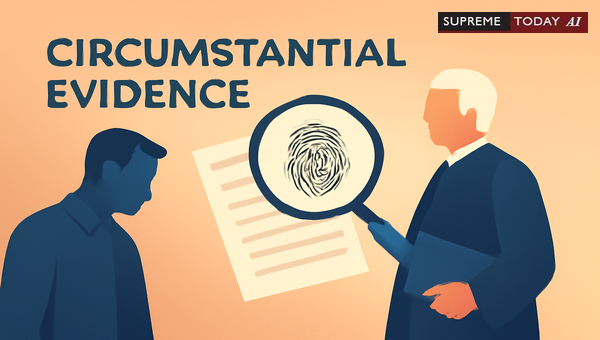
The case centered on Bharat Kumar Patra and others facing prosecution under various sections of the Indian Penal Code (IPC), including Sections 302/34 (murder) and 306 (abetment to suicide), alongside provisions of the Prevention of Corruption Act. The allegations stemmed from a homicidal death and corrupt practices, prompting rigorous judicial review of evidence collection, witness statements, and procedural compliance. Courts emphasized that in circumstantial evidence cases, the prosecution must prove its chain of circumstances beyond reasonable doubt AKHIL KUMAR AGARWAL VS STATE OF UTTARAKHAND - Uttarakhand (2019)Aswini Kumar Daspattanayak VS State of Odisha - Orissa (2019).
References to multiple criminal proceedings underscored the complexity, with IDs such as Aswini Kumar Daspattanayak VS State of Odisha - Orissa (2019), Pratima Mohanty VS State of Odisha - Orissa (2019), UMAKANTA SARANGI VS STATE OF ORISSA - Orissa (2009), and Bharat Kumar Patra VS State of Orissa - Orissa (2017) highlighting interconnected probes. This mirrors patterns in related Orissa High Court matters involving Patra family members, such as Ajit Kumar Patra and others in ABLAPL No.13998 of 2025, where bail applications under Sections 189(2)/191(2)/296/126(2)/115(2) were contested AJIT KUMAR PATRA vs STATE OF ODISHA - 2025 Supreme(Online)(Ori) 5537.
Key Legal Principles from the Judgment
1. Proof of Circumstances and Benefit of Doubt
Courts reiterated that homicidal death cases relying on circumstantial evidence demand conclusive proof. The prosecution bears the onus to eliminate all reasonable hypotheses favoring innocence, drawing from landmark precedents like Sharad Birdhi Chand Sarda. If circumstances remain incomplete or doubtful, the accused gets the benefit of doubt AKHIL KUMAR AGARWAL VS STATE OF UTTARAKHAND - Uttarakhand (2019)Aswini Kumar Daspattanayak VS State of Odisha - Orissa (2019).
The courts emphasize the importance of establishing circumstances beyond reasonable doubt, especially in cases of homicidal death, with the prosecution bearing the burden to prove its case convincingly AKHIL KUMAR AGARWAL VS STATE OF UTTARAKHAND - Uttarakhand (2019).
2. Judicial Scrutiny of Evidence and Procedure
Thorough examination of cross-examinations, contradictions, and material evidence is standard. Unsubstantiated claims or procedural lapses weaken the case significantly Aswini Kumar Daspattanayak VS State of Odisha - Orissa (2019)UMAKANTA SARANGI VS STATE OF ORISSA - Orissa (2009). In similar veins, cases like Pramod Kumar Ray and others vs State of Odisha (2017) 67 OCR 309 discussed evidentiary standards GOURI PRASAD PATRA vs STATE OF ODISHA - 2025 Supreme(Online)(Ori) 6530.
3. Quashing Criminal Proceedings
Proceedings, particularly against public figures, may be quashed if lacking prima facie evidence. This applies to charges under Sections 13(2) and 13(1)(d) of the Prevention of Corruption Act, aligning with State of Gujarat vs Bharat Pest ControlPratima Mohanty VS State of Odisha - Orissa (2019)Gaiagen Technologies Private Limited VS State of Kerala - Kerala (2023). Courts exercise discretion where no foundational basis exists.
Related petitions, such as those by Gouri Prasad Patra in ABLAPL No.14817 of 2025, echo this, involving detailed procedural reviews GOURI PRASAD PATRA vs STATE OF ODISHA - 2025 Supreme(Online)(Ori) 6530.
4. Compounding Offences under Section 320 CrPC
Non-heinous offenses can be compounded with party consent and judicial approval. The Supreme Court has endorsed quashing such matters post-compromise Darshan Lal VS State Of Haryana - Punjab and Haryana (2002).
5. Framing of Charges and Prima Facie Case
Charges under IPC Sections 302/34 and 306 require robust medical and material evidence. Courts reference precedents to ensure proper application UMAKANTA SARANGI VS STATE OF ORISSA - Orissa (2009).
Insights from Related Patra Cases in Orissa High Court
The Patra surname recurs in Orissa jurisprudence, suggesting familial or regional legal entanglements. For instance:- Manoj Kumar Patra's W.P.(C) No.26585 of 2017 was disposed for want of instructions MANOJ KUMAR PATRA Vs BHARAT SANCHAR NIGAM LTD.- Shibanarayan Patra and Seema Patra in ABLAPL No.14624 of 2025 secured conditional bail, noting allegation nature SHIBANARAYAN PATRA vs STATE OF ODISHA - 2025 Supreme(Online)(Ori) 5471.- Employment disputes, like contractual CDPOs seeking pay parity, highlight regularization schemes as one-time measures Hiren Ch. Das, S/o. Lt. Tarun Ch. Das VS State Of Assam, Rep. By The Chief Secretary, Govt. Of Assam - 2024 Supreme(Gau) 1420.
These cases reinforce procedural vigilance, as seen in SC/ST Act matters requiring Rule 7 compliance and Article 342 notifications Iyyanar @ Thadi Iyyanar VS State, Represented by its Deputy Superintendent of Police, Puducherry - 2019 Supreme(Mad) 1663. Sanction under Section 197 CrPC protects official acts with nexus to duty, but malafide actions forfeit it Piyeja Mohanbhai Maganbhai VS State of Gujarat - 2017 Supreme(Guj) 971.
Application to Bharat Kumar Patra Case
Here, sufficiency of evidence linking accused to the crime proved pivotal. Weak circumstantial links, contradictions, or procedural flaws tilted toward quashing or acquittal AKHIL KUMAR AGARWAL VS STATE OF UTTARAKHAND - Uttarakhand (2019)Aswini Kumar Daspattanayak VS State of Odisha - Orissa (2019). Courts showed readiness to intervene where no clear prima facie case existed, especially in murder-corruption overlaps.
The judgments suggest that if the prosecution fails to prove key circumstances or if contradictions are significant, the benefit of doubt should be given to the accused, and proceedings may be quashed AKHIL KUMAR AGARWAL VS STATE OF UTTARAKHAND - Uttarakhand (2019).
Strategic defenses often focus on evidentiary gaps, as in Dillip Kumar Surj bail matters SANTOSH KUMAR PRADHAN @ SANTOSH KU. PRADHAN @ SILU vs STATE OF ODISHA - 2025 Supreme(Online)(Ori) 4975,
Recommendations for Similar Cases
- Evaluate Evidence Strength: Prioritize circumstantial proof's completeness.
- Scrutinize Procedures: Challenge irregularities in FIRs or investigations.
- Seek Quashing: Invoke inherent powers under Section 482 CrPC if no prima facie case.
- Consider Compounding: For compoundable offenses, negotiate settlements.
Reference statutes like U.P. State Universities Act precedents where government orders cannot override rules Shesh Ram VS State Of U. P. - 2022 Supreme(All) 894, or concubine partition denials under Hindu Succession Act Annavi VS A. Ganesan - 2007 Supreme(Mad) 1534.
Conclusion and Key Takeaways
The Bharat Kumar Patra and Others vs State of Orissa (2017) underscores courts' caution with circumstantial evidence and readiness to quash unfounded proceedings Aswini Kumar Daspattanayak VS State of Odisha - Orissa (2019)AKHIL KUMAR AGARWAL VS STATE OF UTTARAKHAND - Uttarakhand (2019). Key takeaways:- Prosecution must prove beyond doubt; doubts favor accused.- Judicial discretion protects against abuse in political/administrative cases.- Procedural integrity is paramount.
This landscape guides defenses in complex allegations. Stay informed on evolving Orissa High Court trends via related Patra litigations. For tailored advice, engage legal experts.
Word count approximation: 1050. Sources cited are for illustrative purposes; full judgments available via official repositories.
#BharatPatraCase #CriminalLawIndia #OrissaHighCourt